
Double Gorilla Trekking in 4 Days: Rwanda’s Volcanoes NP and Uganda’s Bwindi
Starting and ending in Kigali. It’s tight — you’re trekking on consecutive mornings in two different countries — so the driving days are long, but it’s a well-trodden route via the Cyanika border.
Day 1 – Kigali → Volcanoes National Park (Musanze)
- Morning pickup in Kigali, scenic drive north (~2.5–3 hrs) to Musanze/Kinigi.
- Afternoon free: optional Twin Lakes (Burera/Ruhondo) visit, Iby’Iwacu Cultural Village, or Dian Fossey/Gorilla Guardians exhibit.
- Briefing and early night — trek starts at dawn.
- Lodge (midrange): Mountain Gorilla View Lodge, Le Bambou Gorilla Lodge, or Five Volcanoes Boutique Hotel.
Day 2 – Gorilla Trekking Rwanda → Cross to Uganda (Bwindi/Mgahinga, via Kisoro)
- Early start, briefing at Kinigi Park HQ (~7 am), then gorilla trek in Volcanoes NP — one hour with a habituated family.
- After the trek, drive to the Cyanika border (~30–45 min), cross into Uganda, and continue to the Kisoro area near the Mgahinga/Nkuringo sector of Bwindi (~1–1.5 hrs from the border).
- Lodge (midrange): Nkuringo Bwindi Gorilla Lodge, Gorilla Mist Camp, or Mount Gahinga Lodge.
Note: the Rwanda gorilla permit costs USD 1,500 per person, while the Uganda permit costs USD 800 per person for foreign non-residents — book both several months ahead, as permits often sell out months in advance, especially during peak seasons (June–September & December–February).
Day 3 – Gorilla Trekking Uganda (Bwindi or Mgahinga) → Back toward Rwanda border
- Early briefing, second gorilla trek — this time in Uganda’s denser, hillier forest (Nkuringo sector is the closest to the border, so it keeps driving manageable).
- Afternoon: relax at the lodge, or drive back across the border to overnight in Musanze/Kinigi again to shorten Day 4’s drive.
- Lodge (midrange): stay another night at the Nkuringo-area lodge, or cross back to Le Bambou Gorilla Lodge / Five Volcanoes in Musanze.
Day 4 – Return to Kigali
- Morning drive back to Kigali (~2.5–3 hrs from Musanze), with time for a stop at a coffee or craft cooperative en route.
- Arrive in Kigali by early-mid afternoon for departure flights or a final evening in the city (Inema Arts Centre, Kigali Genocide Memorial, local market).
A few practical notes
- This is genuinely tight. Two treks in three mornings, plus an international border crossing, mean very little downtime. If you can stretch to 5 days, it makes the trip far more comfortable.
- Border crossing: Cyanika (Rwanda–Uganda) is the most direct route for this itinerary; bring passports with at least 6 months’ validity and any required visas (East Africa Tourist Visa covers Rwanda, Uganda, and Kenya on one visa and is worth getting in advance).
- Permits must be booked early and tied to your passport — they’re non-transferable.
- Fitness: both treks involve hiking at altitude on uneven, sometimes muddy terrain; porters are available for a small fee and are worth hiring.
Want me to also map out the driving route and lodge locations, or put this into a downloadable itinerary document?
Adventure Gorilla Tours in Rwanda and Uganda: The Ultimate Guide
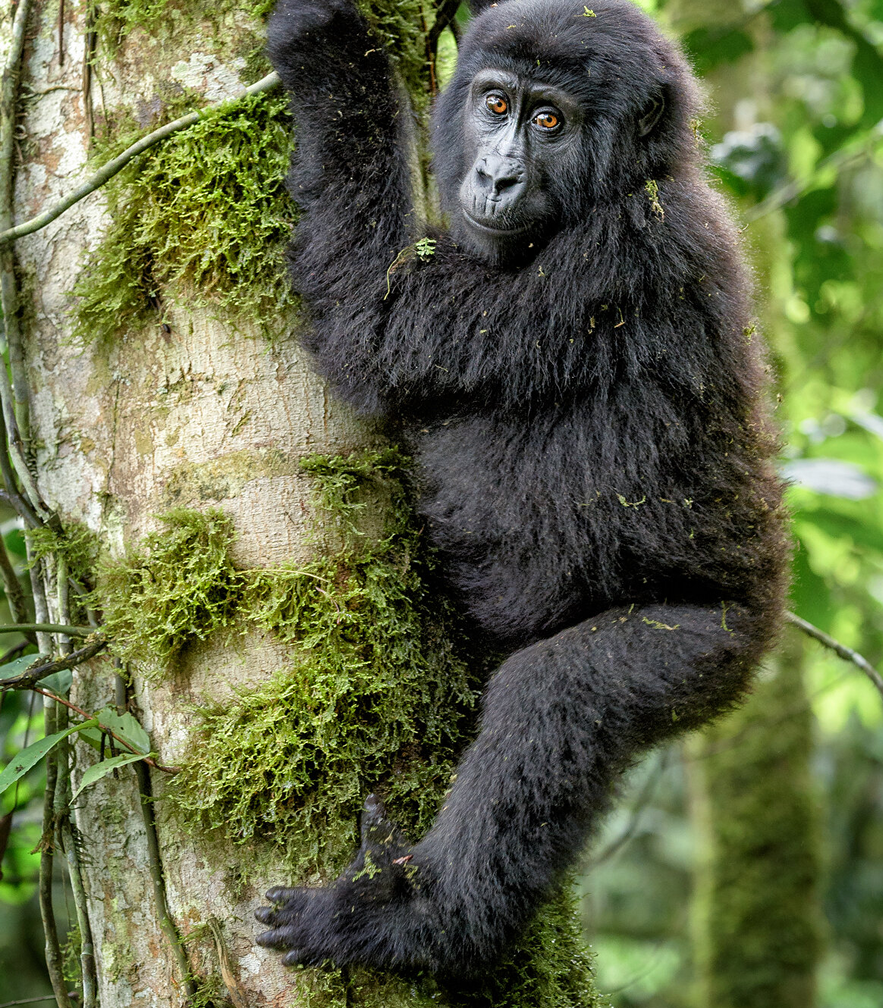
There are wildlife encounters, and then there is gorilla trekking. No amount of documentary footage, no wildlife photograph, however brilliant, can prepare you for the moment a wild mountain gorilla turns its ancient, intelligent eyes on yours. It is a look that crosses the boundary between species — a recognition so deep and so immediate that most trekkers describe leaving the forest fundamentally changed. For those who have experienced it, gorilla trekking in the Virunga massif and Uganda’s jungle heartlands ranks as one of the most profoundly moving wildlife encounters on Earth.
Rwanda and Uganda together hold the vast majority of the world’s remaining mountain gorillas (Gorilla beringei beringei), a subspecies so endangered that scientists once feared it would be extinct by the end of the twentieth century. Thanks to decades of conservation effort, community engagement, and carefully managed ecotourism, their numbers have climbed from fewer than 300 individuals in the 1980s to over 1,000 today. Trekking to see them is not merely an indulgence — it is one of the most impactful things a visitor can do to ensure these animals remain on the planet.