Adventure Gorilla Safaris
3-Day Murchison Falls Safari: Full Itinerary & Wildlife Guide
Overview
This 3-day safari from Entebbe to Murchison Falls National Park offers an unforgettable wildlife experience combining scenic drives, game drives, boat safaris on the Nile, and encounters with Uganda’s rich biodiversity. The park covers 3,700 km² and is home to elephants, giraffes, buffalo, lions, hippos, crocodiles, and over 450 bird species.
Recommended Midrange Lodges
1. Murchison River Lodge ⭐⭐⭐⭐⭐ (4.6/5)
Best Overall Choice for Budget-Conscious Travellers
- Location: Riverside setting, 15 minutes from Paraa Bridge
- Features: Stunning Nile views, warm hospitality, pool with sunblock shelter, excellent food
- Room Types: Mix of tents and cottages
- Price Range: Budget-friendly with package deals including meals
- Why Choose: Excellent value for money, intimate atmosphere, friendly staff with local knowledge, active wildlife viewing from the lodge
- Contact: +256 752 473393
- Website: murchisonriverlodge.com
2. Murchison Giraffe Camp ⭐⭐⭐⭐⭐ (4.6/5)
Best for Authentic Safari Experience
- Location: Across the Nile, peaceful setting
- Features: Affordable package deals, excellent food, evening campfire, knowledgeable staff
- Highlights: Frequent wildlife sightings (elephants, monkeys), giraffes visible from dining area
- Price Range: Very affordable, includes meals with packages
- Why Choose: Authentic bush experience, great value, strong community partnerships, night escorted walks (hippos often pass nearby!)
- Contact: +256 703 850695
3. Nile Safari Lodge ⭐⭐⭐⭐⭐ (4.9/5)
Best for Comfort & Service (Slightly Upscale)
- Location: Eco-friendly property on the Victoria Nile
- Features: Spacious cottages, excellent pool, gourmet cuisine, personal butler service available
- Highlights: Sunset views, hippo-spotting from rooms, impeccable service
- Price Range: Mid-to-upper range
- Why Choose: Exceptional service, beautiful design, great for special occasions
- Contact: +256 757 363362
Day-by-Day Breakdown
Day 1: Entebbe → Murchison Falls (5-6 hours)
- Early Start: Depart Entebbe at 6:00 AM to avoid traffic
- Journey: Drive through Uganda’s varied landscapes—from urban areas to rural villages, farmland, and savanna
- Stop: Breakfast/snack stop in the Kampala area (~45 minutes)
- Arrival: Reach the lodge between 1:00 and 2:00 PM
- Afternoon: Check-in, lunch, and rest
- Evening: Short game drive or nature walk around lodge grounds to spot local wildlife
- Sunset: Enjoy views from the Nile viewpoint
- Dinner: Welcome dinner at the lodge
- Accommodation: Your chosen mid-range lodge
Day 2: Full-Day Wildlife Experience
- 5:30 AM: Wake-up call with tea/coffee
- 6:00-10:00 AM: Early morning game drive (peak wildlife activity)
- Best time to spot elephants, giraffes, buffalo, lions, and antelopes
- Cooler temperatures make animals more active
- Bring binoculars and a camera with a good zoom
- 10:00 AM-12:30 PM: Return to lodge for breakfast and rest
- 1:00-4:00 PM: Visit Murchison Falls (Top of Falls)
- Walk to the dramatic viewpoint
- Experience the power of the 43-meter waterfall
- Photo opportunities with the spectacular gorge
- Explore visitor facilities and nature trails
- 4:00-6:30 PM: Nile Boat Safari (from Paraa landing)
- Cruise upstream on the Victoria Nile
- Spot hippos, crocodiles, elephants at the water’s edge
- Watch for buffalo and water birds
- Look for the rare shoebill stork
- Return before sunset for excellent light photography
- Evening: Relax at the lodge, dinner, and bonfire socialising
Day 3: Return to Entebbe
- 6:00-8:00 AM: Final early morning activity
- Bird watching walk (Murchison has exceptional avian diversity)
- Quiet nature walk around the lodge
- Last chance to spot wildlife
- 8:30 AM: Breakfast and lodge checkout
- 9:00 AM-3:00 PM: Return drive to Entebbe
- Lunch stop at a roadside café
- Scenic drive through Uganda
- Arrive Entebbe early evening
- Evening: Rest at the airport hotel or depart
What You’ll See & Experience
Wildlife: Elephants, giraffes, buffalo, antelopes, hippos, crocodiles, lions (occasionally), warthogs, wild dogs, various primates
Birdlife: Over 450 species, including the shoebill, crowned crane, fish eagles, storks, herons, kingfishers
Natural Wonders:
- Murchison Falls (the “Devil’s Cauldron”—where the Nile forces through a 7m gorge)
- The Victoria Nile River
- Savanna and riverine landscapes
Practical Information
Best Time to Visit
- Dry Season (June-August, December-February): Best wildlife viewing
- Green Season (March-May, September-November): Fewer tourists, lush scenery, excellent bird watching
What to Pack
- Lightweight, neutral-colored clothing (khaki, tan, green—no bright colours)
- Sun hat and sunscreen (SPF 50+)
- Binoculars and a camera with a zoom lens
- Insect repellent (DEET-based)
- Light jacket for cool early mornings
- Sturdy walking shoes
- Medications (especially malaria prophylaxis—consult your doctor)
- Swimwear
- Toiletries (limited availability at lodges)
Health & Safety
- Get malaria prophylaxis from your doctor
- Yellow fever vaccination recommended
- Travel insurance is highly advised
- Guides accompany all activities—follow their instructions
- Lodges provide night escorts in sensitive areas
Budget Estimate (per person, 3 days)
- Accommodation (2 nights, mid-range lodge)
- Meals: Included in most lodge packages
- Activities (game drives, boat safari, park fees)
- Transport (guide & vehicle):
Booking Tips
- Book accommodations 2-4 weeks in advance
- Confirm all transfers and activities in writing
- Many lodges offer package deals (accommodation + meals + activities)
- Negotiate vehicle rentals with guides for better rates
- Ask lodges about discounts for group bookings
Pro Tips for the Best Experience
- Rise Early: Wildlife is most active at dawn—don’t miss early morning drives
- Binoculars Essential: You’ll spot more wildlife and birds
- Bring Extra Cash: Some activities have minimal plastic payment options
- Request Experienced Guides: Good guides make all the difference
- Ask About Shoebill: These rare birds are sometimes spotted—ask your guide where they’ve been seen recently
- Respect Wildlife Distance: Observe from a safe distance; don’t disturb animals
- Photography: Bring extra memory cards—the photo opportunities are endless
- Relax Between Activities: The midday heat is intense; use rest time wisely
- Sunset Viewing: Never miss sunset from the lodge—magical light for photos
- Engage with Staff: Lodge staff often have wonderful stories and wildlife knowledge
This 3-day safari offers an authentic, immersive experience of Uganda’s natural wonders without breaking the bank. The combination of game drives, boat safaris, and the dramatic Murchison Falls makes it one of East Africa’s most rewarding wildlife experiences.
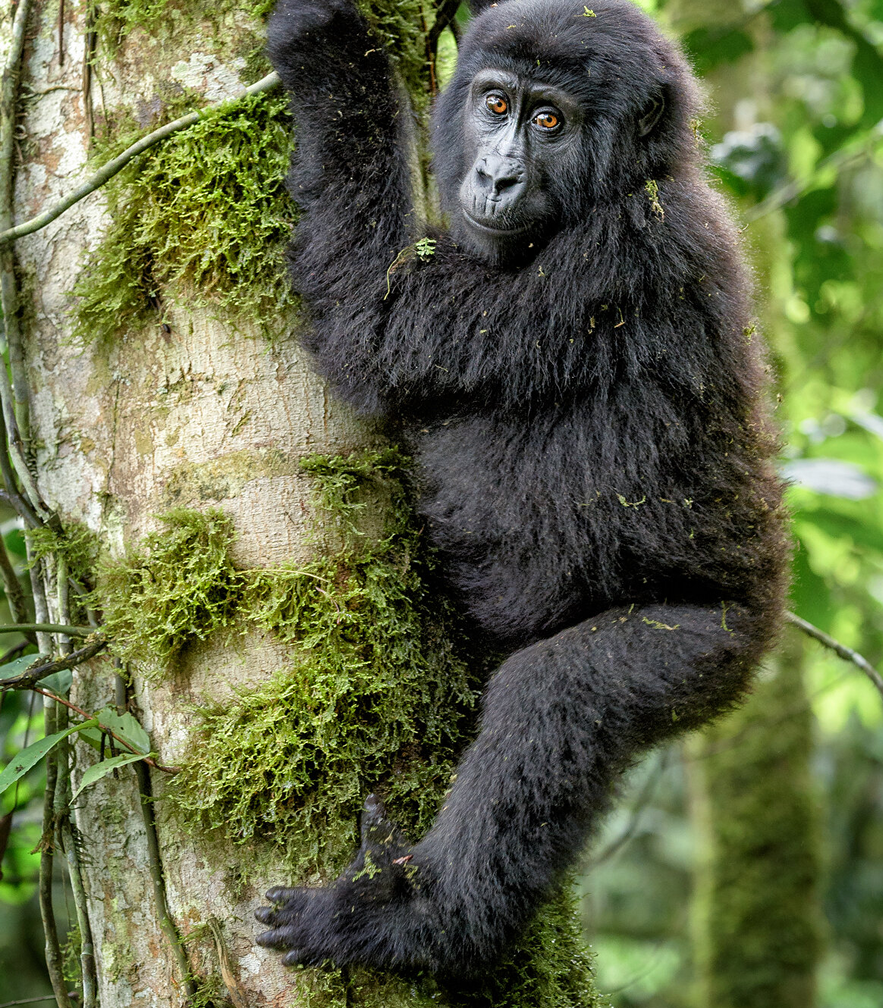
Mountain gorillas (Gorilla beringei beringei) are one of the most extraordinary wildlife encounters on Earth, and gorilla trekking has become a signature safari experience in East Africa for good reason.
Where They Live
Mountain gorillas exist in only two isolated populations, found nowhere else on the planet:
- The Virunga Massif — spanning the borders of Uganda, Rwanda, and the Democratic Republic of Congo, including Volcanoes National Park (Rwanda), Mgahinga Gorilla National Park (Uganda), and Virunga National Park (DRC)
- Bwindi Impenetrable Forest — a dense, ancient rainforest in southwestern Uganda
They live at high altitude, typically between 2,200 and 4,300 meters, in cool, misty mountain forests thick with bamboo and vegetation.
A Conservation Success Story
Mountain gorillas were once considered critically endangered, with numbers dropping below 700 individuals in the late 1980s. Thanks to decades of dedicated conservation work, anti-poaching efforts, and community-based tourism, the population has slowly recovered to just over 1,000 individuals today — one of the only great ape populations in the world that is actually increasing. This recovery is largely credited to the revenue and protection that gorilla trekking tourism generates.
Why It’s Such a Popular Safari Activity
1. Rarity and exclusivity. With only around 1,000 gorillas left and permits deliberately limited (a handful of groups per day, per park), trekking offers an experience very few people on Earth get to have. That scarcity — plus permit costs running from a few hundred to $1,500+ depending on the country — adds to its appeal as a bucket-list activity.
2. Profound closeness with a wild great ape. Habituated gorilla families allow visitors to sit within a few meters of them for a full hour, watching silverbacks, mothers, and playful youngsters go about their day. The eye contact and clear intelligence in their gaze often leaves people deeply moved — many describe it as the most emotional wildlife encounter of their lives.
3. The adventure of the trek itself. Reaching the gorillas isn’t passive — it involves hiking through dense, muddy, high-altitude rainforest, sometimes for a couple of hours, sometimes much longer. The physical effort and unpredictability make the eventual encounter feel earned.
4. Direct conservation impact. Because permit fees fund park protection and local communities, visitors know their trip is directly supporting the survival of an endangered species — a rare case where tourism dollars visibly translate into conservation outcomes.
5. Combines well with other iconic experiences. Uganda and Rwanda pair gorilla trekking with chimpanzee tracking, savanna game drives, and volcano hikes, letting travelers build a broader East African itinerary around it.
If you’re considering it, permits typically need to be booked well in advance (especially in Rwanda, where demand is highest), and July is actually within one of the better trekking windows since the dry season runs roughly June through September.