- admin
- July 13, 2026
- Gorilla Habituation
Buhoma, Ruhija, Rushaga & Nkuringo
Why Bwindi National Park Stands Out as the Premier Gorilla Trekking Destination
When adventurers dream of coming face-to-face with one of Earth’s most magnificent creatures—the mountain gorilla—their minds often conjure images of misty highland forests and the thunderous presence of these gentle giants. Three national parks in East-Central Africa have earned international recognition for hosting these critically endangered primates: Uganda’s Bwindi Impenetrable National Park and Mgahinga Gorilla National Park, and Rwanda’s Volcanoes National Park. Yet among these three sacred destinations, Bwindi emerges as the undisputed leader in offering transformative gorilla trekking experiences. The reasons extend far beyond mere chance, rooted instead in Bwindi’s exceptional combination of gorilla populations, habituation advantages, landscape diversity, ecological richness, and practical accessibility that collectively distinguish it from its competitors.
The Gorilla Population: Quantity and Diversity
The most compelling argument for Bwindi’s prominence lies in its gorilla census. Bwindi is home to approximately 500 mountain gorillas—roughly half of the world’s remaining population of these critically endangered primates. This number alone represents a stunning biological reality: if you visit Bwindi, you’re encountering a substantial portion of the species’ entire genetic legacy. By contrast, Mgahinga harbors around 400-450 gorillas across its three national parks (including Mgahinga proper, Volcanoes, and Sarambwe Reserve), meaning that even when Mgahinga and Volcanoes are combined with Rwanda’s contribution, Bwindi still maintains populations comparable to or exceeding the others.
More significantly, Bwindi’s gorillas are distributed across the park in multiple, distinct family groups—approximately 21 habitually visited families available for trekking on any given day. This distribution creates a critical advantage: when visitor numbers spike, Bwindi can accommodate far more trekkers across different family groups without degrading the experience or stressing individual gorilla families. Mgahinga and Volcanoes, with far fewer habituated groups (typically 8-10 across both parks combined), face bottleneck challenges during peak seasons, meaning many visitors are turned away or given reduced access to primates.
The genetic diversity within Bwindi’s population is equally important. Visitors encounter not just gorillas, but family structures representing diverse social hierarchies, parenting styles, and behavioral patterns. Some groups feature silverbacks with characteristically different personalities—from the gentle to the aggressively protective. This variation ensures that no two treks feel identical, even for repeat visitors.
Habituation: The Bwindi Advantage
Gorilla habituation—the gradual process of accustoming wild animals to human presence—represents one of the most delicate conservation achievements. Bwindi has invested decades in refining this science, resulting in gorilla families that are not merely tolerant of humans but remarkably accepting. The habituated families at Bwindi allow trekkers to spend extended periods—often exceeding two hours—in direct proximity without stress-induced behavioral changes.
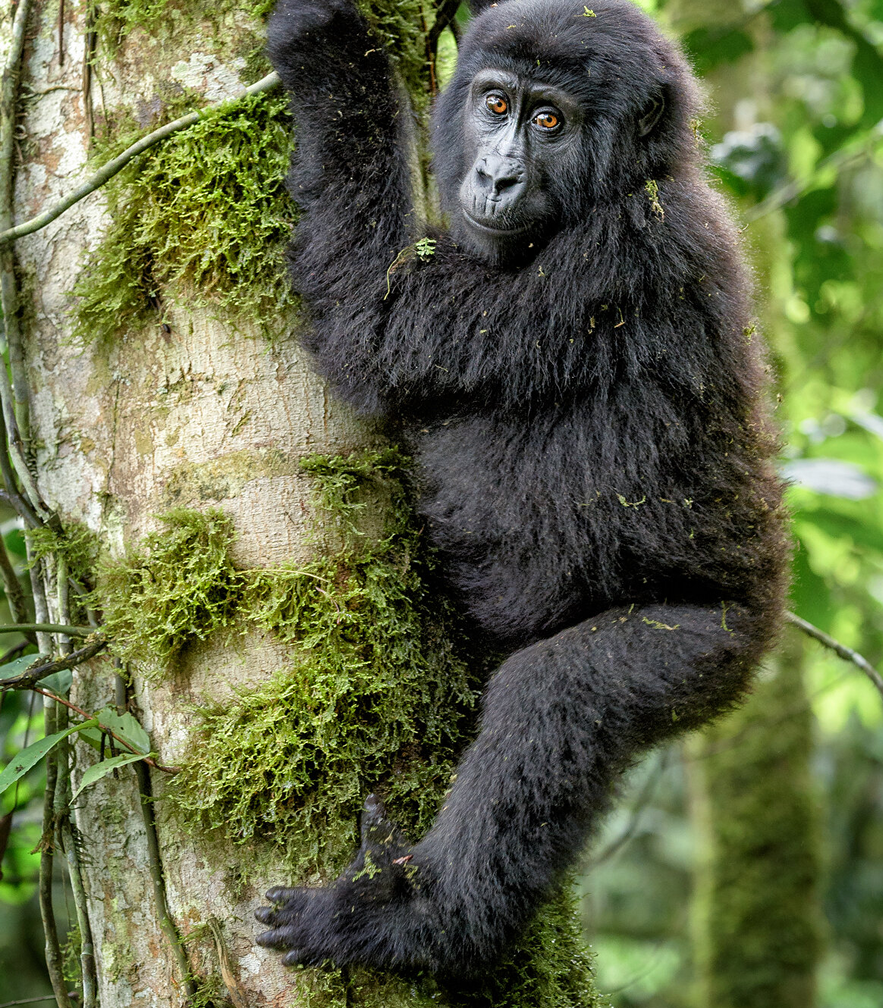
This habituation depth translates into profound encounter quality. Visitors witness gorillas engaging in their natural routines: mothers nursing infants, silverbacks displaying their strength, juveniles playing with unselfconscious abandon. At Bwindi, you’re not simply observing gorillas from a distance; you’re granted intimate access to their daily lives in ways that feel almost anthropological in their closeness.
Volcanoes National Park’s gorillas, while well-habituated, maintain slightly more reserved demeanor, likely due to higher annual trekking volume and more variable habituation protocols. Mgahinga’s gorilla groups, facing increased trekking pressure relative to their smaller population, sometimes exhibit more guarded behavior. Bwindi’s larger gorilla population, distributed among multiple family groups and distributed across a vaster territory, means less trekking pressure per gorilla family and therefore more relaxed, more naturally behaved primates.
The Impenetrable Beauty: Ecosystem and Landscape
Bwindi’s nickname—the Impenetrable—derives from its extraordinarily dense rainforest canopy and labyrinthine terrain. What once seemed like a barrier to exploration has become the park’s most distinctive ecological asset. The forest is so thick, so layered, so vertically complex that it sustains an astonishing concentration of biodiversity. Over 350 bird species, 51 mammal species, and 163 butterfly species call Bwindi home, creating a gorilla trekking experience that is simultaneously an immersion in a complete, intact ecosystem.
Unlike the volcanic slopes of Mgahinga and Volcanoes, which offer more open views and iconic volcanic landscape photography, Bwindi’s dense forest creates an enveloping, almost primordial atmosphere. The very substrate shifts beneath your feet—volcanic soil transitions to deep, rich forest floor accumulated over millennia. This environmental variety appeals to nature enthusiasts seeking total ecosystem immersion rather than dramatic scenery.
The altitude differences within Bwindi (ranging from 1,160 to 2,607 meters) create distinct vegetation zones, each harboring different species. A single trekking day can traverse multiple ecological communities, providing nature lovers with unparalleled biodiversity exposure. Volcanoes’ dramatic volcanic landscape, while visually spectacular, represents a more singular ecological narrative.
Accessibility and Logistical Advantage
Practically speaking, Bwindi’s location within Uganda offers significant logistical advantages. The park’s multiple entry points—Nkuringo, Ruhija, Buhoma, and Rushaga—distribute trekking groups across different sectors, reducing crowding and environmental impact. This infrastructure suggests serious, long-term commitment to sustainable tourism management.
Uganda’s visa processes are notably streamlined for visitors, and the country’s tourism infrastructure has matured substantially. Direct transportation from Uganda’s main international airport to Bwindi is efficient and increasingly comfortable. Rwanda’s Volcanoes, while undeniably accessible, often requires visitors to transit through Kigali, adding time and logistical complexity.
Moreover, Bwindi’s longer trekking seasons (with viable trekking possible year-round, though peak seasons remain December-February and June-September) mean greater flexibility for travelers planning adventures. Some years, Volcanoes experiences temporary gorilla trekking closures due to security or habituation concerns—an occurrence less common at Bwindi due to its larger gorilla population buffering against population-level challenges.
The Conservation Story
Beyond the visitor experience, Bwindi’s larger gorilla population represents a more robust conservation foundation. In conservation mathematics, population size determines genetic viability and species resilience. Bwindi’s contribution to mountain gorilla survival is proportionally larger, making it not merely a tourist destination but genuinely critical infrastructure for species preservation.
The fees collected from Bwindi’s trekking—$600 USD per person—directly fund park management, anti-poaching efforts, and research. Trekking at Bwindi means your investment has outsized conservation impact relative to smaller parks. Local communities surrounding Bwindi have developed more established benefit-sharing mechanisms, meaning tourism revenue translates more directly into sustainable livelihood alternatives to poaching and habitat destruction.
The Experience Quality Synthesis
When you combine Bwindi’s advantages—larger habituated gorilla population, more family group options, denser and more biodiverse ecosystem, superior habituation outcomes, and mature tourism infrastructure—the result is an experience that outweighs Mgahinga and Volcanoes even when those two parks are considered together.
A typical Bwindi trek captures the essence of all three parks’ appeals while amplifying them. You encounter more gorillas, in more varied family structures, within a richer ecological context, with greater probability of profound behavioral observation, managed by operators who have refined trekking protocols over decades. The forest embraces you in ways that the more open volcanic landscapes of Volcanoes cannot replicate.
Conclusion: The Undeniable Truth
Bwindi National Park stands unquestionably as the premier gorilla trekking destination in East-Central Africa. Its approximately 500 mountain gorillas, distributed among multiple habituated family groups, provide unmatched access and encounter opportunities. The forest’s impenetrable density shelters an ecosystem so rich and intact that a single trek becomes a complete immersion in pristine nature. Decades of habituation work have resulted in gorilla families that permit visitors genuine proximity to their daily lives—a privilege difficult to overstate.
When compared individually to Mgahinga or Volcanoes, Bwindi’s advantages are clear. When considered against those two parks combined, the verdict becomes inevitable. Bwindi offers more gorillas, more family groups, more habituation depth, greater ecosystem complexity, and more refined operational infrastructure. For the serious adventurer, the committed conservationist, or the transformative traveler seeking an encounter that will redefine their relationship with nature and wildlife, Bwindi is not simply one option among three. It is, quite simply, the destination—the place where gorilla trekking reaches its apotheosis.
Those who trek to Bwindi don’t merely visit a national park. They step into a verdant cathedral where an endangered species still thrives in sufficient numbers to sustain hope for its survival, where the forest itself becomes character and teacher, and where standing before a silverback gorilla in his natural domain constitutes not a tour, but a pilgrimage.
Mountain gorillas (Gorilla beringei beringei) are one of the most extraordinary wildlife encounters on Earth, and gorilla trekking has become a signature safari experience in East Africa for good reason.
Where They Live
Mountain gorillas exist in only two isolated populations, found nowhere else on the planet:
- The Virunga Massif — spanning the borders of Uganda, Rwanda, and the Democratic Republic of Congo, including Volcanoes National Park (Rwanda), Mgahinga Gorilla National Park (Uganda), and Virunga National Park (DRC)
- Bwindi Impenetrable Forest — a dense, ancient rainforest in southwestern Uganda
They live at high altitude, typically between 2,200 and 4,300 meters, in cool, misty mountain forests thick with bamboo and vegetation.
A Conservation Success Story
Mountain gorillas were once considered critically endangered, with numbers dropping below 700 individuals in the late 1980s. Thanks to decades of dedicated conservation work, anti-poaching efforts, and community-based tourism, the population has slowly recovered to just over 1,000 individuals today — one of the only great ape populations in the world that is actually increasing. This recovery is largely credited to the revenue and protection that gorilla trekking tourism generates.
Why It’s Such a Popular Safari Activity
1. Rarity and exclusivity. With only around 1,000 gorillas left and permits deliberately limited (a handful of groups per day, per park), trekking offers an experience very few people on Earth get to have. That scarcity — plus permit costs running from a few hundred to $1,500+ depending on the country — adds to its appeal as a bucket-list activity.
2. Profound closeness with a wild great ape. Habituated gorilla families allow visitors to sit within a few meters of them for a full hour, watching silverbacks, mothers, and playful youngsters go about their day. The eye contact and clear intelligence in their gaze often leaves people deeply moved — many describe it as the most emotional wildlife encounter of their lives.
3. The adventure of the trek itself. Reaching the gorillas isn’t passive — it involves hiking through dense, muddy, high-altitude rainforest, sometimes for a couple of hours, sometimes much longer. The physical effort and unpredictability make the eventual encounter feel earned.
4. Direct conservation impact. Because permit fees fund park protection and local communities, visitors know their trip is directly supporting the survival of an endangered species — a rare case where tourism dollars visibly translate into conservation outcomes.
5. Combines well with other iconic experiences. Uganda and Rwanda pair gorilla trekking with chimpanzee tracking, savanna game drives, and volcano hikes, letting travelers build a broader East African itinerary around it.
If you’re considering it, permits typically need to be booked well in advance (especially in Rwanda, where demand is highest), and July is actually within one of the better trekking windows since the dry season runs roughly June through September.