
Big Game Safaris in Uganda & Rwanda
East Africa’s Great Lakes region is one of the few places on earth where a traveller can, within the space of a single trip, watch lions stalk across open grassland in the morning and sit a few metres from a family of mountain gorillas in misty highland forest a few days later. Uganda and Rwanda, though small compared to their savannah-famous neighbours Kenya and Tanzania, pack an extraordinary range of ecosystems into compact territory — from the flat, acacia-studded plains of the Rift Valley floor to the volcanic peaks of the Virunga range. Understanding how the “big game” savannah safari and the gorilla trek fit together is really a story about geology, altitude, and vegetation as much as it is about wildlife.
The Gorilla Highlands: A Different World Next Door
The savannah parks sit at relatively low altitude — Murchison and Queen Elizabeth are largely below 1,200 metres — with warm temperatures and grassland or woodland vegetation that suits grazing and browsing herbivores and their predators. Mountain gorillas need almost the opposite conditions. They live in dense, high-altitude montane and bamboo forest, generally between 1,900 and 3,400 metres, on the slopes of extinct and dormant volcanoes where cool temperatures, heavy rainfall, and thick vegetation cover create a completely different habitat.
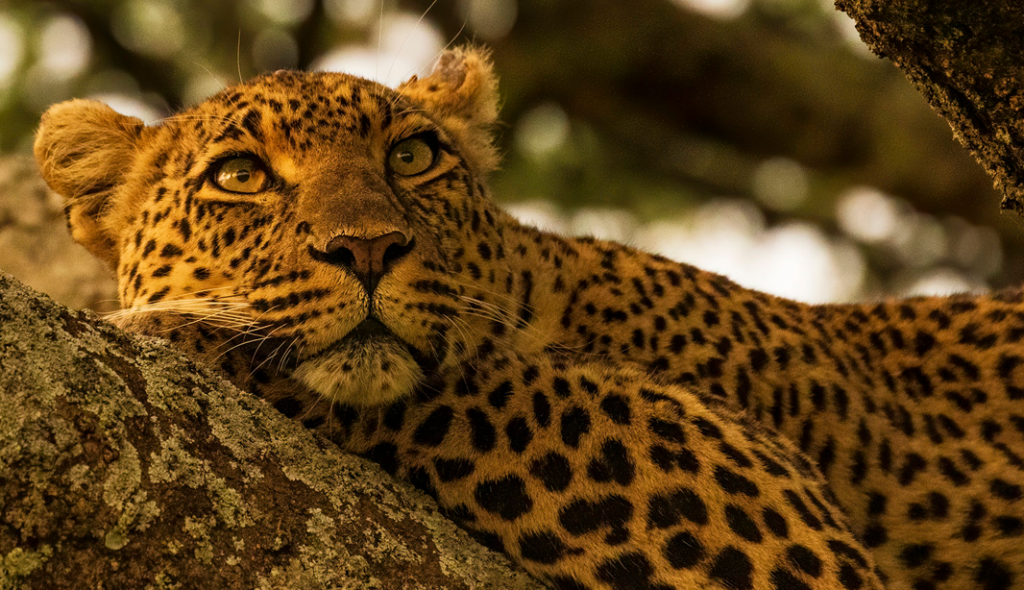
Combine Wildlife Safaris! with Gorilla trekking
Volcanoes National Park in Rwanda, Bwindi Forest and Mgahinga National Park of Uganda are centers for Gorilla Tours. These can be combined with Savannah National Parks of Akagera in Rwanda, Queen Elizabeth and Kibale forest in Uganda.
How the Two Experiences Relate
The relationship between savannah safari and gorilla trek is best understood as complementary rather than competing — they showcase different faces of the same broader ecosystem of the Albertine Rift, and most well-designed itineraries deliberately combine them.
Geographic proximity makes combination easy. In Uganda, Queen Elizabeth National Park and Bwindi are only a few hours’ drive apart, so it’s entirely standard to spend three or four days doing game drives and boat cruises in Queen Elizabeth, then continue south to trek gorillas in Bwindi before looping back out via Lake Bunyonyi or crossing into Rwanda. In Rwanda, Akagera in the east and Volcanoes National Park in the northwest are further apart (roughly a full day’s drive across the country, or a short domestic flight), but Rwanda’s small size and excellent roads still make a savannah-plus-gorillas itinerary of six to eight days entirely comfortable, often bookended by time in Kigali.
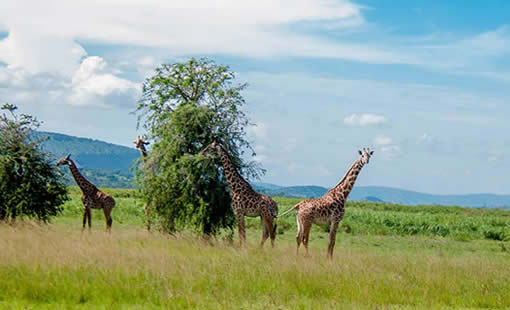
3-day / 2-night Akagera safari
Explore Rwanda’s only Big Five park on a 3-day Akagera safari. Game drives, Lake Ihema boat trip & nights at Ruzizi Tented Lodge. Book your wildlife tour today
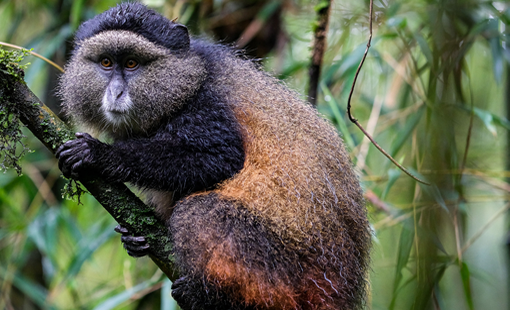
4 Days /3 nights at Nyungwe
Explore Nyungwe National Park in 4 days: chimpanzee trekking, the East African canopy walkway, colobus monkeys & Kamiranzovu Swamp. Book with Adventure Gorilla Safaris
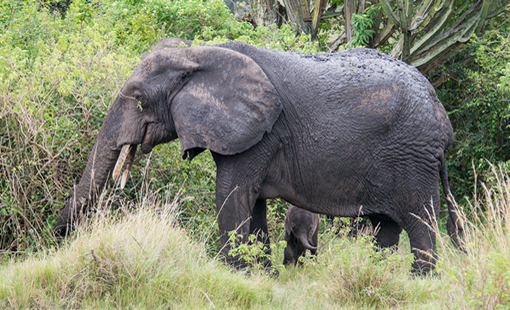
6-Day Rwanda Safari
Trek chimpanzees in Nyungwe Forest and mountain gorillas in Volcanoes National Park on this 6-day Rwanda safari. Canopy walkway, golden monkeys, midrange lodges
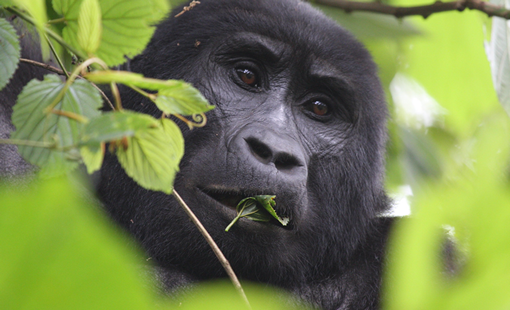
7-Day Rwanda Safari Itinerary
A 7-day Rwanda loop from Kigali: chimp trekking in Nyungwe, relaxing on Lake Kivu, and a mountain gorilla trek in Volcanoes NP. Day-by-day itinerary, permits & tips
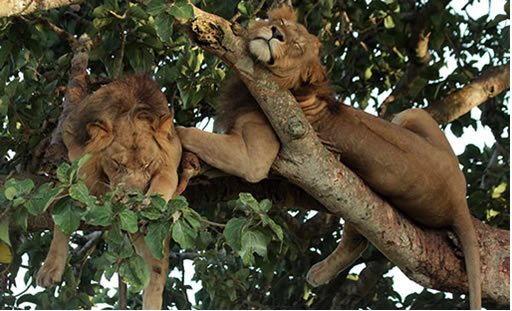
14-Day Rwanda & Uganda
Explore the best of Rwanda and Uganda in 14 days: gorilla trekking in Bwindi, chimpanzees in Nyungwe & Kibale, golden monkeys, and game drives in Queen Elizabeth NP.
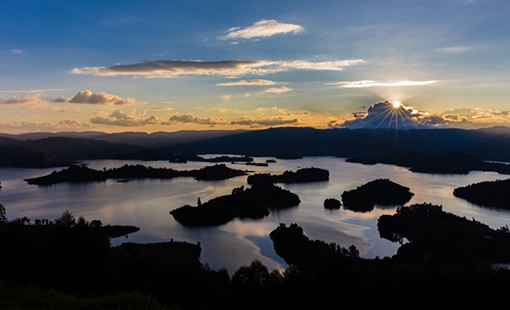
5-Day Budget Safari
Track golden monkeys in Volcanoes NP, trek gorillas in Mgahinga, and unwind at Lake Bunyonyi — a 5-day budget-friendly Rwanda-Uganda safari loop from Kigal
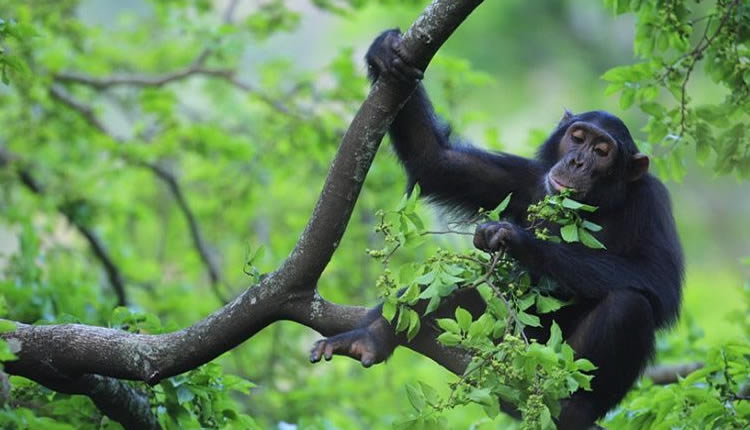
In short, the savannah plains and the gorilla forests of Uganda and Rwanda are not separate attractions competing for a traveller’s time, but two halves of a single ecological and economic story: the open grasslands supply the classic African wildlife spectacle, the volcanic highlands supply something rarer and more intimate, and the tourism revenue from both is what keeps this densely populated, historically pressured region able to sustain wildlife at all.
The Savannah Plains: Uganda's Big Game Heartland
Uganda’s savannah wildlife is concentrated in the western and northern rift valley parks, where the land drops from the cool highlands into hot, dry lowlands studded with acacia, euphorbia, and open grassland.
Queen Elizabeth National Park, straddling the equator in the southwest, is Uganda’s most visited savannah reserve. Its Kasenyi Plains and Ishasha sector support large herds of Ugandan kob, buffalo, elephant, and topi, along with hippo-choked channels like the Kazinga Channel connecting Lakes Edward and George. Ishasha is famous specifically for tree-climbing lions, a curious regional behaviour where entire prides drape themselves along the low branches of fig trees during the heat of the day — a spectacle found in only a couple of places in Africa.
Murchison Falls National Park, Uganda’s largest protected area, sits along the Victoria Nile as it thunders through a narrow gorge before opening into broad savannah on both banks. It holds Uganda’s densest lion populations, along with giraffe (the localised Rothschild’s subspecies), elephant, buffalo, and large numbers of Nile crocodile downstream of the falls. Boat safaris up the Nile to the base of the falls are as central to the Murchison experience as game drives.
Kidepo Valley National Park, tucked into Uganda’s remote northeastern corner against the Karamoja and South Sudan borders, is widely regarded by safari specialists as one of Africa’s most scenic and least-visited parks. Its wide valleys support cheetah, lion, and species found nowhere else in Uganda, such as greater and lesser kudu, ostrich, and bat-eared fox — animals more typical of the arid Horn of Africa than the wetter parks further south.
Rwanda’s savannah offering is smaller but has been rebuilt into a conservation success story. Akagera National Park, along the Tanzanian border in the east, was heavily degraded by encroachment and poaching after the 1994 genocide, when returning refugees settled much of the park. A partnership between the Rwanda Development Board and African Parks from 2010 onward reintroduced lions in 2015 and eastern black rhino in 2017, restoring Akagera to a genuine Big Five destination — the only one in Rwanda. Its landscape of savannah, papyrus swamp, and lake shoreline now supports healthy populations of elephant, buffalo, giraffe, zebra, and a wide range of antelope, alongside boat trips on Lake Ihema for hippo and crocodile.
About our safaris
Go gorilla trekking in Rwanda and Uganda in Volcanoes National Park and Bwindi Impenetrable forest. Combine Gorilla tours with widllife and primates safaris – Chimps and Golden Monkey tracking.
Featured Safari Experiences
Most Recent Posts
- All Post
- Gorilla Habituation
- Mountain Gorilla Trekking
- Primate-tracking opportunities
- safari destinations
- Tailor-made Safaris
- Wildlife Tours