The Great Wildebeest Migration & Gorilla Trekking: Combined Serengeti–Rwanda Safaris
Wildebeest Migration & Gorilla Tours, combine Serengeti with mountain gorilla trek in Rwanda or Uganda. Tailor-made safaris, expert guides. The Great Migration is one of the planet’s most spectacular wildlife events: roughly 1.5 to 2 million wildebeest, joined by around 400,000 zebra and hundreds of thousands of gazelle, moving in a continuous, roughly circular route through the Serengeti-Mara ecosystem in search of fresh grass and water. It isn’t a single event but a year-round cycle driven by rainfall patterns across Tanzania and Kenya, and it’s often described as a living, breathing ecosystem in constant motion rather than a fixed “show.”
The cycle typically begins in the southern Serengeti and the Ndutu area, around the Ngorongoro Conservation Area, where short-grass plains fertilised by volcanic soil provide ideal calving ground. Between late January and March, an astonishing 500,000 or more wildebeest calves are born within a few short weeks, drawing predators like lions, cheetahs, and hyenas that make the most of this vulnerable, abundant prey. Watching a plain dotted with newborn calves, many just hours old, alongside opportunistic predators, is one of the migration’s most dramatic chapters.
As the southern plains dry out from around April, the herds begin moving north and west through the central Serengeti (the Seronera area) and into the Western Corridor, where they must cross the Grumeti River. This crossing, while smaller than the famous Mara River crossings, still brings tension, as the river holds large Nile crocodiles.
By June and July, the migration pushes further north, and by around July through September, the herds reach the northern Serengeti and cross into Kenya’s Maasai Mara. This is when the migration produces its most iconic imagery: mass crossings of the Mara River, where thousands of animals plunge steep banks into crocodile-infested waters in a chaotic, high-stakes scramble. These crossings are unpredictable in timing and location, but guides who track herd movement daily give visitors a strong chance of witnessing one.
From October, the herds begin drifting back south through the Mara and northern Serengeti, and by November, with the arrival of the short rains, they head back toward the southern plains to complete the cycle in time for the next calving season.
Best time to visit
There isn’t a single “best” month, since it depends on what you want to see:
- December to March — southern Serengeti/Ndutu: calving season, dense predator action, good for those wanting drama on the plains and manageable crowds.
- April to May — green season in the central and western Serengeti: lush landscapes, lower prices, fewer visitors, though rain can make roads challenging.
- June to July — herds moving north through the Western Corridor and Grumeti River crossings.
- July to September — northern Serengeti and Maasai Mara: peak season for the famous Mara River crossings; also the driest, most popular, and most expensive period, so book well ahead.
- October to November — herds moving south again, quieter but still rewarding for general game viewing.
For most first-time visitors chasing the classic river-crossing images, late July through September is the standard recommendation, while dedicated wildlife photographers often prefer February and March for the calving season’s predator interactions.
Great Migration and Gorilla Trekking
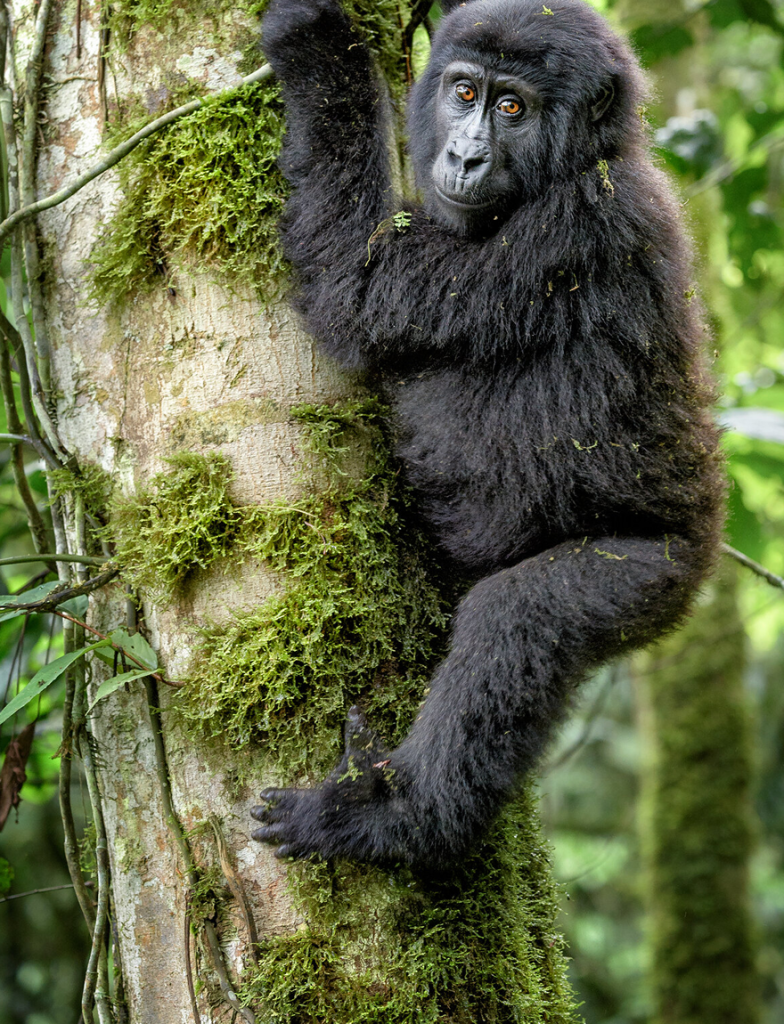
At first glance, these two experiences seem worlds apart: the Great Migration is an open-plains spectacle of vast herds in constant motion, while gorilla trekking is an intimate, on-foot encounter with a small, stationary family of mountain gorillas in dense montane forest. But together they capture two very different, complementary sides of East African wildlife tourism.
The migration takes place across the Serengeti in Tanzania and the Maasai Mara in Kenya, both classic savanna ecosystems where game drives in open vehicles let you follow herds and predators across wide horizons. Gorilla trekking, by contrast, happens in the volcanic, forested highlands of Rwanda’s Volcanoes National Park, Uganda’s Bwindi Impenetrable Forest, or the Democratic Republic of Congo’s Virunga National Park. Here, small groups hike for one to several hours through thick vegetation, guided by trackers, to spend a strictly limited hour with a habituated gorilla family.
Practically, they pair well because they don’t compete for the same travel season in the way you might expect. Gorilla trekking is possible year-round, though the driest months (June to September and December to February) offer easier hiking conditions. This overlaps neatly with the Serengeti’s dry-season migration highlights (roughly June to September), making it feasible to combine both without major seasonal compromise.
Logistically, combining them means flying between distinct hubs, typically Arusha or the Serengeti in Tanzania, and Kigali (Rwanda) or Entebbe (Uganda) for gorillas, since there’s no direct overland route connecting the parks. Regional flights and fly-in safari operators make these connections routine, and many high-end operators package both into a single multi-country trip.
A combined itinerary
A well-regarded Safari experience combining both Gorillas and wildebeest Migrations typically runs 10–14 days:
- Days 1–5: Serengeti tour, Tanzania — Fly into Kilimanjaro or Arusha, then into the Serengeti (timing chosen to match your preferred migration phase, such as northern Serengeti/Mara River crossings in July–September). Include a stop in Ngorongoro Crater en route.
- Day 6: Fly from Tanzania to Kigali, Rwanda — Typically via Nairobi or Kilimanajro to Kigali, or via Entebbe if trekking in Uganda instead.
- Days 7–9: Volcanoes National Park Gorilla trekking, Rwanda — Acclimatize, then trek for gorillas (and optionally golden monkeys) in Volcanoes National Park.
- Days 10–12 (optional Bwindi double Gorilla trekking): Bwindi, Uganda — Some itineraries add a second gorilla trek in a different park, or extend into Uganda for chimpanzee tracking in Kibale Forest.
- Departure — Fly out via Kigali or Entebbe.
Given the complexity of park permits (gorilla permits should be booked months in advance) and cross-border logistics, this kind of trip is best arranged through a specialist East African safari operator who can sequence flights and permits correctly.
Popular safari packages to Volcanoes National Park in Rwanda:
Short Duration Packages
1-Day Gorilla Safari from Kigali The shortest option includes departing Kigali very early in the morning and getting to Volcanoes National Park. This is ideal for those with very limited time.
2-3 Day Gorilla Trekking Safari A 3-day gorilla trekking safari is a short but effective option where you arrive in Kigali, go to Volcanoes National Park, do trekking, and return. The cheapest 2-day, 1-night gorilla trekking safaris out of the Rwandan capital Kigali start at around US$2,000 per person, usually inclusive of transport from Kigali, a transfer to the trailhead, accommodations, meals and the US$1,500 trekking permit.
Medium Duration Packages
3-Day Gorilla and Golden Monkey Trekking Safari This package gives you a chance to track mountain gorillas and golden monkeys in their natural habitats.
3-Day Gorilla Trek and Dian Fossey Hike An affordable option that includes trekking the endangered mountain gorillas in Volcanoes National Park as well as hiking the Dian Fossey grave.
5-Day Rwanda Safari A 5-day Rwanda safari includes gorilla trekking, golden monkeys, and city tour.
Low Season 4-Day Package Rwanda Safari & Akagera Safari offers a Low Season 4-Day Safari & Gorilla Trekking package which includes low season discounts on accommodation and park permits, with travelers spending a minimum of two nights in Akagera or Nyungwe National Park before trekking to see mountain gorillas.
Longer/Luxury Packages
6-Night Luxury safari holiday; A 6-night luxury journey through Rwanda combines a private Akagera safari with a stay in the Volcanoes region for mountain gorilla and golden monkey trekking.
8-Day Volcanoes and Nyungwe Park Safari This safari offers the opportunity to see primates and gorillas in Volcanoes National Park as well as combine visits to Nyungwe Park.
Key Activities Included
Beyond gorilla trekking, Volcanoes National Park offers diverse adventures including golden monkey tracking through bamboo forests, volcano hiking to Mount Bisoke’s crater lake at 3,711m, and Mount Karisimbi at 4,507m.
Most packages operate year-round, though between November and May, visitors can receive a 30% discount on Rwanda gorilla trekking permits from the Rwanda Development Board.