Gorilla Trekking in Rwanda — Detailed FAQ
Volcanoes National Park, Musanze/Kinigi
Cost & Permits
How much is a gorilla permit in 2026?
- Foreign non-residents: USD 1,500 per person, per trek
- Foreign residents of Rwanda: USD 500
- East African Community citizens / residents: USD 200
- Set by the Rwanda Development Board (RDB), the same price at every licensed operator — no operator can legally discount the permit itself.
What does the permit actually include?
- Park entrance fees
- Professional trackers who locate the gorilla family that morning
- Armed park rangers who accompany the group for safety
- One hour with a habituated gorilla family
- A contribution to conservation, anti-poaching patrols, and the community revenue-sharing scheme (funds local schools and clinics)
What’s NOT included?
- Transport to/from the park
- Accommodation and meals
- Porter fees (~$15–20, highly recommended even if you’re fit — it also supports the local community)
- Tips for guides, trackers, and porters
Are there discounts? Rwanda has offered a low-season discount (roughly 30% off, bringing the price to ~$1,050) for travelers who pre-book at least two nights combined in Akagera and/or Nyungwe National Park, typically during the November–May low season. Terms change year to year, so confirm current availability with RDB or your operator before counting on it.
How far ahead do I need to book? Only 96 permits are issued per day (12 habituated families × 8 people). Book 3–6 months ahead for most dates, and 9–12 months ahead if you want peak season (June–September, December–February) or a specific date/family.
Are permits refundable if I cancel or don’t show up? No — permits are non-refundable regardless of reason, including illness on the day.
Booking
How do I book a permit? Either directly through the Rwanda Development Board (via the Irembo platform) or through a licensed tour operator, who will typically also arrange transport, lodging, and guiding. Most independent travelers still use an operator since permits sell out fast and paperwork (passport copies, full names) needs to match exactly.
What details do I need to provide? Full legal name (matching your passport), nationality, and a copy of your passport.
Who Can Go
Minimum age? 15 years old — strictly enforced across Rwanda, Uganda, and DRC by mutual agreement.
Any upper age limit or fitness requirement? No upper age limit, but it’s physically demanding: hiking at altitude (around 2,500–4,000m) on uneven, sometimes muddy volcanic terrain. Trek length varies from under an hour to several hours depending on where the gorillas are that day. Rangers do try to match less mobile visitors with closer-ranging families.
Can I go if I’m sick? No. Gorillas are highly susceptible to human respiratory illnesses. If you have a cold, flu, or other contagious illness, you’ll be asked not to trek (for the gorillas’ protection, not just yours).
The Trek Itself
What does the day look like?
- Early morning briefing at park headquarters (Kinigi), around 7 AM
- Rangers assign your group to one of the habituated families based on fitness level
- Hike into the forest with trackers and armed guides — anywhere from under an hour to several hours each way
- Once located, exactly one hour with the gorilla family
- Hike back out
How close can I get to the gorillas? Park rules require maintaining roughly 7 meters (about 22 feet) distance, though gorillas sometimes approach visitors closer on their own.
What are the rules during the encounter?
- No flash photography
- Keep voices low
- No eating, drinking, or smoking near the gorillas
- Stay with your group and follow ranger instructions at all times
Practical Prep
Best time to visit? Dry seasons offer easier trekking conditions: June–September (long dry season) and December–February (short dry season). Rain is possible year-round in this rainforest environment regardless of season.
What should I pack?
- Sturdy waterproof hiking boots
- Long sleeves/pants (stinging nettles and thick vegetation)
- Gardening gloves (for gripping vegetation on steep sections)
- Rain jacket, even in dry season
- Water and snacks
- Cash for porter fees and tips
Should I hire a porter? Widely recommended even for fit travellers — it directly supports the local community, and porters are experienced with the terrain.
Rwanda vs. Uganda (Quick Comparison)
| Rwanda | Uganda | |
|---|---|---|
| Permit cost (foreign non-resident) | $1,500 | $800 |
| Distance from the capital | ~2–3 hrs from Kigali | Often requires a longer drive or a domestic flight to Bwindi |
| Terrain | Generally more open, considered slightly easier | Denser, often steeper |
Rwanda trades a higher permit price for shorter travel time, generally easier terrain, and more polished lodge infrastructure near the park.
Prices and policies are set by the Rwanda Development Board and can change; confirm current rates directly with RDB or a licensed operator before booking.
Mountain gorillas (Gorilla beringei beringei) are one of the most extraordinary wildlife encounters on Earth, and gorilla trekking has become a signature safari experience in East Africa for good reason.
Where They Live
Mountain gorillas exist in only two isolated populations, found nowhere else on the planet:
- The Virunga Massif — spanning the borders of Uganda, Rwanda, and the Democratic Republic of Congo, including Volcanoes National Park (Rwanda), Mgahinga Gorilla National Park (Uganda), and Virunga National Park (DRC)
- Bwindi Impenetrable Forest — a dense, ancient rainforest in southwestern Uganda
They live at high altitude, typically between 2,200 and 4,300 meters, in cool, misty mountain forests thick with bamboo and vegetation.
A Conservation Success Story
Mountain gorillas were once considered critically endangered, with numbers dropping below 700 individuals in the late 1980s. Thanks to decades of dedicated conservation work, anti-poaching efforts, and community-based tourism, the population has slowly recovered to just over 1,000 individuals today — one of the only great ape populations in the world that is actually increasing. This recovery is largely credited to the revenue and protection that gorilla trekking tourism generates.
Why It’s Such a Popular Safari Activity
1. Rarity and exclusivity. With only around 1,000 gorillas left and permits deliberately limited (a handful of groups per day, per park), trekking offers an experience very few people on Earth get to have. That scarcity — plus permit costs running from a few hundred to $1,500+ depending on the country — adds to its appeal as a bucket-list activity.
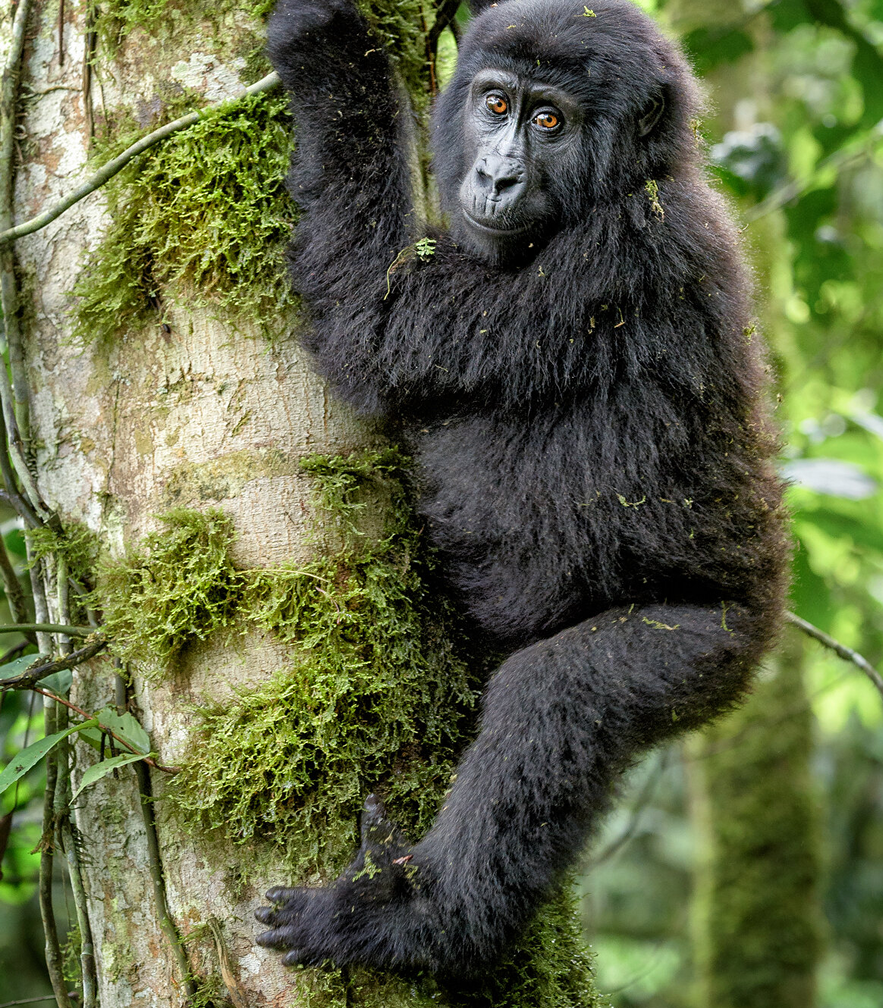
2. Profound closeness with a wild great ape. Habituated gorilla families allow visitors to sit within a few meters of them for a full hour, watching silverbacks, mothers, and playful youngsters go about their day. The eye contact and clear intelligence in their gaze often leaves people deeply moved — many describe it as the most emotional wildlife encounter of their lives.
3. The adventure of the trek itself. Reaching the gorillas isn’t passive — it involves hiking through dense, muddy, high-altitude rainforest, sometimes for a couple of hours, sometimes much longer. The physical effort and unpredictability make the eventual encounter feel earned.
4. Direct conservation impact. Because permit fees fund park protection and local communities, visitors know their trip is directly supporting the survival of an endangered species — a rare case where tourism dollars visibly translate into conservation outcomes.
5. Combines well with other iconic experiences. Uganda and Rwanda pair gorilla trekking with chimpanzee tracking, savanna game drives, and volcano hikes, letting travelers build a broader East African itinerary around it.
If you’re considering it, permits typically need to be booked well in advance (especially in Rwanda, where demand is highest), and July is actually within one of the better trekking windows since the dry season runs roughly June through September.