
The Kigali Genocide Memorial: History, Meaning, and the Daily Ritual of the Tour
The Kigali Genocide Memorial sits on a hillside in Gisozi, on the northern edge of Rwanda’s capital, a short drive from the city centre. It is at once a cemetery, a museum, and a place of active national memory. More than 250,000 victims of the 1994 genocide are buried in mass graves here, making it the largest single burial site connected to the genocide anywhere in the country. The ground was chosen by Kigali’s authorities as a hillside resting-place for city residents murdered during the genocide, after the killing was stopped by the Rwandan Patriotic Front in 1994. What makes this site unusual, though, is that it is not sealed off in the past. Every day, buses and taxis pull up outside its gates, and small groups of visitors — students, diplomats, backpackers, grieving relatives — walk the same paths, guided by people who often survived the very events being described. The memorial’s history and its daily tour life are inseparable; understanding one requires understanding the other.
Origins and construction
Work on the site began in earnest at the end of the 1990s. The memorial on the hill of Gisozi was built in 1999, initially as a place to gather and bury remains, before the full memorial centre and exhibition halls were added around it. Construction of the memorial centre itself began in 2000 with support from the Aegis Trust, a UK-founded organisation dedicated to preventing genocide worldwide. The Aegis Trust manages the Kigali Genocide Memorial and has developed it alongside an associated school of education, and today it continues to run the site on behalf of the National Commission for the Fight Against Genocide.
The memorial centre itself was formally opened in April 2004, timed to coincide with a solemn anniversary. It was inaugurated on the tenth anniversary of the genocide, and the response from survivors was immediate and overwhelming — in its first week, more than 1,500 survivors visited each day, and within its first three months, around 60,000 people from many backgrounds came through, over 7,000 of them from the international community. That early surge established a pattern that continues today: the memorial was never meant to be a static exhibit visited occasionally, but a living site meant for daily, sustained public engagement.
What the memorial contains — and what a tour actually walks through
A typical guided tour follows the exhibition’s own structure, moving visitors through Rwanda’s history before, during, and after 1994. Its three narrative sections outline Rwandan history before the genocide, the events of the genocide itself, and the country’s subsequent journey of justice, reconciliation, and renewal, with a central reflective space containing sculptures inspired by different aspects of the genocide experience, alongside artefacts, photographs of victims, and video testimony from eyewitnesses. Unlike some comparable memorial sites elsewhere in the world, the Rwandan approach does not shy away from physical evidence: the centre includes human remains along with the tools and weapons used in the killings, a stark rebuttal to the genocide’s deniers. Guides are trained to pace this section carefully, since it is often the point where first-time visitors go quiet.
One of the most affecting stops on any tour is the children’s room. It displays life-sized photographs of young victims alongside intimate details — their favourite toys, their last words, and the manner in which each child was killed. The intent is to move visitors from abstract statistics toward individual human loss, and by most accounts, it succeeds painfully well. Guides frequently mention that this room, more than any statistic quoted earlier in the tour, is what visitors bring up afterwards in conversation.
A further section situates the Rwandan genocide within a wider global history of atrocity. There is an exhibition on the history of genocidal violence around the world, drawing comparisons with sites in Germany, Japan, Cambodia, and Bosnia. This comparative framing is deliberate: the memorial’s designers wanted visitors to understand that what happened in Rwanda was not an isolated tribal aberration, but part of a recurring pattern of ideology, propaganda, and mass violence that has occurred repeatedly across the twentieth century. Tour guides often use this room to open a broader discussion with visiting groups — particularly student delegations — about warning signs and prevention in their own countries.
Outside the exhibition halls, the mass graves themselves are marked by simple concrete slabs, and a Wall of Names records identified victims — though, as the memorial itself acknowledges, this wall is a work still in progress, since many victims’ names have yet to be gathered and documented and many of those resting in the graves remain unidentified. The Flame of Remembrance burns each year during the mourning period. It has been part of the memorial since its 2004 inauguration, lit on the 7th of April and burning through the hundred days of commemoration from April to July, symbolising Rwandans’ resilience in leaving genocide behind to build a shared future. Tours run through this same commemorative period at a heightened pace, with additional guides brought on to handle the surge of Rwandan and international visitors who come specifically to mark the anniversary.
More recently, the site has grown to include a large public gathering space. A 1,200-capacity amphitheatre, designed by John McAslan + Partners, opened in 2014 with support from the UK, the Netherlands, Japan, and South Korea, and now hosts commemorations, workshops, dance, theatre, film, and other cultural events, including a long-running relationship with the annual Ubumuntu Arts Festival. On non-festival days, this space often serves as a quiet endpoint for tour groups — a place to sit after the exhibition halls before returning to the gardens.
Gardens, documentation, and education
Beyond the exhibition building, the memorial gardens offer quieter, deliberately unhurried space, and most guided tours end here rather than in the exhibition itself. They are designed for reflection on the genocide’s history and on each visitor’s own responsibility to prevent discrimination and mass atrocity. Guides often give visitors ten or fifteen unstructured minutes here before regrouping — an acknowledgement that the preceding hour cannot simply be walked away from without a pause. An education centre, documentation centre, and resource library support the memorial’s role as a research and teaching institution, not simply a monument. Audiovisual and GPS-based documentation projects have recorded survivor testimony and the proceedings of the Gacaca courts, Rwanda’s community-based justice process, and the exhibitions conclude with material on the search for justice through the international tribunal in Arusha and the local Gacaca courts.
International recognition and the rhythm of daily visits
The memorial’s significance has been formally recognised beyond Rwanda’s borders. It forms part of a UNESCO World Heritage listing alongside three other genocide memorial sites — Nyamata, Murambi, and Bisesero — commemorating the roughly one million people killed across Rwanda between April and July 1994 by militias known as the Interahamwe, who targeted Tutsi but also killed moderate Hutu and Twa.
Today the memorial functions as both a national institution and a working part of daily Rwandan life, and its tour schedule reflects that dual identity. It is open seven days a week, normally from 9:00 am to 5:00 pm, with last entry at 4:00 pm, though on the last Saturday of each month it opens later, from 1:00 pm to 5:00 pm, to accommodate Umuganda, the country’s monthly community work day — a small but telling sign that the memorial’s rhythms are set by Rwandan civic life first, tourism second. Many of its guides are themselves survivors of the genocide, which gives tours a weight and immediacy that written text alone cannot convey; a guide will sometimes pause mid-explanation to note, quietly, that a particular event happened to their own family. Entry is free, though visitors are asked to be respectful in dress and behaviour given the site’s role as a burial ground, and photography is restricted in parts of the exhibition, a rule tour guides enforce gently but firmly at each threshold.
Since its opening, the memorial has become one of the most visited sites in Rwanda and a fixture of most itineraries through Kigali — not as a tourist curiosity, but as something closer to a civic obligation for visitors seeking to understand the country. Every daily tour, in that sense, is a small repetition of the same act that drew 1,500 survivors a day in the memorial’s first week: showing up, in person, to bear witness. It stands alongside institutions like the Gacaca courts and Rwanda’s national policy of commemoration as part of a deliberate, ongoing project — one carried forward, tour by tour, day after day: turning an unbearable history into a tool for education, prevention, and, eventually, a shared national future.
Popular safari packages to Volcanoes National Park in Rwanda:
Short Duration Packages
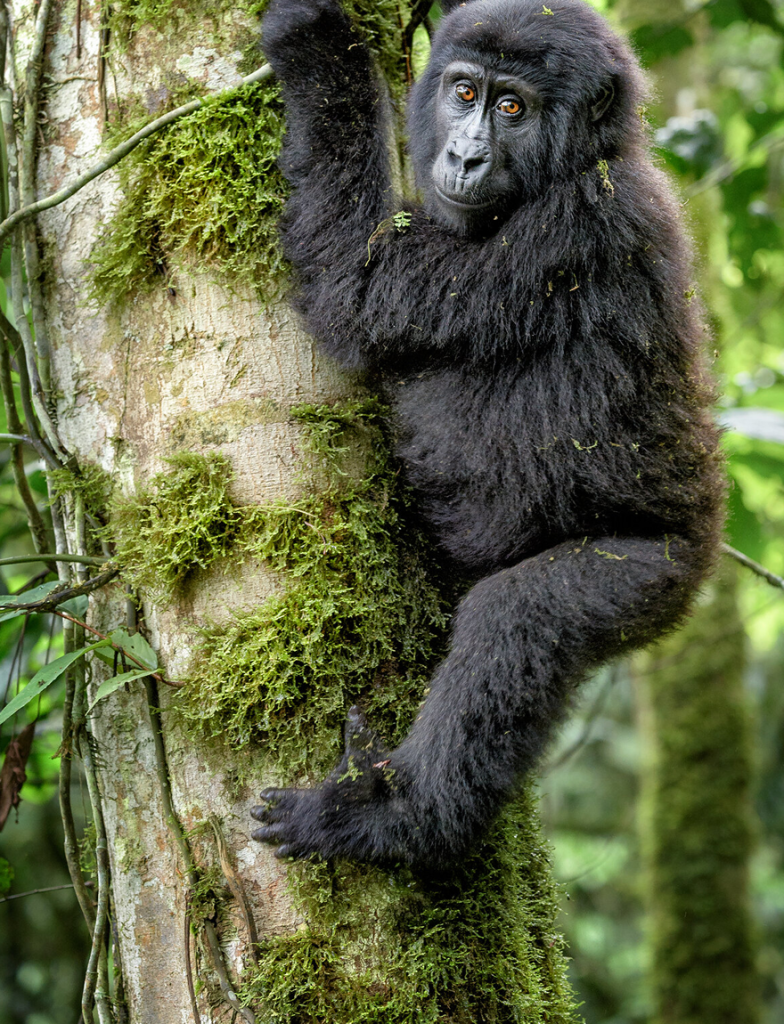
1-Day Gorilla Safari from Kigali The shortest option includes departing Kigali very early in the morning and getting to Volcanoes National Park. This is ideal for those with very limited time.
2-3 Day Gorilla Trekking Safari A 3-day gorilla trekking safari is a short but effective option where you arrive in Kigali, go to Volcanoes National Park, do trekking, and return. The cheapest 2-day, 1-night gorilla trekking safaris out of the Rwandan capital Kigali start at around US$2,000 per person, usually inclusive of transport from Kigali, a transfer to the trailhead, accommodations, meals and the US$1,500 trekking permit.
Medium Duration Packages
3-Day Gorilla and Golden Monkey Trekking Safari This package gives you a chance to track mountain gorillas and golden monkeys in their natural habitats.
3-Day Gorilla Trek and Dian Fossey Hike An affordable option that includes trekking the endangered mountain gorillas in Volcanoes National Park as well as hiking the Dian Fossey grave.
5-Day Rwanda Safari A 5-day Rwanda safari includes gorilla trekking, golden monkeys, and city tour.
Low Season 4-Day Package Rwanda Safari & Akagera Safari offers a Low Season 4-Day Safari & Gorilla Trekking package which includes low season discounts on accommodation and park permits, with travelers spending a minimum of two nights in Akagera or Nyungwe National Park before trekking to see mountain gorillas.
Longer/Luxury Packages
6-Night Luxury safari holiday; A 6-night luxury journey through Rwanda combines a private Akagera safari with a stay in the Volcanoes region for mountain gorilla and golden monkey trekking.
8-Day Volcanoes and Nyungwe Park Safari This safari offers the opportunity to see primates and gorillas in Volcanoes National Park as well as combine visits to Nyungwe Park.
Key Activities Included
Beyond gorilla trekking, Volcanoes National Park offers diverse adventures including golden monkey tracking through bamboo forests, volcano hiking to Mount Bisoke’s crater lake at 3,711m, and Mount Karisimbi at 4,507m.
Most packages operate year-round, though between November and May, visitors can receive a 30% discount on Rwanda gorilla trekking permits from the Rwanda Development Board.