Best of Uganda in 14 Days: Gorilla Trekking, Chimps & 4 National Parks.
Lake Mburo • Bwindi Gorillas • Queen Elizabeth NP • Kibale Chimps • Murchison Falls
Style: Mid-range lodges throughout | Minimum 2 nights per destination | Private 4×4 safari vehicle with driver-guide
Route Overview
| Day | Destination | Nights |
|---|---|---|
| 1 | Entebbe / Kampala | 1 |
| 2–3 | Lake Mburo National Park | 2 |
| 4–5 | Bwindi Impenetrable National Park | 2 |
| 6–8 | Queen Elizabeth National Park (Ishasha + Mweya/Kazinga) | 3 |
| 9–10 | Kibale Forest National Park | 2 |
| 11–13 | Murchison Falls National Park | 3 |
| 14 | Return to Kampala / Entebbe – Departure | – |
Total: 13 nights / 14 days
Day-by-Day Itinerary
Day 1 — Arrival in Entebbe / Kampala
Arrive at Entebbe International Airport, where your driver-guide meets you and transfers you to your lodge for a relaxed first night. Optional afternoon visit to the Uganda Wildlife Education Centre or a stroll along Lake Victoria’s shoreline. Lodge (mid-range): Boma Guesthouse, Karibu Guest House, or 2 Friends Beach Hotel (Entebbe)
Day 2 — Kampala/Entebbe to Lake Mburo National Park
Depart after breakfast for the roughly 4–5 hour drive southwest to Lake Mburo, Uganda’s smallest savanna park, known for zebra, eland, impala, and its absence of dangerous predators (safe for walking safaris). Arrive in time for an afternoon boat cruise on Lake Mburo, spotting hippos, crocodiles, and water birds. Lodge (mid-range): Rwakobo Rock or Mihingo Lodge
Day 3 — Lake Mburo National Park
Full day in the park. Morning game drive in search of zebra, buffalo, topi, impala, and elusive leopard. Optional horseback safari or guided nature walk/game walk with a ranger in the afternoon — one of the few parks in Uganda where walking among wildlife is permitted. Lodge (mid-range): Rwakobo Rock or Mihingo Lodge
Day 4 — Lake Mburo to Bwindi Impenetrable National Park
A long but scenic drive (6–8 hours) through the rolling hills of southwestern Uganda into the Kigezi highlands, arriving at Bwindi in the late afternoon. Evening at leisure to rest ahead of gorilla trekking. Lodge (mid-range): Buhoma Lodge, Engagi Lodge, or Gorilla Valley Lodge
Day 5 — Bwindi: Gorilla Trekking Day
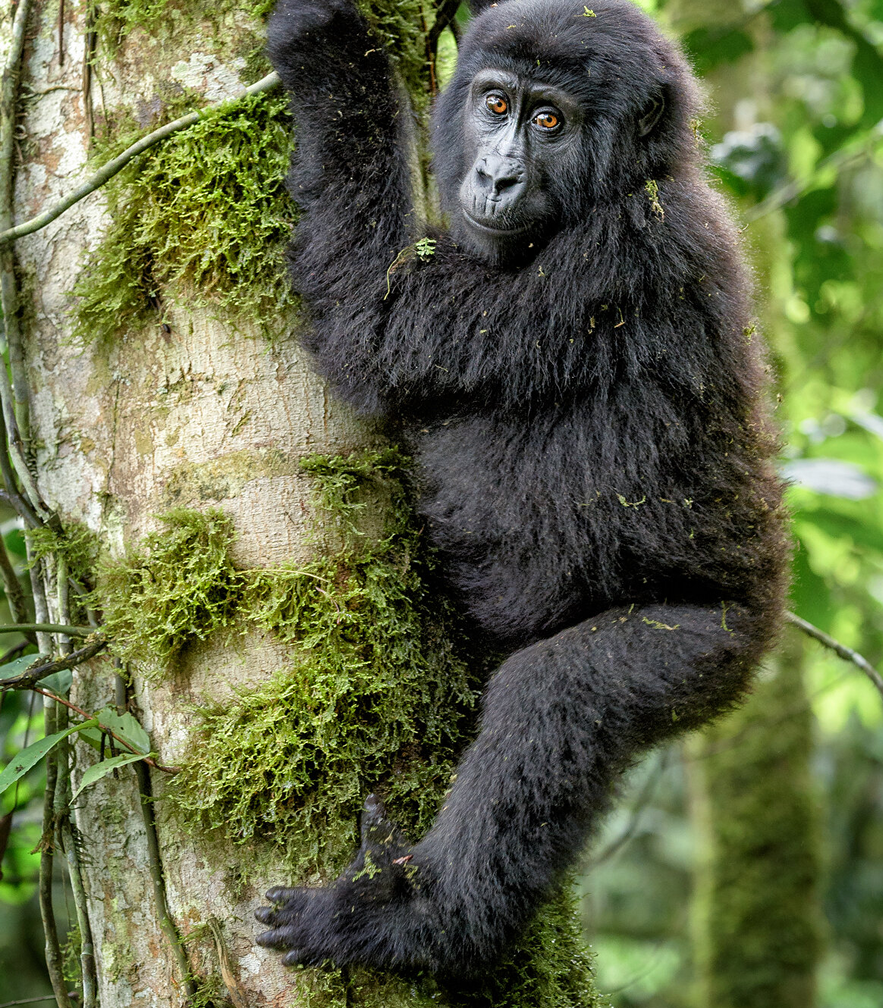
An early briefing at the park headquarters is followed by a guided trek into the forest to track a habituated mountain gorilla family, with one hour spent observing them at close range. Trek duration varies from 2–8 hours depending on the gorillas’ location. Afternoon at leisure or an optional guided Batwa cultural walk. Lodge (mid-range): Buhoma Lodge, Engagi Lodge, or Gorilla Valley Lodge
Day 6 — Bwindi to Queen Elizabeth National Park (Ishasha Sector)
Drive north through Bwindi’s forest edge into Ishasha, the remote southern sector of Queen Elizabeth NP, famous for its tree-climbing lions. Afternoon game drive in search of lions draped over the branches of fig trees. Lodge (mid-range): Ishasha Wilderness Camp
Day 7 — Ishasha to Mweya/Kazinga Channel Area
Morning game drive en route north through the park’s Kasenyi plains, then continue to the central Mweya/Kazinga area. Afternoon boat cruise on the Kazinga Channel, one of Africa’s best wildlife-viewing cruises, with large hippo pods, elephants, buffalo, and abundant birdlife along the banks. Lodge (mid-range): Bush Lodge, Enganzi Game Lodge, or Kingfisher Safari Lodge
Day 8 — Queen Elizabeth National Park — Full Day
Early morning game drive on the Kasenyi plains for lion, elephant, buffalo, hyena, and varied plains game. Optional afternoon visit to Kyambura Gorge (“Valley of the Apes”) for a chance at chimp tracking, or a relaxed second boat cruise. Lodge (mid-range): Bush Lodge, Enganzi Game Lodge, or Kingfisher Safari Lodge
Day 9 — Queen Elizabeth to Kibale Forest National Park
Drive north (roughly 2–3 hours) through the scenic Kichwamba escarpment and past tea plantations to Kibale Forest, Uganda’s premier chimpanzee-trekking destination. Afternoon at leisure to prepare for tomorrow’s trek, or an optional guided Bigodi Wetland Sanctuary walk for birdlife and primates. Lodge (mid-range): Primate Lodge Kibale or Chimpanzee Forest Guesthouse
Day 10 — Kibale Forest: Chimpanzee Trekking
Early morning briefing followed by a guided trek through Kibale’s forest in search of one of its habituated chimpanzee communities, spending roughly one hour observing them once located. Kibale has one of the highest chimp-sighting success rates in Africa. Afternoon Bigodi Wetland walk (if not done the day before) for primates, birds, and forest scenery. Lodge (mid-range): Primate Lodge Kibale or Chimpanzee Forest Guesthouse
Day 11 — Kibale to Murchison Falls National Park
A long drive (approximately 6–7 hours) north via Fort Portal and Hoima to Murchison Falls, Uganda’s largest national park, bisected by the Nile. Arrive in the late afternoon and settle into your lodge along the river. Lodge (mid-range): Fort Murchison or Pakuba Safari Lodge
Day 12 — Murchison Falls National Park
Morning game drive on the northern savanna (Buligi circuit) for lion, giraffe, elephant, buffalo, and Uganda kob. In the afternoon, take a Nile boat cruise to the base of Murchison Falls, where the Nile is forced through a narrow 7-metre gorge — one of the most dramatic sights in East Africa. Lodge (mid-range): Fort Murchison or Pakuba Safari Lodge
Day 13 — Murchison Falls National Park
Morning hike to the top of the falls for views straight down into the gorge, or a further game drive if preferred. Afternoon at leisure by the Nile, with an optional visit to the Rabongo Forest for primate walks or a relaxing sundowner cruise. Lodge (mid-range): Fort Murchison or Pakuba Safari Lodge
Day 14 — Murchison Falls to Kampala / Entebbe — Departure
After breakfast, begin the drive back to Kampala/Entebbe (approximately 5–6 hours, with a stop at the Ziwa Rhino Sanctuary possible en route for those interested in white rhino tracking). Transfer directly to the airport for your evening departure flight.
Estimated Permit Costs (2026 UWA Rates, per person)
| Permit | Foreign Non-Resident Price |
|---|---|
| Gorilla trekking permit (Bwindi) — standard/high season | US$800 |
| Gorilla trekking permit — low season (Apr, May, Nov) | US$600 |
| Chimpanzee trekking permit (Kibale) | US$250 |
| Park entrance fees (Lake Mburo, QENP, Murchison) | Typically US$40–45/day/park, usually bundled into tour pricing |
Permits are non-transferable, must be booked well in advance (3–6 months for gorillas in peak season), and require full payment at the time of booking under current UWA rules.
Mid-Range Lodge Summary
| Destination | Nights | Suggested Lodge |
|---|---|---|
| Entebbe/Kampala | 1 | Boma Guesthouse / 2 Friends Beach Hotel |
| Lake Mburo NP | 2 | Rwakobo Rock / Mihingo Lodge |
| Bwindi (Buhoma) | 2 | Buhoma Lodge / Engagi Lodge / Gorilla Valley Lodge |
| Queen Elizabeth NP (Ishasha) | 1 | Ishasha Wilderness Camp |
| Queen Elizabeth NP (Mweya/Kazinga) | 2 | Bush Lodge / Enganzi Game Lodge / Kingfisher Safari Lodge |
| Kibale Forest | 2 | Primate Lodge Kibale / Chimpanzee Forest Guesthouse |
| Murchison Falls NP | 3 | Fort Murchison / Pakuba Safari Lodge |
Mid-range lodges of this type typically run roughly on a full-board basis, though exact rates vary by season and should be reconfirmed directly with the lodge or operator.
What’s Not Included (Typically)
- International flights
- Gorilla and chimpanzee trekking permits (quoted above; usually paid separately or added to package cost)
- Visa fees (Uganda e-visa, ~US$50)
- Tips/gratuities for guides, porters, and lodge staff
- Travel insurance (highly recommended — including “cancel for any reason” cover given strict gorilla-permit rescheduling rules)
- Alcoholic beverages and items of a personal nature
Planning Notes
- Best time to travel: June–September and December–February (drier, easier roads); April, May, and November are the “green season,” with lower gorilla/chimp permit prices but wetter trails.
- Distances in Uganda are covered by road on this route; travellers short on time sometimes substitute a domestic flight (e.g., Kihihi or Kisoro to Entebbe, or Pakuba airstrip to Entebbe) to cut down driving days — let me know if you’d like a flying variation of this itinerary.
- This itinerary assumes private guided travel for 2+ people; per-person lodge and vehicle costs drop with larger groups.
All permit prices reflect Uganda Wildlife Authority rates current as of mid-2026 and are subject to change — always reconfirm with UWA or a licensed operator before booking.
Popular safari packages to Volcanoes National Park in Rwanda:
Short Duration Packages
1-Day Gorilla Safari from Kigali The shortest option includes departing Kigali very early in the morning and getting to Volcanoes National Park. This is ideal for those with very limited time.
2-3 Day Gorilla Trekking Safari A 3-day gorilla trekking safari is a short but effective option where you arrive in Kigali, go to Volcanoes National Park, do trekking, and return. The cheapest 2-day, 1-night gorilla trekking safaris out of the Rwandan capital Kigali start at around US$2,000 per person, usually inclusive of transport from Kigali, a transfer to the trailhead, accommodations, meals and the US$1,500 trekking permit.
Medium Duration Packages
3-Day Gorilla and Golden Monkey Trekking Safari This package gives you a chance to track mountain gorillas and golden monkeys in their natural habitats.
3-Day Gorilla Trek and Dian Fossey Hike An affordable option that includes trekking the endangered mountain gorillas in Volcanoes National Park as well as hiking the Dian Fossey grave.
5-Day Rwanda Safari A 5-day Rwanda safari includes gorilla trekking, golden monkeys, and city tour.
Low Season 4-Day Package Rwanda Safari & Akagera Safari offers a Low Season 4-Day Safari & Gorilla Trekking package which includes low season discounts on accommodation and park permits, with travelers spending a minimum of two nights in Akagera or Nyungwe National Park before trekking to see mountain gorillas.
Longer/Luxury Packages
6-Night Luxury safari holiday; A 6-night luxury journey through Rwanda combines a private Akagera safari with a stay in the Volcanoes region for mountain gorilla and golden monkey trekking.
8-Day Volcanoes and Nyungwe Park Safari This safari offers the opportunity to see primates and gorillas in Volcanoes National Park as well as combine visits to Nyungwe Park.
Key Activities Included
Beyond gorilla trekking, Volcanoes National Park offers diverse adventures including golden monkey tracking through bamboo forests, volcano hiking to Mount Bisoke’s crater lake at 3,711m, and Mount Karisimbi at 4,507m.
Most packages operate year-round, though between November and May, visitors can receive a 30% discount on Rwanda gorilla trekking permits from the Rwanda Development Board.