Adventure Gorilla Safaris
5-Day Kibale & Bwindi Safari: Complete Itinerary for Chimps & Mountain Gorillas
Explore Uganda’s best wildlife on this 5-day itinerary. Trek chimpanzees in Kibale, mountain gorillas in Bwindi, plus cultural experiences. Day-by-day guide & lodge recommendations.
Daily Breakdown
Day 1: Arrival & Transfer to Kibale
- Arrival: Entebbe International Airport (5-6 hour drive to Kibale)
- Route: Kampala → Fort Portal → Kibale Forest
- Lodging: Chimpanzee Forest Lodge ⭐4.7/5
- Beautiful mid-range option with spacious rooms overlooking the primary forest
- Facilities: Restaurant, bar, gardens with bird watching, WiFi
Evening activity: Settle in, enjoy dinner on your veranda, listen to night sounds.
Day 2: Chimpanzee Tracking & Wetland Walk
Morning (5:30 AM departure)
- Kibale National Park Chimpanzee Trek (3-4 hours)
- Success rate: ~95% (highest in Africa)
- Permit for each person
- Trek through the misty rainforest with expert guides
- Group size: 6 people maximum per guide
Afternoon (2:00 PM)
- Bigodi Wetland Sanctuary Walk (2-3 hours)
- Community-run wetland
- Spot primates, 200+ bird species, butterflies
- Support local conservation
Evening: Return to lodge, dinner, rest and recovery.
Day 3: Transfer to Bwindi Impenetrable Forest
- Drive time: 8-10 hours (leave early morning, ~7 AM)
- Route: Kibale → Fort Portal → Mbarara → Bwindi
- Lunch stop: Fort Portal or en route
- Arrive: Late afternoon (5:00-6:00 PM)
Lodging: Nkuringo Gorilla Lodge ⭐4.6/5
- Mid-range luxury perched on a hillside
- Spectacular panoramic views of valleys
- Facilities: Fireplace in room, private veranda, excellent restaurant
- Evening briefing: Staff prepare you for the gorilla trek logistics
Alternative options:
- Gorilla Forest Lodge (4.8/5) – Premium mid-range at Buhoma gate
- ICHUMBI Gorilla Lodge (4.6/5) – At Rushaga gate, excellent value
- Broadbill Forest Camp (4.8/5) – Remote safari tents, immersive experience
Day 4: Mountain Gorilla Trekking & Cultural Experience
Early Morning (5:30 AM)
- Gorilla Trek Briefing (30 mins at park headquarters)
- Mountain Gorilla Trek (2-7 hours depending on gorilla location)
- Permit cost: $800 USD per person (non-negotiable)
- Trek through dense vegetation, altitude 2,200-4,300m
- Groups habituated to human contact
- Once-in-a-lifetime encounter
Afternoon (2:30 PM)
- Batwa Trail Experience (2-3 hours)
- Walk with local Batwa (pygmy) guides
- Learn traditional forest knowledge and hunting techniques
- Understand indigenous conservation efforts
- Lunch with host family (optional)
Evening: Recovery time, spa services available, share stories by the fireplace.
Day 5: Return to Entebbe
- Breakfast: 7:30 AM
- Morning forest walk: Bird watching and monkey spotting around the lodge
- Departure: 9:00-10:00 AM
- Drive time: 6-7 hours to Entebbe
- Arrival: Late afternoon for evening/next-day flights
Essential Packing List
Clothing:
- Sturdy, broken-in hiking boots
- Long-sleeved shirts (sun & insect protection)
- Rain jacket and waterproof pants
- Warm layers (mornings/evenings are cool)
- Gaiters (protect from mud and insects)
- Hat and sunglasses
Gear:
- Binoculars (bird/primate watching)
- Camera with a weatherproof bag
- Backpack (20-30L)
- Insect repellent (DEET-based)
- Sunscreen (high SPF)
- First aid kit
Documents:
- Passport (valid 6+ months)
- Yellow fever vaccination (required)
- Travel insurance
- Uganda visa (if required for your nationality)
Practical Tips
✓ Best Time to Visit: June-July or December-February (dry seasons)
✓ Physical Fitness: Moderate fitness required. Gorilla trekking can be strenuous at altitude.
✓ Photography: Bring extra batteries and memory cards. WiFi limited in remote areas.
✓ Money: Uganda uses the Ugandan Shilling (UGX). ATMs available in Kampala and Fort Portal. USD is widely accepted.
✓ Transportation: Book transfers through your lodge or established tour operators. Roads are good, but journeys are long.
✓ Guides: Use registered guides only. Your lodge can arrange experienced, knowledgeable guides.
✓ Booking: Reserve permits 2-3 months in advance, especially June-August.
✓ Altitude: Bwindi reaches 4,300m. Drink plenty of water and take time acclimatising.
This itinerary offers an authentic balance of adventure, wildlife encounters, and community engagement at reasonable mid-range prices. Would you like help booking specific lodges or arranging transportation?
Mountain gorillas (Gorilla beringei beringei) are one of the most extraordinary wildlife encounters on Earth, and gorilla trekking has become a signature safari experience in East Africa for good reason.
Where They Live
Mountain gorillas exist in only two isolated populations, found nowhere else on the planet:
- The Virunga Massif — spanning the borders of Uganda, Rwanda, and the Democratic Republic of Congo, including Volcanoes National Park (Rwanda), Mgahinga Gorilla National Park (Uganda), and Virunga National Park (DRC)
- Bwindi Impenetrable Forest — a dense, ancient rainforest in southwestern Uganda
They live at high altitude, typically between 2,200 and 4,300 meters, in cool, misty mountain forests thick with bamboo and vegetation.
A Conservation Success Story
Mountain gorillas were once considered critically endangered, with numbers dropping below 700 individuals in the late 1980s. Thanks to decades of dedicated conservation work, anti-poaching efforts, and community-based tourism, the population has slowly recovered to just over 1,000 individuals today — one of the only great ape populations in the world that is actually increasing. This recovery is largely credited to the revenue and protection that gorilla trekking tourism generates.
Why It’s Such a Popular Safari Activity
1. Rarity and exclusivity. With only around 1,000 gorillas left and permits deliberately limited (a handful of groups per day, per park), trekking offers an experience very few people on Earth get to have. That scarcity — plus permit costs running from a few hundred to $1,500+ depending on the country — adds to its appeal as a bucket-list activity.
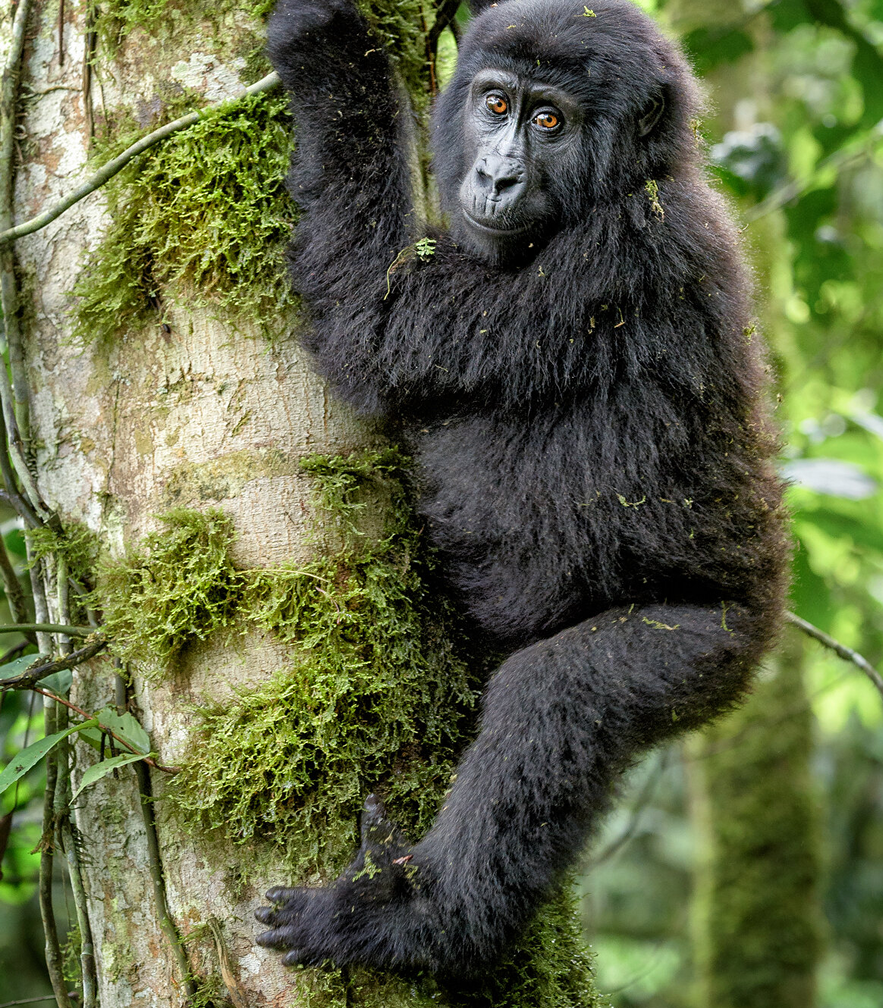
2. Profound closeness with a wild great ape. Habituated gorilla families allow visitors to sit within a few meters of them for a full hour, watching silverbacks, mothers, and playful youngsters go about their day. The eye contact and clear intelligence in their gaze often leaves people deeply moved — many describe it as the most emotional wildlife encounter of their lives.
3. The adventure of the trek itself. Reaching the gorillas isn’t passive — it involves hiking through dense, muddy, high-altitude rainforest, sometimes for a couple of hours, sometimes much longer. The physical effort and unpredictability make the eventual encounter feel earned.
4. Direct conservation impact. Because permit fees fund park protection and local communities, visitors know their trip is directly supporting the survival of an endangered species — a rare case where tourism dollars visibly translate into conservation outcomes.
5. Combines well with other iconic experiences. Uganda and Rwanda pair gorilla trekking with chimpanzee tracking, savanna game drives, and volcano hikes, letting travelers build a broader East African itinerary around it.
If you’re considering it, permits typically need to be booked well in advance (especially in Rwanda, where demand is highest), and July is actually within one of the better trekking windows since the dry season runs roughly June through September.