- admin
- July 31, 2026
- Mountain Gorilla Trekking
Gorilla Trekking Adventures
Planning a Gorilla Adventure in Rwanda or Uganda
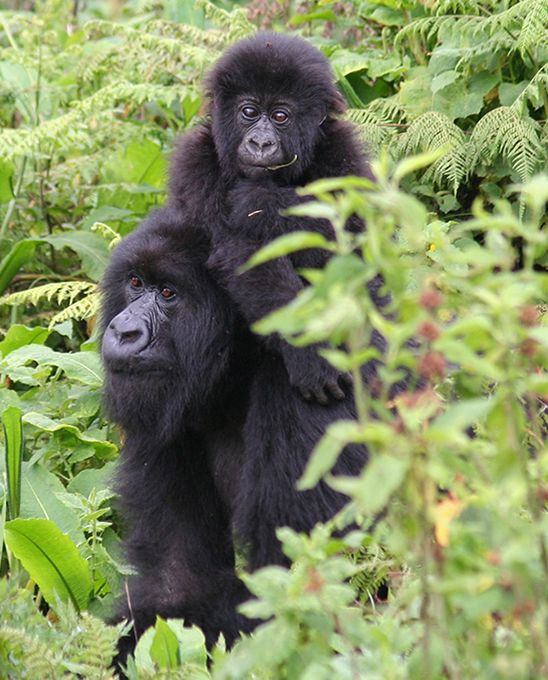
Few wildlife experiences compare to standing a few metres from a family of mountain gorillas in the misty forests of the Virunga or Bwindi highlands. It is expensive, physically demanding, and requires months of planning — but for most travellers who do it, it becomes the single most memorable day of their trip to Africa. Whether you’re drawn to classic Rwanda gorilla trekking or one of the many adventure gorilla tours through Uganda’s rainforest sectors, here is a practical guide to planning that day, choosing between the two countries, and preparing your body and your daypack for the trek itself.
Rwanda or Uganda: Weighing Safety, Budget, and Experience
Mountain gorillas survive in only three countries — Rwanda, Uganda, and the Democratic Republic of Congo (DRC) — but DRC’s Virunga National Park has been repeatedly closed to tourists due to regional insecurity, so most travellers choose between Rwanda and Uganda.
Rwanda gorilla trekking happens in Volcanoes National Park, near the town of Musanze, about a three-hour drive from Kigali. Many travellers on a tight schedule opt for a 1 Day gorilla trekking Volcanoes National Park itinerary, flying into Kigali in the morning, transferring straight to Musanze, and trekking the following day before heading back out — a format the park’s proximity to the capital makes possible. Rwanda is widely regarded as one of the safest and most politically stable countries in East Africa, with excellent roads, a well-organised tourism authority, and a high concentration of luxury lodges just outside the park. The trade-off is price: a gorilla permit costs US$1,500 per person. That premium buys convenience — shorter transfer times from the airport, generally gentler terrain in parts of the park, and a highly polished, high-end tourism product. Rwanda also caps trekking at a limited number of permits per day across its habituated gorilla families, which keeps groups small and experiences intimate, but it also means permits sell out early, particularly for the June–September and December–February peak seasons, so booking three to six months ahead is wise.
Bwindi gorilla trekking in Uganda takes place in Bwindi Impenetrable National Park and the smaller Mgahinga Gorilla National Park in the country’s mountainous southwest. A standard permit costs US$800, dropping to around US$600 in the April, May, and November low season — roughly half of Rwanda’s price, which is why Uganda has become the go-to choice for budget gorilla safaris in the region. For travellers coming through Rwanda’s capital, a 3 Days Bwindi gorilla trekking from Kigali package is a popular way to combine both countries: cross the border overland into southwestern Uganda, trek in Bwindi, and return to Kigali within a long weekend. Uganda is also considered a safe and welcoming destination for tourism, though its overall security profile is generally rated slightly below Rwanda’s by most travel advisories, largely due to its size and the greater diversity of regions travellers might pass through. Uganda has a distinct advantage for those wanting more than the standard one-hour visit: it is the only one of the three countries offering gorilla habituation experiences, which allow up to four hours with a gorilla family that is still being acclimatised to human presence, at a higher permit price. Uganda also has more habituated gorilla families spread across several trekking sectors (Buhoma, Ruhija, Rushaga, Nkuringo, and Mgahinga), giving more flexibility on terrain difficulty and availability.
In practice: if budget is the main constraint and you have more time to spend in the region, Uganda’s lower permit costs make it the natural home for budget gorilla safaris, and it pairs naturally with a Uganda safari circuit (Queen Elizabeth or Kibale National Parks). If your time is limited, you’re arriving via Kigali, and you want the smoothest possible logistics with top-tier lodges close to the park gate, a Rwanda gorilla trekking itinerary — even a compact 1 Day gorilla trekking Volcanoes National Park trip — makes sense. Both countries are considered safe for tourists, and neither is a security gamble compared with DRC.
What Physical Condition You Need
Gorilla trekking is not a technical climb, but it is a genuine physical test, and trekking companies are honest about this: treks can last anywhere from two to seven hours round trip, depending on where the gorilla family has moved to that morning, and the terrain is often steep, muddy, and dense with vegetation at altitudes above 2,000 metres.
You do not need to be an athlete, but you should be able to:
- Walk continuously on uneven, sometimes very steep and slippery ground for several hours
- Handle moderate altitude (most trailheads sit between 1,800 and 2,500 metres)
- Manage heat, humidity, and sudden rain within the same outing
- Push through stinging nettles, vines, and thick undergrowth off-trail, since gorillas don’t follow paths
People with significant heart, lung, or joint conditions should consult a doctor before booking, and both countries enforce a minimum age of 15 for participants, partly for gorilla disease-transmission reasons and partly because of the physical demands. If you’re an older traveller or unsure of your fitness, most operators can request an “easier” gorilla family known to stay closer to the trailhead, and hiring a porter (usually $15–20 for the day) is strongly recommended regardless of fitness level — porters not only carry your bag but physically assist you over difficult sections, and hiring one also supports the local community.
A reasonable rule of thumb: if you can comfortably hike three to four hours on hilly terrain at home, you can manage a gorilla trek. If you’re unsure, a few weeks of regular walking or stair-climbing before the trip will make the day considerably more enjoyable.
What to Carry on Trekking Day
Rangers and guides brief every group at park headquarters before departure, but showing up well-equipped makes a real difference to comfort and safety. A good gorilla-trekking daypack includes:
- Sturdy, ankle-supporting hiking boots — ideally worn in beforehand, since the terrain is often muddy and uneven
- Waterproof, breathable jacket — the forest is unpredictable, and rain can start with little warning even in the “dry” season
- Long trousers tucked into socks or gaiters — this is not optional; stinging nettles and biting ants are a real hazard, and long sleeves are equally important for the same reason
- Gardening-style gloves — useful for grabbing vegetation on steep sections without getting stung
- A daypack (rain cover included) to carry water and any personal items, ideally one you’re comfortable letting a porter carry for you
- At least 2 litres of water and some energy snacks, since treks can run long
- A hat and sunscreen, along with insect repellent
- A basic first-aid kit with blister plasters, since a rubbing boot can end your day
- A walking stick — most parks provide these free at the trailhead, but bring trekking poles if you already own them
- Camera with a fully charged battery and spare memory card — flash photography is banned near the gorillas, so a camera that performs reasonably in low forest light is worth packing
- Cash in small denominations for tipping guides, trackers, and porters
- Passport and permit confirmation, which rangers check before you’re allowed on the trail
A few practical notes: leave large suitcases at the lodge and bring only a light daypack; wear muted, earth-toned clothing rather than bright colours, which can startle the gorillas or the surrounding wildlife; and if you feel even mildly unwell before the trek — a cold, flu, or stomach bug — say so at the briefing, since mountain gorillas are highly susceptible to human respiratory illnesses and guides may reschedule or reassign you rather than risk the group’s health.
Putting It Together
A well-planned gorilla trekking adventure starts months in advance: choose your country based on budget and itinerary, book permits early through a reputable operator or directly with Rwanda Development Board or the Uganda Wildlife Authority, build in a buffer day in case of rescheduling, and spend a few weeks before departure on your fitness. Whether you go for a quick 1 Day gorilla trekking Volcanoes National Park trip, a longer 3 Days Bwindi gorilla trekking from Kigali package, or a value-focused budget gorilla safari deeper into Uganda’s trekking sectors, the preparation is largely the same. On the day itself, dress for mud and nettles, hydrate well, hire a porter without hesitation, and keep your camera ready — because once your group’s hour with the gorillas begins, nothing about the trek up to that point will matter anymore.