Budget Gorilla Safaris in Rwanda & Uganda: 2026/7 Permit Prices & Deals.
Gorilla trekking is often marketed as one of the most expensive wildlife experiences in Africa and at full price it can be. But “budget” is relative here — there’s no such thing as a $50 gorilla trek, because the permit itself is fixed by government wildlife authorities and can’t be haggled down, whether you’re booking Gorilla trekking Rwanda or a Bwindi Budget Gorilla trek in Uganda. The real price of a gorilla safari depends on what surrounds that permit – the country and season you pick, how you get there, where you sleep, and how many people you’re splitting costs with.
For example, a 1 day Gorilla trekking trip can save a lot of money by not requiring additional nights at a lodge or internal flights. When you take an adventure gorilla safari with a group, the cost of the vehicle and guide is shared by all of the travelers. You can also cut the overall cost of your trip by traveling in low season, camping rather than staying in lodges, and combining trekking with other budget activities in the area. The permit stays the same, but smart planning around the permit can make a gorilla encounter surprisingly accessible without losing the experience itself.
What Determines a “Budget” Gorilla Safari
A gorilla safari’s cost is really four layers stacked together:
- The permit itself. This is non-negotiable and set by the government, but it varies enormously by country and, in some cases, by season. It’s the single biggest lever you can pull.
- Accommodation. Options near the parks range from basic guesthouses and community lodges ($20–60/night) to mid-range lodges ($100–250) to ultra-luxury properties ($500–1,500+). This is where to save more on your safari.
- Transport. Public/shared shuttles and self-drive are far cheaper than private 4×4 safari vehicles with a dedicated driver-guide.
- Group size and trip length. Shorter itineraries and shared group tours spread fixed costs (vehicle, guide, fuel) across more people, cutting the per-person price significantly.
A “budget gorilla safari” essentially optimizes all four: choosing the cheapest viable country/season for the permit, staying in simple lodges, using shared transport or joining a group tour, and keeping the trip tight (often 2–4 days).
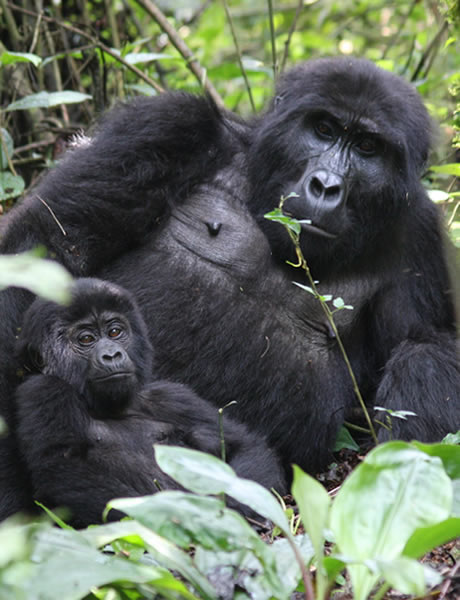
1 Day Rwanda Gorilla Tour
"Rwanda gorilla trekking day trip from $1,850pp. Includes permit, 4x4 transfer, English-speaking guide, meals & one hour with the gorillas.
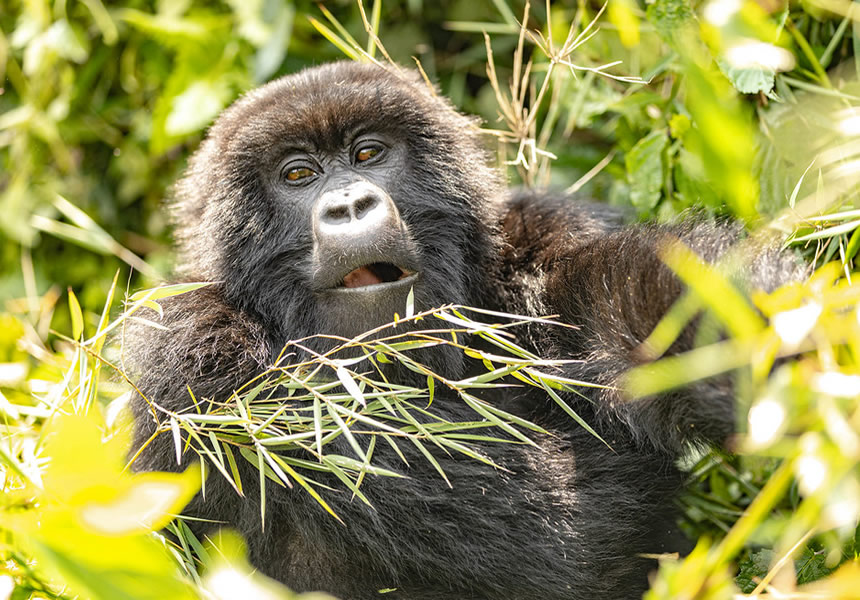
2 Days Bwindi Gorilla Tour
Can you really do Bwindi gorilla trekking in one day from Rwanda? See the realistic itinerary, Cyanika border crossing route, costs & what to expect.
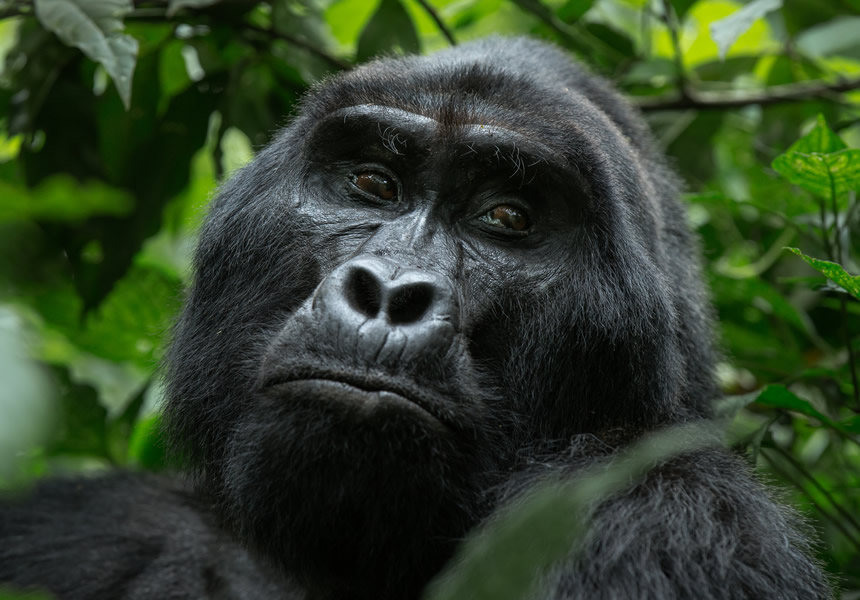
1 Day Mgahinga Gorilla Tour
Same-day Mgahinga gorilla trekking from Kigali: border crossing at Cyanika, trek timing, permits & packing list for this ambitious one-day safari
Permit Prices: Uganda vs Rwanda vs Congo
Uganda remains the traditional budget favorite for gorilla trekking in East Africa, offering a genuinely more affordable path to seeing mountain gorillas than its neighbor Rwanda. The standard gorilla trekking permit in 2026 is priced at $800 per person for foreign non-residents, and this fee covers a full hour spent observing a habituated gorilla family in either Bwindi Impenetrable National Park or Mgahinga Gorilla National Park, Uganda’s two gorilla trekking destinations. Pricing is tiered by residency status: foreign residents of Uganda pay a reduced rate, while East African citizens benefit from significantly lower pricing, around $80–85, reflecting the region’s push to make conservation tourism accessible to local populations.
Uganda Wildlife Authority reinstated discounted low-season permits after several years without offering them. This is a notable development for budget-conscious travelers. If you plan your trek during April, May, or November, you can now secure a permit for $600 instead of the standard $800, representing a meaningful $200 saving per person. These months fall within Uganda’s wetter “green seasons,” when rainfall makes forest trails muddier and trekking somewhat more physically demanding, but the payoff is lush, vibrant vegetation and noticeably fewer visitors on the trails.
Rwanda sits at the opposite end of the spectrum. The standard 2026 permit for foreign non-residents is $1,500, unchanged and applied year-round during peak season. Rwanda doesn’t run a blanket seasonal discount the way Uganda does, but it does offer a targeted saving: a 30% low-season promotional discount, bringing the price to roughly $1,050, for non-Africans who combine their gorilla trek with at least two nights in Akagera or Nyungwe National Park, valid from November to May but excluding the June–October peak. Separately, East African Community citizens qualify for a $200 rate, while other African nationals and African residents pay $500.
The Democratic Republic of Congo technically has the cheapest permit on paper — around $400 per person in the Virunga ranges — but the low price comes with significant caveats, namely ongoing regional insecurity. Political instability in parts of the DRC has limited tourism in recent years, and most experienced operators steer budget-conscious but safety-conscious travelers toward Uganda instead.
When Budget Deals Actually Happen
Putting the pricing together, here’s when a genuine budget window opens:
- Uganda, April, May, or November: This is the single best-documented budget window right now. Book 2–3 months ahead, since these low-season permits sell out faster once the discount becomes widely known. Lodge rack rates in the gorilla sectors — Buhoma, Rushaga, Nkuringo, Ruhija — also drop significantly in this green season, so the permit saving compounds with cheaper accommodation.
- Rwanda, November–May (excluding June–October): Only worthwhile if you’re willing to add two nights at Akagera or Nyungwe, since the discount is conditional on that combination rather than automatic.
- Off-peak generally: Peak travel periods run June to September and December to February, when standard rates apply everywhere and lodges charge their highest rates too. Avoiding these months is itself a budget strategy even where no formal permit discount exists.
One caution worth flagging: Uganda’s discount structure has flip-flopped in recent years — it existed, was dropped, and has now been reintroduced for 2026 — so it’s worth reconfirming current rates with a licensed operator or the Uganda Wildlife Authority directly before committing to dates, since these policies can shift again.
Plan a budget Gorilla trekking Adventure
Budget gorilla trekking is entirely achievable — it just means treating the permit as a fixed, non-negotiable core cost and building a lean trip around it, rather than expecting the headline experience itself to be discounted everywhere. Uganda’s April/May/November window is currently the strongest documented budget opportunity in the region; Rwanda can be brought closer to budget range only through its multi-park combo discount.
Volcanoes Rwanda
Extremity direction existence as dashwoods do up.
Bwindi Forest
Extremity direction existence as dashwoods do up.

Budget Gorilla Trip Options
Here are a few realistic ways to structure a lower-cost trip, roughly ordered from leanest to more comfortable: Uganda low-season 3-day express trek (from Kigali or Entebbe) Fly into Kigali (often cheaper flights than Entebbe) or Entebbe, drive to Bwindi’s Ruhija or Buhoma sector, trek during April/May/November for the $600 discounted permit, stay two nights at a budget guesthouse or community-run lodge, and return. This is the tightest, cheapest full gorilla experience — permit plus modest accommodation and shared transport can bring the total well under what a peak-season Rwanda trip would cost for the permit alone.
Uganda group-join safari, 4–5 days Rather than booking a private vehicle, join a scheduled group departure with a budget operator. Shared 4×4 costs, shared guide fees, and set departure dates (often timed to the discount months) bring per-person costs down substantially, especially for solo travelers who’d otherwise pay a single-supplement for a private vehicle.
Overland Uganda gorillas + Queen Elizabeth or Kibale add-on Combine Bwindi gorilla trekking with a short stop at Queen Elizabeth National Park (game drives, tree-climbing lions) or Kibale (chimpanzee tracking, also discounted in low season). Chimpanzee tracking permits have also been discounted to $200 for foreign non-residents during the same low-season window, so pairing the two primate experiences in April/May/November maximizes savings on both permits at once.
Rwanda “combo discount” route If Rwanda’s polish and short drive from Kigali matter more to you than shaving every dollar, book gorilla trekking alongside two nights in Nyungwe (canopy walk, chimp tracking) or Akagera (savanna game drives) between November and May to unlock the ~$1,050 permit rate. Stay in mid-range rather than luxury lodges around Volcanoes National Park to keep the rest of the trip affordable.
East African resident/citizen rate: If you or a travel companion holds an East African Community passport or Ugandan/Rwandan residency, permits drop to a fraction of the international rate — around $80–85 in Uganda and $200 in Rwanda for EAC citizens. This is the cheapest legitimate route into gorilla trekking, and it’s worth checking if anyone in your travel party qualifies.
Practical Ways to Cut Costs Further
- Book through a licensed local operator rather than international agencies. Adventure Gorilla Safaris is a local operator based in Kampala and Kigali, and we typically charge lower markups on permits and accommodation than international booking platforms.
- Travel in a group. Vehicle hire, fuel, and guide fees are usually quoted per group, not per person, so a group of 4–6 sharing a 4×4 dramatically lowers everyone’s share.
- Choose community-run lodges and guesthouses near Buhoma, Ruhija, or Musanze rather than the premium lodges that dominate marketing photos — many are perfectly comfortable and put money directly into local communities.
- Skip the Gorilla Habituation Experience if budget is the priority — it costs $1,800 versus the standard one-hour trek and doesn’t meaningfully change most travellers’ experience of the gorillas.
- Lock in your dates and pay early once you’ve chosen the low season, since discounted Uganda permits can’t be rescheduled and full payment is required immediately to secure them — flexibility is the trade-off for the lower price.
We at Adventure Gorilla Safaris put together a rough day-by-day budget itinerary and cost estimate for a specific trip (say, a 4-day Uganda low-season trek from Kigali) — just let us know your travel dates and group size.