Bwindi Impenetrable National Park, Uganda
Bwindi, a UNESCO World Heritage Site in southwestern Uganda, holds roughly half the world’s remaining wild mountain gorillas, and it’s generally the more affordable option overall — accommodation included. The park splits into four trekking sectors — Buhoma, Ruhija, Rushaga, and Nkuringo — and lodges are spread across all of them, so picking a place near your actual trekking sector matters more than it might seem.
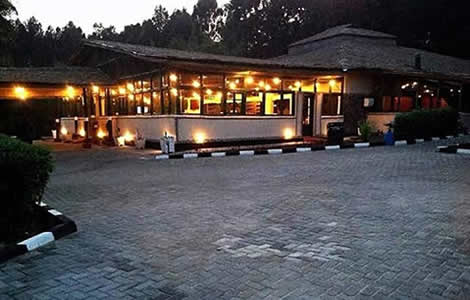
In Buhoma, on the northern side, Engagi Lodge is a solid mid-range choice just outside the gate. Glass sliding doors give it an upscale feel, and the views over the forest canopy are good from pretty much anywhere on the property. Each cottage has double or twin beds, an en-suite bathroom with hot and cold water, and a private balcony — a nice spot for morning tea while looking out over the trees. The whole lodge runs on solar.
Silverback Lodge, also in Buhoma and part of the Marasa Africa group, is bigger than most of its neighbors — the largest lodge in the sector by room count. All rooms are en-suite with private balconies set up with chairs and tables, and there’s a restaurant serving local and international dishes.
Sanctuary Gorilla Forest Camp, right inside the park boundary in Buhoma, sits closer to the luxury end but shows up often in mid-range comparisons because of the value it offers as a tented camp. It has ten spacious tents with queen beds, en-suite bathrooms with hot showers and flush toilets, and private verandas facing the forest — gorillas have genuinely wandered onto the property before. Full-board rates run roughly $250–$450 per person per night.
Mahogany Springs Lodge, above the Munyanga River valley in Buhoma, feels a bit more polished. Its 12 suites have private terraces, comfortable beds, and en-suite bathrooms with solar-powered hot water, plus a restaurant doing farm-to-table meals, a bar, laundry, and Wi-Fi.
In Ruhija, to the east, Bakiga Lodge stands out as a genuinely community-run place — part of the nonprofit Bakiga Community Project, perched above a valley overlooking the forest. It has more than 10 self-contained cabins with en-suite bathrooms and private balconies facing the forest, including 6 family cabins and 2 twin tents, with Wi-Fi throughout. Nearby, Gorilla Mist Camp has en-suite single, twin, and double rooms and runs entirely on solar, while Broadbill Forest Camp sits at the more budget-friendly end without giving up much comfort.
In Rushaga, in the far south, a handful of newer mid-range lodges have opened up to serve the sector’s large number of habituated gorilla families. Ichumbi Gorilla Lodge is about a 10-minute walk from the trailhead where the morning briefing happens, with up to 13 cottages — singles, doubles, twins, triples, and family rooms — each with an en-suite bathroom and private balcony. Four Gorillas Lodge, also in Rushaga, mixes modern and traditional design and is popular for how close it sits to the briefing center. Gorilla Safari Lodge sits toward the top of the mid-range bracket, with rates typically $400–$600 per person per night on full board, about a 10-minute drive from the Rushaga gate. Gorilla Valley Lodge and Gorilla Hills Eco Lodge round things out — the former with 12 en-suite rooms and private verandas, the latter a smaller eight-room property right at the edge of the southern sector.
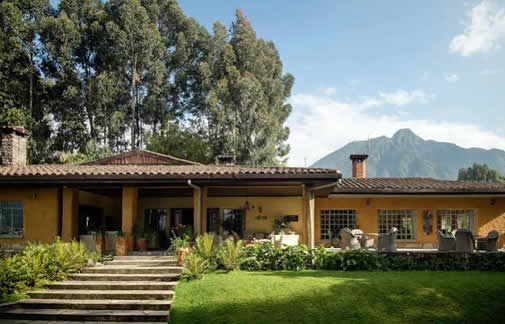
In Nkuringo, perched on a ridge with views over the Virunga volcanoes, Clouds Mountain Gorilla Lodge and a few nearby options offer cooler-climate mid-range stays. Chameleon Hill Lodge, on the shores of Lake Mutanda about 45 minutes from the Nkuringo or Rushaga trailheads, is known for its colorful architecture and views, with around 15 rooms — 6 deluxe chalets, 4 classic chalets, a superior family chalet, a premium family bungalow, and one camping-style room.
Across Bwindi’s sectors, mid-range lodging generally runs $100–$300 per person per night on full board — noticeably cheaper than Rwanda’s mid-range tier, let alone its luxury properties. That tracks with Uganda’s gorilla permit pricing too, which sits well below Rwanda’s.
Choosing Between the Two
Both parks offer essentially the same core experience: trekking through dense forest for a tightly regulated hour with a habituated gorilla family. Where they differ is in how the accommodation feels. Rwanda’s mid-range lodges lean a bit more polished, closer to boutique-hotel territory, which fits the country’s broader push as a higher-end safari destination. Bwindi’s mid-range scene, on the other hand, has more community-linked and eco-conscious lodges at noticeably lower prices, plus the flexibility of four different trekking sectors to choose from. A lot of travelers end up doing both parks on one trip, and mid-range lodging in each makes that kind of longer itinerary realistic without giving up comfort.