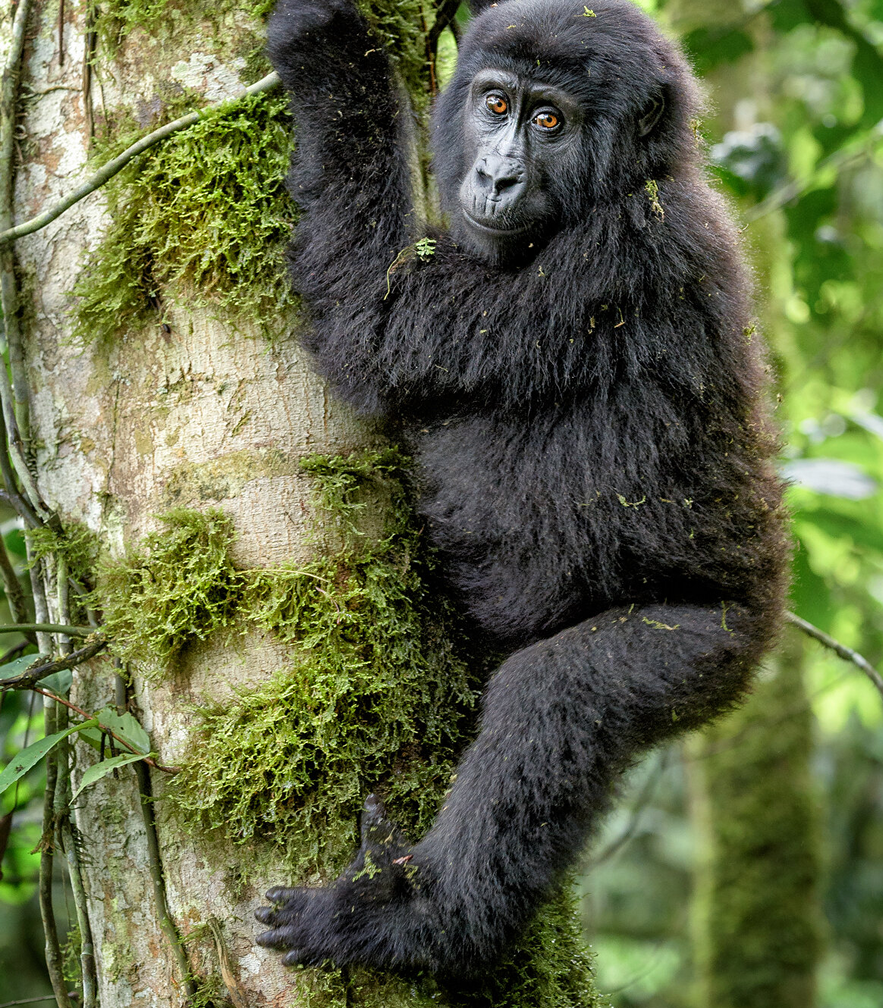
Gorilla Trekking Permits in Rwanda, Uganda, and the DRC: A Complete Guide
Mountain gorillas exist in only two wild populations on Earth, both confined to the Virunga Massif and the Bwindi–Sarambwe ecosystem straddling Rwanda, Uganda, and the Democratic Republic of Congo (DRC). Trekking to see them requires a permit — a strictly rationed, government-issued document that controls how many people can visit each habituated gorilla family per day. Because supply is deliberately kept small, understanding the permit system, costs, and timing in each country is essential to planning a successful trip.
Rwanda: The Premium Option
Gorilla trekking in Rwanda takes place exclusively in Volcanoes National Park, near Musanze/Kinigi in the northwest, roughly two and a half to three hours by road from Kigali International Airport. Rwanda limits daily permits strictly to protect the gorillas from stress, issuing only around 96 permits each day across twelve habituated families, with a maximum of eight visitors per family. Some sources note this cap has actually risen slightly in recent years to accommodate demand.
The headline price for a Rwanda permit is USD 1,500 per person per trek for international non-residents, a figure set by the Rwanda Development Board (RDB) and applied uniformly across every licensed operator. This single fee covers park entry, the tracking team, armed ranger escorts, and one hour with a habituated gorilla family. It does not cover porters, tips, transport, or accommodation. Rates are lower for other categories: foreign residents of Rwanda and citizens or residents of other African countries pay around US$500, while Rwandan nationals and other East African citizens pay roughly US$200. Notably, a 2026 promotion further discounts rates for East African and African travelers, though these discounted rates are suspended during the June–October peak season, when everyone pays the standard price.
Rwanda also runs a long-standing incentive for combining parks: visitors who spend at least two nights in Nyungwe and Akagera National Parks between November and May receive a 30% discount on their gorilla permit, bringing the effective cost down to roughly $1,050.
Rwanda’s premium pricing is a deliberate “low volume, high value” strategy. A meaningful share of every permit fee funds anti-poaching patrols, veterinary care, and ranger salaries, while 10% of permit revenue is invested directly into communities around the park, funding schools and clinics. This model, combined with the park’s proximity to Kigali and generally excellent infrastructure, is why Rwanda markets itself as the most convenient and polished (if priciest) trekking destination.
Permit policies in Rwanda are strict. Permits are non-refundable if you cancel or fail to show up, and cannot be resold or transferred since your passport details are checked against the permit before trekking. If booked through an operator, rescheduling is usually possible with at least 30 days’ notice.
Uganda: The Budget-Friendly Alternative
Uganda’s gorilla trekking happens in Bwindi Impenetrable National Park (across four sectors: Buhoma, Ruhija, Rushaga, and Nkuringo) and the smaller Mgahinga Gorilla National Park, both in the country’s southwest. Access is less convenient than Rwanda’s — the drive from Entebbe to Bwindi can take eight to ten hours by road, though domestic charter flights can cut that down to about an hour.
As of the 2026 tariff cycle, the standard Uganda gorilla permit costs USD 800 per person for foreign non-residents, a figure set by the Uganda Wildlife Authority (UWA) and fixed across every licensed operator. Foreign residents pay around $700, and citizens of other African countries around $500, with East African citizens paying a much lower local rate. Uganda also offers a longer, more immersive Gorilla Habituation Experience, which grants up to four hours with a semi-habituated family (rather than the usual one hour) for around $1,500.
A notable feature of Uganda’s system is its seasonal discount. During the wetter low-season months of April, May, and November, the permit price drops to USD 600 for foreign non-residents and USD 500 for foreign residents — though these discounted permits cannot be rescheduled once purchased. Travelers should also be aware that pricing structures are reviewed periodically; some operators report a UWA tariff review is expected around mid-2026, so it’s worth confirming current rates before booking.
Uganda has also tightened its booking process recently. Since March 2026, the previous practice of holding a permit for seven days without payment (“soft hold”) has been suspended — full payment is now required immediately to secure a permit, and as of March 2026, individual foreign travelers can no longer purchase permits directly through UWA; all bookings must go through a licensed Ugandan tour operator. This was introduced to curb permit fraud, so travelers should verify an operator’s license before paying.
Uganda offers more permits daily than Rwanda — around 152–176 standard permits spread across roughly 19 habituated families in Bwindi’s four sectors, plus a further 8 permits in Mgahinga’s single gorilla group — making it somewhat easier to find availability, though peak dates still sell out.
DRC: Cheapest but Currently Closed
The DRC is technically the least expensive option, with a permit in Virunga National Park priced at around US$400. Virunga is also unique in offering treks to both mountain gorillas and, separately, at Kahuzi-Biega National Park near Bukavu, the eastern lowland (Grauer’s) gorilla — the only place in the world this subspecies can be trekked.
However, the security situation makes Virunga effectively unavailable at present. The park closed to tourism in March 2020, initially due to COVID-19, and has not reopened due to renewed conflict — in 2025 the militant group M23 captured the city of Goma and surrounding areas, and the park’s gorilla and volcano treks remain closed for the foreseeable future as a result. Virunga’s own official website currently states plainly that gorilla and Nyiragongo volcano treks are closed until further notice, directing anyone wishing to inquire to contact the park directly.
Kahuzi-Biega, further south near Bukavu, has generally continued operating for lowland gorilla trekking even when Virunga has been closed, though as with anywhere in eastern DRC, security conditions can shift quickly and should be checked immediately before travel. Given the unpredictability, most tour operators currently steer travelers toward Rwanda or Uganda and suggest treating a DRC gorilla trek as a speculative bonus rather than a plan to build a trip around, at least until the regional situation stabilizes.
Common Rules Across All Three Countries
A few regulations are consistent everywhere gorillas are trekked, since they’re coordinated across the shared Virunga Massif ecosystem: a minimum age of 15 is strictly enforced by mutual agreement between all three countries, though there’s no upper age limit — fitness is the real constraint, since trekking can be physically demanding. Every permit covers exactly one hour with the gorillas once located (four hours for habituation experiences), plus the guided trek itself, which can range from under an hour to several hours of hiking depending on where the family is ranging that day.
When to Book
Because permits are capped and non-transferable, timing your booking matters as much as timing your visit. Across all sources, the consistent guidance is to book 3 to 6 months ahead for standard travel dates, and further out — 6 to 12 months, sometimes even earlier — for peak periods like June through September, and the Christmas/New Year window in December. Rwanda and Uganda open bookings well in advance and allow reservations by exact date and sector, so booking 9–12 months out is advisable if you have fixed peak-season dates. Uganda’s newly tightened rules — requiring full payment at booking rather than a holdable reservation — mean that once you find open dates, you should be ready to pay immediately, since inventory can vanish fast without the old grace period.
If budget flexibility matters more than exact dates, booking for Uganda’s low season (April, May, November) can save several hundred dollars per person, and Rwanda’s November–May combo-park discount offers similar savings, provided you can build in visits to Nyungwe or Akagera.
Best Time to Visit the Mountain Gorillas
Gorilla trekking is possible year-round in both Rwanda and Uganda, since the parks don’t close, but conditions vary significantly by season:
Dry seasons (best trekking conditions): June to September (the long dry season) and December to February (the short dry season) offer the driest trails, easier hiking, and generally better visibility and photography conditions. These are also, unsurprisingly, the busiest and most expensive periods, when permits sell out furthest in advance.
Wet seasons (quieter, cheaper, muddier): March to May and October to November bring heavier rain, muddier and more slippery trails, and a more physically demanding trek — but also fewer crowds, better permit availability, lush scenery, and in Uganda’s case, genuine price discounts. Rain in this region tends to arrive as intense but short showers rather than constant all-day downpours, so treks still generally proceed.
For most travelers, the dry season from June to September represents the sweet spot of manageable trekking conditions and reasonable travel logistics, while January and February (within the short dry season) are excellent alternatives with slightly fewer visitors than the long dry season peak. Budget-conscious or crowd-averse travelers, meanwhile, should look seriously at April, May, and November, when Uganda’s discounted permits and lower lodge rates can meaningfully reduce trip costs without dramatically increasing risk of a rained-out trek.
Bottom Line
Rwanda offers the most polished, accessible, and expensive experience; Uganda offers substantially lower permit costs with more habituated families and slightly more rugged logistics; and the DRC, while cheapest on paper, is currently not a viable option due to the ongoing conflict in eastern Congo. Whichever country you choose, book your permit as early as possible — ideally several months to a year ahead for peak season — and time your trip around the June–September or December–February dry seasons unless a lower-cost, lower-crowd wet-season trek suits your priorities better.
Mountain gorillas (Gorilla beringei beringei) are one of the most extraordinary wildlife encounters on Earth, and gorilla trekking has become a signature safari experience in East Africa for good reason.
Where They Live
Mountain gorillas exist in only two isolated populations, found nowhere else on the planet:
- The Virunga Massif — spanning the borders of Uganda, Rwanda, and the Democratic Republic of Congo, including Volcanoes National Park (Rwanda), Mgahinga Gorilla National Park (Uganda), and Virunga National Park (DRC)
- Bwindi Impenetrable Forest — a dense, ancient rainforest in southwestern Uganda
They live at high altitude, typically between 2,200 and 4,300 meters, in cool, misty mountain forests thick with bamboo and vegetation.
A Conservation Success Story
Mountain gorillas were once considered critically endangered, with numbers dropping below 700 individuals in the late 1980s. Thanks to decades of dedicated conservation work, anti-poaching efforts, and community-based tourism, the population has slowly recovered to just over 1,000 individuals today — one of the only great ape populations in the world that is actually increasing. This recovery is largely credited to the revenue and protection that gorilla trekking tourism generates.
Why It’s Such a Popular Safari Activity
1. Rarity and exclusivity. With only around 1,000 gorillas left and permits deliberately limited (a handful of groups per day, per park), trekking offers an experience very few people on Earth get to have. That scarcity — plus permit costs running from a few hundred to $1,500+ depending on the country — adds to its appeal as a bucket-list activity.
2. Profound closeness with a wild great ape. Habituated gorilla families allow visitors to sit within a few meters of them for a full hour, watching silverbacks, mothers, and playful youngsters go about their day. The eye contact and clear intelligence in their gaze often leaves people deeply moved — many describe it as the most emotional wildlife encounter of their lives.
3. The adventure of the trek itself. Reaching the gorillas isn’t passive — it involves hiking through dense, muddy, high-altitude rainforest, sometimes for a couple of hours, sometimes much longer. The physical effort and unpredictability make the eventual encounter feel earned.
4. Direct conservation impact. Because permit fees fund park protection and local communities, visitors know their trip is directly supporting the survival of an endangered species — a rare case where tourism dollars visibly translate into conservation outcomes.
5. Combines well with other iconic experiences. Uganda and Rwanda pair gorilla trekking with chimpanzee tracking, savanna game drives, and volcano hikes, letting travelers build a broader East African itinerary around it.
If you’re considering it, permits typically need to be booked well in advance (especially in Rwanda, where demand is highest), and July is actually within one of the better trekking windows since the dry season runs roughly June through September.