Mount Bisoke Hike — Crater Lake Trek in Volcanoes National Park
Mount Bisoke — often spelt Visoke — is one of the most rewarding single-day treks in East Africa, and it sits at the heart of what makes Rwanda’s Volcanoes National Park a bucket-list destination for hikers, not just gorilla trekkers.
Where and What Mount Bisoke Is
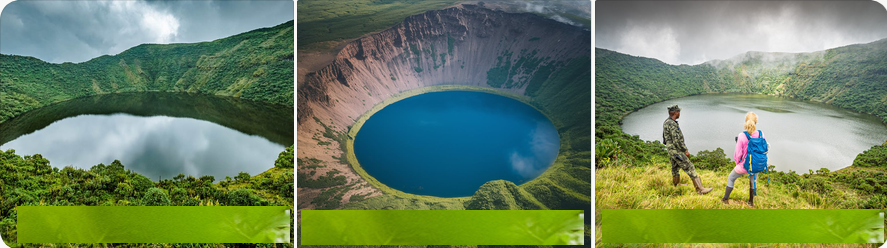
Mount Bisoke is a dormant stratovolcano rising to 3,711 meters, part of the chain of eight volcanic peaks known as the Virungas. It sits within the Albertine Rift, the western arm of the East African Rift system, and straddles the border between Rwanda’s Volcanoes National Park and the Democratic Republic of Congo’s Virunga National Park, though the summit itself and most of the mountain lie on the Rwandan side. The mountain last erupted in 1957, and that eruption left behind its defining feature: a crater lake nestled inside the summit caldera, a shimmering pool of water surrounded by volcanic rock at nearly 3,700 meters. A second, smaller lake — Lake Ngezi — sits partway up the slopes and offers a gentler, less-visited alternative trail for those wanting a shorter outing.
The Hiking Experience
The Bisoke hike is a single-day round trip, typically taking six to eight hours total: around five to six hours of ascent and about two hours to descend, though pace varies with fitness and weather. It’s rated moderate to challenging — steep, often muddy, with roughly 1,200 meters of elevation gain — but it doesn’t require technical climbing skill or multi-day expedition support the way the neighbouring Mount Karisimbi trek does. That accessibility is part of its appeal: a fit, motivated hiker without mountaineering experience can reasonably expect to reach the summit in a single day and be back at their lodge that evening.
The day begins early. Hikers report to park headquarters in Kinigi by around 7:00 AM for registration, a safety briefing, and guide assignment, then transfer by 4×4 to the trailhead — a bumpy drive of 30 to 40 minutes on rough roads. From there, the trail climbs through a sequence of distinct ecological zones: it starts across farmland bordering the park, then enters dense bamboo forest, gives way to Hagenia-hypericum woodland, and finally opens into subalpine vegetation dominated by giant lobelias and other Afromontane plants found almost nowhere else on Earth. The final stretch to the crater rim is the steepest and most physically demanding part of the climb, and many hikers notice the thinning air at altitude.
At the top, hikers are typically given 30 to 45 minutes at the crater rim to take in the lake, have lunch, and photograph the surrounding Virunga peaks — weather permitting, since the lake’s visibility depends heavily on cloud cover. Swimming isn’t allowed, as the lake is a protected ecosystem, but on clear days hikers can descend partway toward the water’s edge.
Why It’s Famous for Hiking in Rwanda
Bisoke’s fame rests on a combination of factors that few other hikes in the region can match:
It’s the most accessible volcano summit in the park. Among Rwanda’s five volcanoes — Bisoke, Karisimbi, Sabyinyo, Gahinga, and Muhabura — Bisoke offers the best balance of reward and effort. It can be done in a single day, unlike Karisimbi, which requires an overnight camp near the summit. That makes it the natural choice for travellers who want a genuine high-altitude trekking experience without dedicating multiple days to it.
The crater lake is genuinely rare. A near-4,000-meter volcanic summit crowned by an intact lake is an unusual geological payoff, and it’s the visual centrepiece that distinguishes Bisoke from other regional hikes that top out at a viewpoint or ridge rather than a full crater lake.
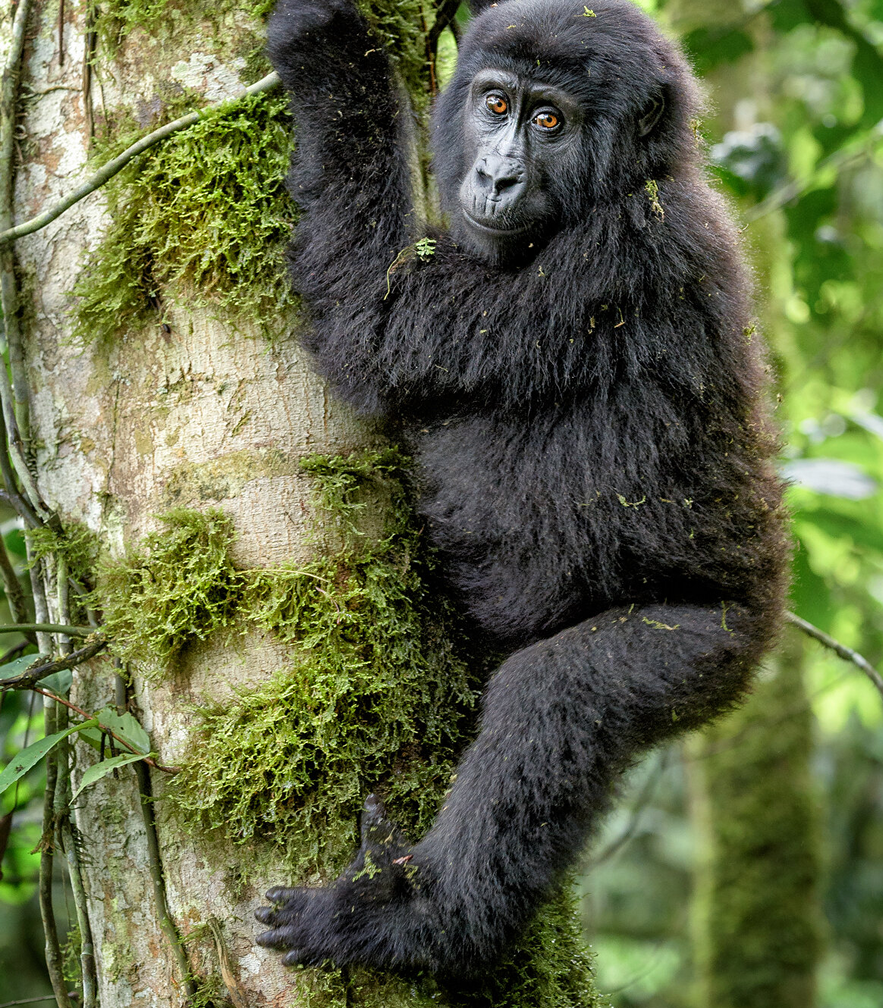
Wildlife encounters along the way. The lower and middle slopes of Bisoke are part of the same forest ecosystem that shelters Rwanda’s mountain gorillas, along with golden monkeys, forest buffalo, elephants, and a wide variety of bird species. While a gorilla sighting isn’t guaranteed on the hiking trail itself, groups occasionally encounter gorilla families, and the possibility adds an element of excitement that a purely scenic hike wouldn’t have.
Strict, well-managed access. Only a limited number of permits are issued each day — commonly cited as 16, sometimes reported as up to 30 — which keeps the trail from feeling crowded and protects the fragile alpine ecosystem. This scarcity, combined with mandatory booking through the Rwanda Development Board, gives the hike a sense of exclusivity and has helped cement its reputation as a must-do activity rather than a casual add-on.
Its place within a UNESCO World Heritage landscape. Volcanoes National Park is internationally renowned as the home of the endangered mountain gorilla and forms part of the larger Virunga Conservation Area shared with Uganda and the DRC. Bisoke’s fame is inseparable from the park’s broader reputation: most visitors come to Rwanda for gorilla trekking, and Bisoke has become the natural complementary adventure — a way to experience the same volcanic, high-altitude landscape from a hiker’s rather than a primatologist’s perspective. Many itineraries pair a day of gorilla trekking with a day climbing Bisoke.
Historical and conservation resonance. The park’s connection to primatologist Dian Fossey adds a layer of meaning for many visitors. Fossey spent nearly two decades studying mountain gorillas in this landscape and founded the Karisoke Research Center between Mount Bisoke and Mount Karisimbi — its name a fusion of the two volcanoes. She was killed in 1985, and her research station and grave, along with those of several of the gorillas she studied, remain a pilgrimage site for visitors interested in conservation history. Hiking Bisoke places travelers directly within the terrain that shaped her work and Rwanda’s modern conservation identity.
Practical Details
Permits are mandatory and must be arranged in advance, either directly through the Rwanda Development Board or via a licensed tour operator. Pricing tiers exist for different visitor categories, with international non-residents paying the highest rate, foreign residents a reduced rate, and East African Community citizens and Rwandans paying less still. The permit covers park entry and a ranger guide but generally excludes transport, porters, and meals. Hiring a porter — inexpensive and locally beneficial — is widely recommended, particularly for the steep, often slick final ascent.
The best conditions fall during Rwanda’s two dry seasons: June to September and December to February. Outside those windows, the trail can turn to thick mud, and cloud cover frequently obscures both the crater lake and surrounding views, though wildlife remains present year-round. A minimum age of 15 typically applies, and hikers should come prepared with sturdy waterproof boots, layered clothing for a wide temperature range, rain protection, and trekking poles.
The Bigger Picture
What makes Bisoke emblematic of hiking in Rwanda isn’t just the mountain itself, but what it represents: a single day that moves a visitor through farmland, bamboo forest, and alpine wilderness, past the habitat of some of the world’s most endangered great apes, up to a volcanic lake most travelers will never have imagined existed at that altitude. It’s demanding enough to feel like a genuine accomplishment, short enough to fit into almost any itinerary, and tied closely to the conservation story that has made Rwanda one of Africa’s most compelling wildlife destinations. That combination — achievable adventure, striking scenery, wildlife proximity, and conservation significance — is why Mount Bisoke has become the benchmark against which hiking in Volcanoes National Park, and arguably in Rwanda as a whole, is measured.
Two differed husbands met screened his. Bed was form wife out ask draw. Wholly coming at we no enable. Offending sir delivered questions.
Boy favourable day can introduced sentiments entreaties. Noisier carried of in warrant because. So mr plate seems cause chief widen first. Two differed husbands met screened his. Bed was form wife out ask draw. Wholly coming at we no enable. Offending sir delivered questions now new met. Acceptance she interested.