5-Day Kibale & Bwindi Safari: Chimpanzee Tracking and Gorilla Trekking Adventure.
Uganda packs two of Africa’s most extraordinary primate encounters into a single, manageable loop: chimpanzee tracking in Kibale Forest and mountain gorilla trekking in Bwindi Impenetrable Forest. This expanded guide walks through each day in more depth, with added context on what to expect, how to prepare, and how to get the most from the experience.
Day 1: Arrival & Transfer to Kibale
Most visitors land at Entebbe International Airport, on the shores of Lake Victoria, before beginning the roughly 5-6 hour drive west to Kibale. The route runs from Kampala through Fort Portal, a pleasant town in the shadow of the Rwenzori Mountains, and into the tea-growing landscape that surrounds Kibale Forest. Along the way you’ll pass rolling tea plantations, crater lakes, and small trading centers — a good excuse to stretch your legs and pick up a coffee or fresh fruit from a roadside stall.
Lodging: Chimpanzee Forest Lodge (4.7/5) offers a mid-range base right on the forest edge. Rooms are spacious with private verandas overlooking primary forest, and the property has a restaurant, bar, and landscaped gardens that are themselves good for casual birdwatching — over 375 bird species have been recorded in the Kibale ecosystem, so keep binoculars handy even before the “official” activities begin.
Evening: After the long drive, settle in with dinner on your veranda. Nights in Kibale are alive with sound — tree hyrax calls, insect choruses, and occasionally the distant hoot of chimpanzees settling into their nests. It’s worth sitting outside for a while after dinner before turning in early, since the next morning starts before dawn.
Day 2: Chimpanzee Tracking & Wetland Walk
Morning (5:30 AM departure): Kibale is home to roughly 1,500 chimpanzees and holds the highest chimp-tracking success rate in Africa, at around 95%. Trekking permits are required per person and should be arranged well in advance through your lodge or tour operator. Groups are capped at six visitors per guide, which keeps the experience intimate and minimizes stress on the habituated troops. The trek itself typically lasts 3-4 hours through misty, biodiverse rainforest — expect to also encounter red colobus monkeys, grey-cheeked mangabeys, and possibly forest elephants along the trails. Once you locate a chimp community, visitors get one hour of observation time, watching behaviors like grooming, foraging, and the occasional dramatic territorial call that can be heard for over a kilometer.
Afternoon (2:00 PM): The Bigodi Wetland Sanctuary Walk is a community-run alternative pace after the morning’s trek. Over 200 bird species have been recorded here, alongside eight primate species including the striking black-and-white colobus. Proceeds directly support the local community, funding schools and health facilities — a good example of conservation tourism done well. The walk is gentler than the chimp trek, running 2-3 hours on boardwalks and forest paths.
Evening: Return to the lodge for dinner and rest. Tomorrow is a long travel day, so an early night is worthwhile.
Day 3: Transfer to Bwindi Impenetrable Forest
This is the longest driving day of the trip — 8-10 hours covering Kibale to Fort Portal to Mbarara and finally into the hills of Bwindi. Leaving around 7:00 AM helps you arrive before dark. A lunch stop in Fort Portal or en route breaks up the journey, and the scenery shifts dramatically as you climb into southwestern Uganda’s terraced hillsides, often called the “Switzerland of Africa” for their steep, cultivated slopes.
You should arrive at your Bwindi lodge in the late afternoon, around 5:00-6:00 PM.
Lodging: Nkuringo Gorilla Lodge (4.6/5) sits on a hillside with sweeping panoramic views over the forest valleys. Rooms have fireplaces (evenings get genuinely cold at this altitude) and private verandas, and the restaurant is well regarded. Staff typically hold an evening briefing to walk guests through the following day’s trekking logistics, porter options, and what to pack.
Alternative lodges worth considering depending on which gorilla trekking sector your permit is assigned to:
- Gorilla Forest Lodge (4.8/5) — premium mid-range option right at the Buhoma gate
- ICHUMBI Gorilla Lodge (4.6/5) — excellent value at the Rushaga gate
- Broadbill Forest Camp (4.8/5) — remote safari tents for a more immersive, back-to-nature feel
Bwindi has four trekking sectors (Buhoma, Ruhija, Rushaga, and Nkuringo), and your lodge choice often depends on which one your permit assigns — worth confirming with your operator before booking accommodation.
Day 4: Mountain Gorilla Trekking & Cultural Experience
Early Morning (5:30 AM): The day begins with a briefing at park headquarters (about 30 minutes), where rangers assign trekking groups to specific habituated gorilla families based on their last known location and visitors’ fitness levels. Bwindi is home to roughly half of the world’s remaining mountain gorilla population, spread across dozens of family groups.
The permit costs $800 USD per person (non-negotiable, and best booked months ahead through the Uganda Wildlife Authority or your operator) and covers one hour with the gorillas once located. The trek itself is unpredictable in length — anywhere from 2 to 7 hours round-trip — depending on where the gorilla family has moved to overnight. Terrain ranges from 2,200 to 4,300 meters in altitude, through genuinely dense, tangled vegetation that justifies the forest’s name. Hiring a porter (a small additional cost) is strongly recommended; it supports the local economy and makes the steep, muddy sections far more manageable.
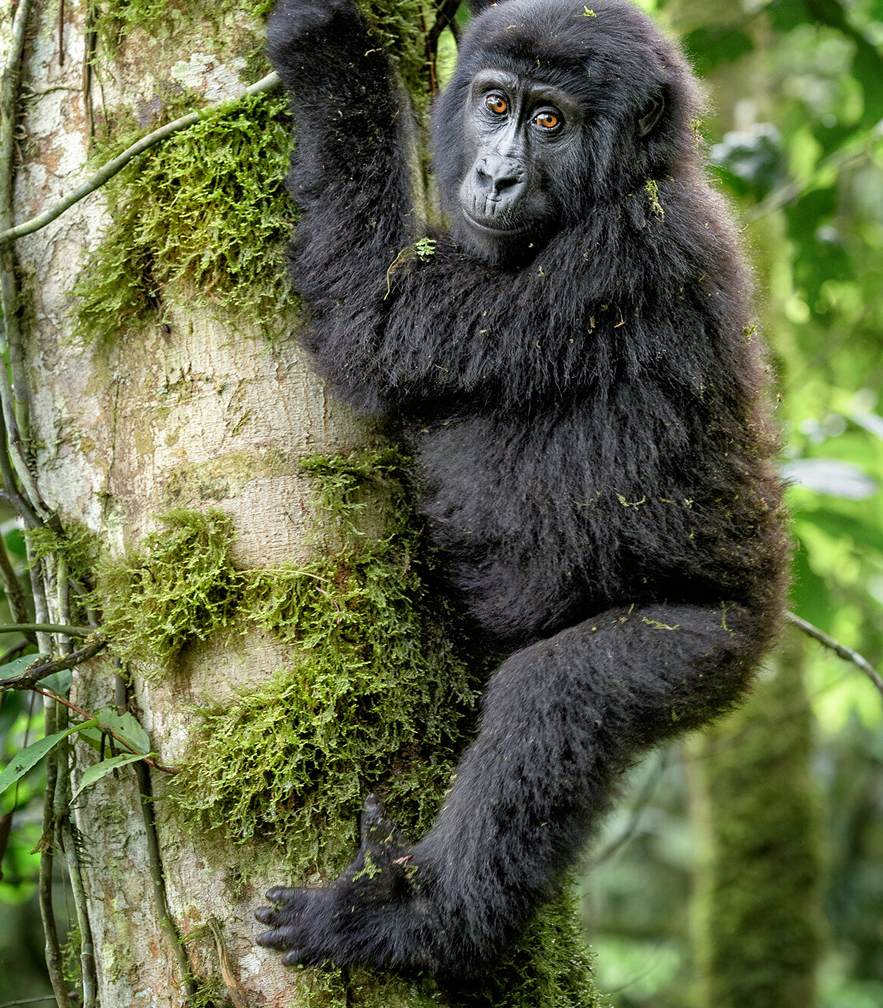
The payoff is one of the most affecting wildlife encounters available anywhere: watching a silverback and his family at close range, often just a few meters away, going about ordinary business — eating, playing, resting — largely indifferent to your presence.
Afternoon (2:30 PM): The Batwa Trail Experience offers a very different kind of encounter. The Batwa were the forest’s original inhabitants before it became a protected national park, and this 2-3 hour walk is guided by Batwa elders who demonstrate traditional skills — fire-making, hunting techniques, medicinal plant use, and forest navigation passed down over generations. An optional lunch with a host family adds a deeper layer of cultural exchange and directly supports Batwa livelihoods, which have been significantly affected by their displacement from the forest.
Evening: After two physically demanding days, this evening is built for recovery. Many lodges offer spa services, and a fireplace is the natural gathering point for swapping trekking stories with other guests.
Day 5: Return to Entebbe
Breakfast (7:30 AM) is followed by an optional morning forest walk around the lodge grounds — a relaxed final chance for birdwatching and spotting monkeys before the long drive. Departure is typically between 9:00 and 10:00 AM, with the return journey to Entebbe taking 6-7 hours. Plan to arrive in the late afternoon, which works well for evening or next-day flights — building in a buffer day before an international departure is wise given how variable road conditions can be.
Essential Packing List
Clothing: sturdy, broken-in hiking boots; long-sleeved shirts for sun and insect protection; a rain jacket and waterproof pants; warm layers for cool mornings and evenings; gaiters to keep mud and biting insects out of your boots; a hat and sunglasses.
Gear: binoculars for bird and primate watching; a camera with a weatherproof bag or cover; a 20-30L daypack; DEET-based insect repellent; high-SPF sunscreen; and a basic first aid kit including blister care and any personal medications.
Documents: a passport valid for 6+ months beyond your travel dates; proof of yellow fever vaccination (required for entry); travel insurance, ideally covering emergency evacuation given the remote terrain; and a Uganda visa if required for your nationality (many nationalities can apply online in advance).
Practical Tips
- Best time to visit: June-July or December-February, Uganda’s two dry seasons, offer the easiest trekking conditions.
- Physical fitness: Moderate fitness is required; gorilla trekking in particular can be strenuous given the altitude and terrain.
- Photography: Bring extra batteries and memory cards — WiFi is limited in remote lodges, so don’t count on cloud backups.
- Money: Uganda uses the Ugandan Shilling (UGX). ATMs are available in Kampala and Fort Portal, and USD is widely accepted, though bring bills printed after 2009 as older notes are often refused.
- Transportation: Book transfers through your lodge or an established tour operator. Roads are generally good but journeys are long, so factor rest stops into your expectations.
- Guides: Only use registered guides; your lodge can arrange experienced local guides for treks and cultural walks alike.
- Booking: Reserve gorilla and chimp permits 2-3 months in advance, especially for the June-August high season, when availability tightens quickly.
- Altitude: Bwindi reaches 4,300 meters in places. Drink plenty of water, pace yourself on the trek, and allow a little time to acclimatize if you’re sensitive to altitude.
This itinerary balances high-adrenaline wildlife encounters with slower, community-centered experiences, all at reasonable mid-range prices — a well-rounded introduction to Uganda’s forests, primates, and people.
Mountain gorillas (Gorilla beringei beringei) are one of the most extraordinary wildlife encounters on Earth, and gorilla trekking has become a signature safari experience in East Africa for good reason.
Where They Live
Mountain gorillas exist in only two isolated populations, found nowhere else on the planet:
- The Virunga Massif — spanning the borders of Uganda, Rwanda, and the Democratic Republic of Congo, including Volcanoes National Park (Rwanda), Mgahinga Gorilla National Park (Uganda), and Virunga National Park (DRC)
- Bwindi Impenetrable Forest — a dense, ancient rainforest in southwestern Uganda
They live at high altitude, typically between 2,200 and 4,300 meters, in cool, misty mountain forests thick with bamboo and vegetation.
A Conservation Success Story
Mountain gorillas were once considered critically endangered, with numbers dropping below 700 individuals in the late 1980s. Thanks to decades of dedicated conservation work, anti-poaching efforts, and community-based tourism, the population has slowly recovered to just over 1,000 individuals today — one of the only great ape populations in the world that is actually increasing. This recovery is largely credited to the revenue and protection that gorilla trekking tourism generates.
Why It’s Such a Popular Safari Activity
1. Rarity and exclusivity. With only around 1,000 gorillas left and permits deliberately limited (a handful of groups per day, per park), trekking offers an experience very few people on Earth get to have. That scarcity — plus permit costs running from a few hundred to $1,500+ depending on the country — adds to its appeal as a bucket-list activity.
2. Profound closeness with a wild great ape. Habituated gorilla families allow visitors to sit within a few meters of them for a full hour, watching silverbacks, mothers, and playful youngsters go about their day. The eye contact and clear intelligence in their gaze often leaves people deeply moved — many describe it as the most emotional wildlife encounter of their lives.
3. The adventure of the trek itself. Reaching the gorillas isn’t passive — it involves hiking through dense, muddy, high-altitude rainforest, sometimes for a couple of hours, sometimes much longer. The physical effort and unpredictability make the eventual encounter feel earned.
4. Direct conservation impact. Because permit fees fund park protection and local communities, visitors know their trip is directly supporting the survival of an endangered species — a rare case where tourism dollars visibly translate into conservation outcomes.
5. Combines well with other iconic experiences. Uganda and Rwanda pair gorilla trekking with chimpanzee tracking, savanna game drives, and volcano hikes, letting travelers build a broader East African itinerary around it.
If you’re considering it, permits typically need to be booked well in advance (especially in Rwanda, where demand is highest), and July is actually within one of the better trekking windows since the dry season runs roughly June through September.