
5-Day Rwanda Safari: Akagera Wildlife, Gorilla Trekking & Golden Monkeys
Rwanda packs an extraordinary range of experiences into a small footprint — savanna wildlife in the east, misty volcanic forests in the northwest, and two of Africa’s most sought-after primate encounters. Here’s a well-paced five-day itinerary connecting Akagera National Park with Volcanoes National Park.
Day 1: Kigali to Akagera National Park
Depart Kigali after breakfast for the roughly 2.5 to 3-hour drive northeast to Akagera National Park, Rwanda’s only Big Five destination. The drive itself is scenic, winding through Rwanda’s famous “thousand hills” landscape of terraced farms and small trading towns.
Arrive at your lodge by early afternoon, settle in, then head out for an afternoon game drive as temperatures cool and animals become more active. Akagera’s mix of savanna, woodland, and wetland along the Tanzanian border supports elephants, buffalo, giraffes, zebras, various antelope species, and both black and white rhino (reintroduced in recent years as part of a major conservation success story). The park’s lakes, particularly Lake Ihema, also host large hippo pods and Nile crocodiles.
Overnight at a mid-range lodge inside or near the park.
Suggested lodge: Akagera Game Lodge — perched on a hillside overlooking Lake Ihema, this is the park’s original lodge with comfortable rooms, a pool, and expansive views, at a reasonable price point compared to the newer luxury tented camps. Ruzizi Tented Lodge, on the lakeshore itself, is another excellent mid-range option with a more intimate, safari-tent feel and superb hippo and birdlife right from the deck.
Day 2: Full Day in Akagera
Dedicate this full day to exploring the park’s varied terrain. An early morning game drive offers the best light and wildlife activity, with a strong chance of spotting elephants, buffalo, and antelope near the water sources, plus excellent birdlife — Akagera is a haven for both resident and migratory species, including the elusive shoebill stork in the papyrus swamps for the fortunate.
Consider adding a boat safari on Lake Ihema around midday, a relaxing way to see hippos, crocodiles, and waterbirds up close from the water rather than a vehicle. In the afternoon, head back out for a game drive with a chance at spotting lion (reintroduced in 2015) or the shyer rhino, particularly in the park’s more remote southern and central sectors.
Return to your lodge for dinner and a second overnight, giving you a relaxed, unhurried pace rather than rushing wildlife viewing into a single half-day visit.
Day 3: Akagera to Volcanoes National Park
After an early breakfast, begin the transfer to Volcanoes National Park in Rwanda’s Northern Province, near the town of Musanze (Ruhengeri). This is a longer drive — roughly 5 to 6 hours — since it cuts diagonally across the country from the eastern lowlands to the volcanic highlands. Many itineraries route this via Kigali, where you can stop for lunch and, if time allows, a brief visit to the Kigali Genocide Memorial, a sobering but important part of understanding modern Rwanda.
Continuing north, the landscape transforms dramatically as you climb into the foothills of the Virunga Mountains, a chain of eight volcanoes shared between Rwanda, Uganda, and the Democratic Republic of Congo. Arrive in the Musanze/Kinigi area by late afternoon or early evening, check into your lodge, and rest ahead of the following day’s trek. Use the evening for a briefing on trekking logistics, since permits and group assignments for gorilla trekking are typically confirmed the night before or very early the next morning.
Suggested lodge: Mountain Gorilla View Lodge, set on a ridge with sweeping volcano views, offers solid mid-range comfort with cozy cottages and fireplaces for the cool highland evenings. Le Bambou Gorilla Lodge, closer to Kinigi park headquarters, is another good-value choice with thatched bungalows and gardens. For travelers wanting to stretch slightly upward without going full luxury, Kinigi Guest House or the Virunga Lodge’s simpler sister properties are also worth considering, though Virunga Lodge itself sits more toward the upper-mid to luxury bracket.
Day 4: Gorilla Trekking in Volcanoes National Park
This is the centerpiece of the trip. Wake early for a pre-dawn breakfast and head to Kinigi park headquarters for the briefing, where rangers assign trekking groups based on fitness level and the location of the gorilla families that morning. Volcanoes National Park is home to roughly a dozen habituated mountain gorilla families, ranging from relatively easy, shorter treks to more strenuous multi-hour hikes through dense, muddy volcanic forest and steep terrain.
Once assigned, you’ll drive to the trailhead and set off with an armed ranger-guide and trackers who maintain radio contact with trackers already following the gorillas since dawn. Trek duration varies enormously depending on where the family is ranging that day — anywhere from 30 minutes to several hours of hiking, often through thick vegetation, stinging nettles, and uneven ground, so sturdy boots, gardening gloves, and a walking stick (available for rent locally) are worth having.
Once you locate the gorilla family, you’re permitted exactly one hour in their presence, an experience many describe as genuinely life-changing. Watching a silverback move calmly through the group, juveniles playing, and mothers with infants at extremely close range, all in their natural high-altitude forest habitat, is unlike any other wildlife encounter on the continent.
Afternoon is free to rest, do laundry, or explore Musanze town, or optionally visit the Iby’Iwacu Cultural Village for a lighter, community-based cultural experience showcasing traditional Rwandan dance, music, and daily life. Overnight again in the Musanze/Kinigi area.
Day 5: Golden Monkey Trekking and Return to Kigali
On your final morning, head back into Volcanoes National Park for a golden monkey trek, a wonderful and often underrated complement to gorilla trekking. Golden monkeys are an endangered species found only in the Virunga and Bwindi regions, known for their striking orange-gold coats and playful, highly active behavior as they leap through the bamboo forest canopy. Treks are generally shorter and less physically demanding than gorilla trekking, typically taking one to two hours round trip, and you’re given a full hour observing the troop once located — often numbering 30 to 80 individuals, making for lively, constant movement and photography opportunities.
Afterward, return to your lodge to freshen up, check out, and have lunch before the drive back to Kigali, roughly 2.5 to 3 hours depending on traffic through the capital. Depending on your flight time, you may have a few hours in Kigali for last-minute shopping at a market like Kimironko, a coffee stop at one of the city’s specialty cafés (Rwanda’s coffee is excellent and a nice souvenir), or a final visit to a site you missed earlier in the trip. Transfer to Kigali International Airport for your departure flight.
Practical Notes
Gorilla trekking permits ($1,500 per person as of recent pricing) and golden monkey permits (around $100 per person) should be booked well in advance through Rwanda Development Board or a licensed tour operator, since gorilla permits in particular sell out during peak season (June–September and December–February). A private 4×4 vehicle with driver-guide is strongly recommended for both the Akagera game drives and the long transfers, as road conditions and wildlife viewing both benefit from an experienced local driver. Pack layers, as Kigali and Akagera are warm while the Volcanoes region at higher altitude can be quite cool, especially in early morning and evening.
This itinerary balances big-game safari, high-altitude primate trekking, and cultural texture into a tight but rewarding five days, and the mid-range lodges suggested offer comfort and good service without the price tag of the ultra-luxury tented camps that have become increasingly common in both parks.
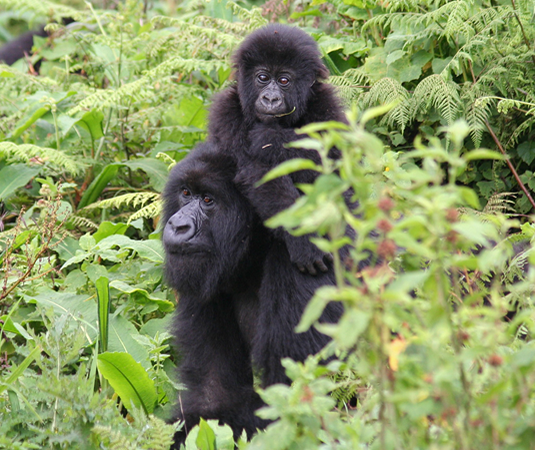
Mountain gorillas in Volcanoes National Park are among the most extraordinary wildlife encounters in Africa. The park, part of the Virunga Massif that spans Rwanda, Uganda, and the Democratic Republic of Congo, sits at the foot of five volcanoes—Karisimbi, Bisoke, Sabyinyo, Gahinga, and Muhabura—covered in dense rainforest, bamboo, and misty highland vegetation.
Gorillas live in close-knit family groups led by a dominant silverback, whose broad shoulders and distinctive silver-gray back give the species its name. Groups typically range from five to thirty individuals, including younger blackback males, females, and playful infants who cling to their mothers or tumble through the undergrowth. Despite their immense size and strength, mountain gorillas are gentle, highly social animals, spending much of the day foraging for leaves, stems, and wild celery, and resting in nests they build from vegetation.
Once critically endangered, the population has grown thanks to intensive conservation efforts, anti-poaching patrols, and community-based tourism that funds habitat protection. Trekkers hike through steep, muddy terrain to spend a carefully limited hour observing a habituated family, an experience often described as profoundly moving. Volcanoes National Park remains a global symbol of successful conservation, largely inspired by primatologist Dian Fossey’s pioneering research there
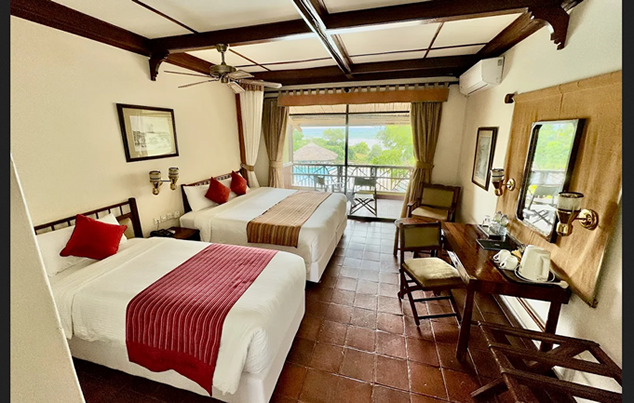
Akagera National Park, in northeastern Rwanda, offers East Africa’s classic Big Five safari experience: lions, leopards, elephants, buffalo, and rhinos roam its savannas, lakes, and wetlands. Boat cruises on Lake Ihema reveal hippos and crocodiles, while over 500 bird species attract keen birders. Game drives through rolling hills and acacia woodland showcase a remarkable conservation comeback, making Akagera a rewarding, less-crowded alternative to Rwanda’s famous gorilla trekking.