
6-Day Double Gorilla Trekking Safari – Bwindi Impenetrable National Park, Uganda
This itinerary is built around two separate gorilla treks in two different sectors of Bwindi, broken up by a relaxing stop at Lake Bunyonyi. It’s a favourite structure for honeymooners, photographers, and anyone who wants to compare gorilla families and forest terrain rather than just tick the trek off once. Below is a day-by-day breakdown with midrange lodge suggestions for each stop.
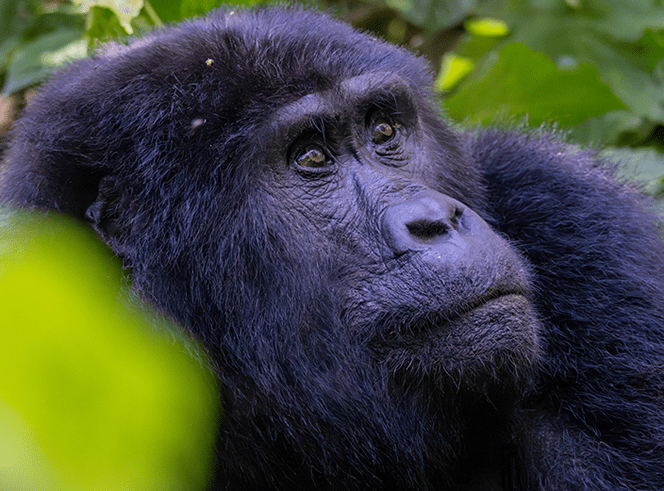
Gorilla Trekking Essentials (Days on Trekking)
- Sturdy, broken-in hiking boots with ankle support — Nkuringo’s terrain is notably steep, and boots matter more here than for other sectors
- Gardening gloves — for grabbing stinging nettles/vines on the trail
- Long, thick socks to tuck trousers into (protection from safari ants and nettles)
- Long-sleeved shirts and long trousers in lightweight, quick-dry fabric (neutral/dark colors, not bright or white)
- A light, waterproof/windproof jacket — mountain weather changes fast, and Bwindi/Nkuringo is genuinely misty rainforest
- A daypack (20–30L) to carry water, snacks, rain gear during the trek
- Gaiters (optional but useful for mud and nettles)
- Walking stick — often provided free at the trekking start, but bring your own if you prefer
- Cash tip money for porters and guides (hire a porter regardless of fitness — it’s worth it)
Day 1: Kampala/Entebbe – Transfer to Buhoma or Ruhija (Bwindi North/Central)
Your journey begins early, either by road or scheduled domestic flight. The road route (roughly 8–9 hours) winds through the Ugandan countryside via Mbarara or Kabale, passing terraced hillsides, banana plantations, and views of the western Rift Valley escarpment as you approach southwestern Uganda. Many operators build in a stop at the Uganda Equator Line near Kayabwe for photos, and a lunch break in Mbarara or Ntungamo.
Alternatively, a scenic flight from Entebbe or Kajjansi airstrip to Kihihi or Kisoro airstrip cuts travel time to about an hour, followed by a 1.5–2 hour road transfer into the park — ideal for travelers short on time or wanting to maximize trekking days.
By late afternoon you arrive at your lodge in Buhoma or Ruhija, the two sectors on Bwindi’s northern and central edges. Buhoma, the park’s original tourism hub, sits at lower altitude with a warmer microclimate and easier trails, while Ruhija sits higher (around 2,300m) with cooler temperatures, denser forest, and excellent birdlife. Settle in, enjoy a briefing from your guide about the next day’s trek, and rest — an early start awaits.
Day 2: Gorilla Trekking – First Encounter (Buhoma or Ruhija Sector)
After an early breakfast, transfer to the sector headquarters for the 7:00 am briefing, where rangers assign trekking groups to specific gorilla families based on fitness level and permit allocation. Buhoma is home to habituated families such as Mubare, Habinyanja, and Rushegura, while Ruhija hosts groups like Bitukura, Oruzogo, and Kyaguriro.
The trek itself is the heart of the experience — an adventure through dense, misty rainforest often involving muddy trails, steep inclines, and thick undergrowth, guided by trackers who follow signs left by the previous day’s gorilla nest sites. Depending on where the family has moved, treks can last anywhere from 1 to 6 hours each way. Once located, you’re granted a precious, strictly regulated one hour with the gorillas — watching silverbacks lounge, juveniles play, and mothers tend to infants at extremely close range. Photographers particularly value Ruhija’s forest light filtering through old-growth canopy, distinct from Buhoma’s slightly more open lower-elevation trails.
After the trek, return to your lodge for a well-earned hot lunch, shower, and rest. Many lodges offer guided nature walks, waterfall hikes, or birding excursions in the afternoon for those with energy to spare — Ruhija in particular is renowned among birders for species like the African green broadbill.
Day 3: Transfer Across the Park to Nkuringo or Rushaga (South Bwindi)
This is a transitional day, moving from the northern/central sector to Bwindi’s southern sectors — Nkuringo or Rushaga — where your second trek will take place. The drive typically takes 3–5 hours, often routed via Kabale town, and passes through some of the most dramatic scenery in the region: the terraced, volcanic hills of Kigezi (“Switzerland of Africa”), tea plantations, and glimpses of the Virunga volcanoes on clear days.
Many itineraries build in a stop at Lake Bunyonyi, one of Africa’s most picturesque lakes, dotted with 29 islands and free of bilharzia and crocodiles, making it safe for swimming and canoeing. Depending on pacing, you might spend a few relaxed hours here — canoeing between islands, visiting a local community project, or simply enjoying lunch lakeside — before continuing to your Nkuringo or Rushaga lodge, arriving in the late afternoon. This lakeside interlude is deliberately included to let trekking muscles recover and to offer a scenic, low-key contrast to the intensity of the forest days — a big reason this package appeals to honeymooners.
By evening, you check into your second lodge, many of which — particularly in Rushaga and Nkuringo — are perched on ridgelines with sweeping views into the Congo’s Virunga range, offering spectacular sunsets.
Day 4: Gorilla Trekking – Second Encounter (Nkuringo or Rushaga Sector)
Your second trek offers a genuinely different experience from Day 2. Rushaga, in Bwindi’s far south, has the highest concentration of habituated gorilla families in the park — including Nshongi, Mishaya, Busingye, Kahungye, and others — and is also where gorilla habituation experience permits are offered for those wanting extended time with semi-habituated groups. Nkuringo, meanwhile, is known for its dramatic, punishing terrain — steep ridges and valleys — but rewards trekkers with the Nkuringo family, one of the longest-habituated groups in the park, and panoramic views toward the Virunga volcanoes.
The trekking format mirrors Day 2: an early briefing, ranger-led hike through forest that can range from moderate to strenuous depending on where the gorillas have ranged overnight, and a full, magical hour observing the family once located. Because you’re now with a different family in a different landscape, the contrasts are often striking — perhaps a much larger troop, a different silverback temperament, or terrain that shifts from bamboo zones to dense montane forest.
Afternoon is free for recovery — many southern-sector lodges offer sundowners with volcano views, cultural visits to Batwa (indigenous forest people) community programs, or simple relaxation after two demanding trekking days.
Day 5: Optional Activities or Buffer Day / Cultural Immersion
Depending on your itinerary’s flexibility, Day 5 can serve several purposes. Some travelers use it as a buffer day in case Day 4’s trek ran long or weather caused delays. Others opt for an additional activity: a Batwa Trail experience, learning about the forest-dwelling Batwa people’s traditional life before their displacement from Bwindi; a community walk through nearby villages; a visit to a local coffee or banana beer cooperative; or simply another nature walk within the park’s buffer zone.
For the more adventurous or those with extra permits, this can also be the day for a second trek or a gorilla habituation experience in Rushaga, offering up to four hours with a semi-habituated family alongside researchers and trackers — a richer, less time-constrained encounter for photography enthusiasts. Alternatively, some packages route travelers back toward Lake Bunyonyi for a final night of relaxation — kayaking, spa treatments, or simply enjoying the lake views — before departure logistics begin.
Day 6: Departure – Transfer to Kigali or Entebbe
Your final day is dedicated to departure. From the southern sectors (Rushaga/Nkuringo), many travelers find it more convenient to exit via Kigali, Rwanda, rather than backtracking the full distance to Entebbe — the drive to Kigali International Airport takes approximately 4–5 hours through beautiful rolling countryside, crossing the Uganda–Rwanda border at Cyanika or Katuna. This routing has become increasingly popular precisely because of packages like this one, which end in the south of Bwindi.
Alternatively, if returning to Entebbe, you’ll retrace the route north through Kabale and Mbarara (7–8 hours by road) or arrange a flight from a nearby airstrip such as Kisoro. Your operator will typically time the transfer to align with your onward flight, with a final lunch stop en route.
Practical Notes
This itinerary requires two separate gorilla permits (currently regulated by the Uganda Wildlife Authority), booked well in advance due to limited daily availability across Bwindi’s four sectors. Physical fitness matters — Rushaga and Nkuringo terrain tends to be steeper than Buhoma — and porters are highly recommended for both treks, doubling as valuable local income support. Packing essentials include waterproof hiking boots, gardening gloves for gripping vegetation, layered clothing, and rain gear, as Bwindi’s weather is unpredictable year-round.
About our Safaris
At Adventure Gorilla Safaris, we believe this once-in-a-lifetime experience should be within reach for every traveler — not just those seeking luxury travel. While gorilla trekking permits carry a significant cost, we design budget-friendly packages that make your dream safari attainable, without ever compromising on quality or comfort.