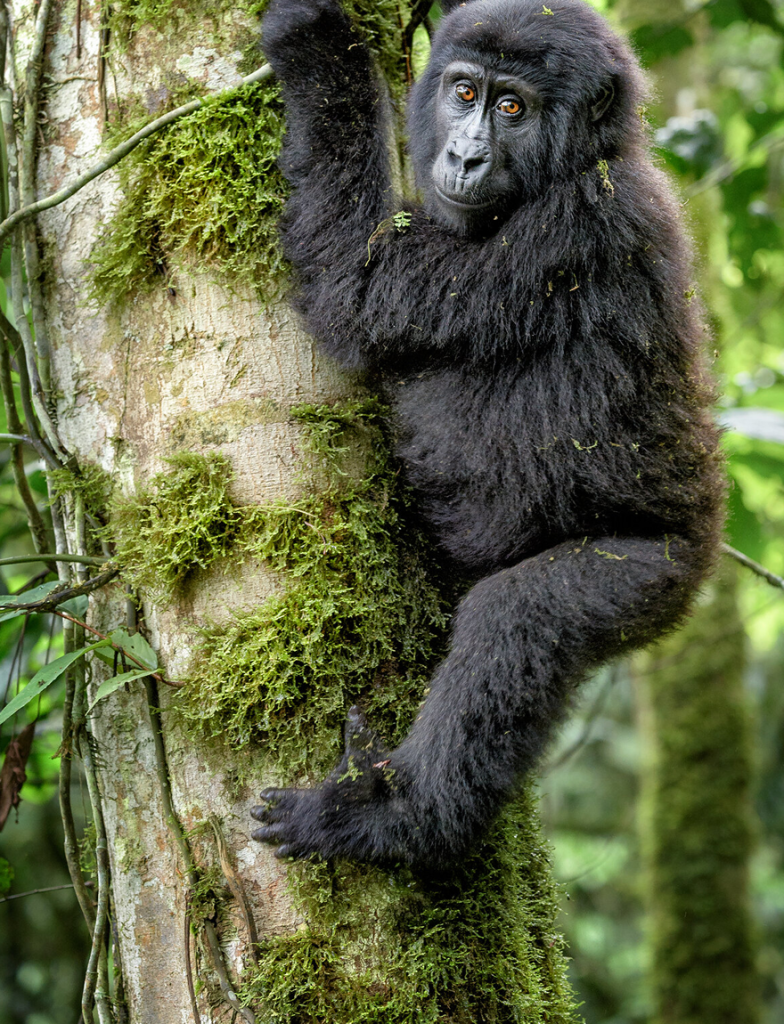
Bwindi Impenetrable vs. Volcanoes National Park: A Gorilla Trekking Comparison
Uganda’s Bwindi Impenetrable National Park and Rwanda’s Volcanoes National Park are the two most popular places on Earth to track mountain gorillas (Congo’s Virunga National Park is the third, but ongoing security concerns have kept it largely closed to tourists). Both parks sit in the same broader ecosystem — the Virunga Massif region of the Albertine Rift — and both offer genuinely life-changing encounters with habituated gorilla families through adventure gorilla tours built specifically around this experience. But they differ significantly in terrain, cost, accessibility, and overall trekking experience. Here’s how they stack up.
Location and Accessibility
Volcanoes National Park has the clear edge in accessibility. The park sits just 2.5–3 hours’ drive from Kigali International Airport, making it the most accessible gorilla trekking park on the continent. You can land in Kigali, drive up that same morning or the next, and be face-to-face with gorillas within 24–48 hours of arrival — which is exactly why a 1 day gorilla trekking safari out of Kigali has become such a popular option for travelers short on time. Rwanda’s road network is excellent, and the entire trip can be done as a short, efficient add-on to a broader itinerary.
Bwindi, by contrast, is remote. It sits in the far southwest corner of Uganda near the borders with Rwanda and the DRC, and getting there typically involves either a long day’s drive from Kampala (8–10 hours) or a domestic flight to airstrips like Kihihi or Kisoro followed by a road transfer. It’s not prohibitive, but it takes more logistical planning and time than Volcanoes does.
Terrain and Trekking Difficulty
This is where the two parks feel most different. Bwindi lives up to its name — it’s a genuinely dense, ancient montane rainforest with steep, muddy, tangled terrain. Vines, thick undergrowth, and slick slopes are the norm, and treks can range from a couple of hours to a full-day slog depending on where the gorilla family has wandered. It’s physically demanding, but many trekkers say that the raw, primeval feel of the forest itself is part of what makes Bwindi so special — you feel like you’re pushing into genuinely wild, untouched habitat. For travelers who want more time in that habitat, a 4 days double gorilla trekking itinerary lets you track two separate gorilla families on two different days, doubling your chances of a memorable encounter and giving you a real feel for how varied each trek can be.
Volcanoes National Park sits on the lower slopes of the Virunga volcanoes and tends to have more open terrain — bamboo forest and volcanic foothills rather than tangled rainforest. Guides and operators generally describe it as somewhat easier going underfoot, though the altitude (much of the park sits above 2,500m/8,200 ft) adds its own challenge, and treks can still involve serious uphill hiking depending on the gorilla family’s location that day.
Gorilla Families and Permit Availability
Uganda simply has more gorillas and more permits. Bwindi has 17 gorilla groups, making it the best place to see gorillas in the wild, and combined with Mgahinga’s single family, Uganda issues approximately 176 standard gorilla trekking permits per day across both national parks, spread across the four sectors of Bwindi — Buhoma (north), Ruhija (east), Rushaga (south), and Nkuringo (south).
Rwanda’s Volcanoes National Park is smaller in scale but well organized: daily permit limit sits at 112 permits across 14 habituated families, with eight permits daily for each of the 12 habituated gorilla groups that can be visited by tourists. More Bwindi permits generally means more flexibility on dates, especially in peak season.
Cost
This is the starkest difference between the two parks, and it’s likely to be the deciding factor for many travelers.
Bwindi/Uganda: The standard permit for foreign non-residents is $800, with a discounted low-season rate of $600 during April, May, and November, introduced as of February 2026, when the Uganda Wildlife Authority officially introduced low-season price discounts. Uganda also uniquely offers the Gorilla Habituation Experience, where for USD $1,500 per person, you get to spend up to four hours with a semi-habituated gorilla family, joining researchers and rangers as they gently accustom the group to human presence — limited to just four visitors per group each day, and only available in Bwindi’s southern Rushaga sector.
Volcanoes/Rwanda: The standard permit costs USD 1,500 per person per trek, issued by the Rwanda Development Board, a price that has remained unchanged for several years and reflects Rwanda’s high-value, low-volume tourism strategy. There is a meaningful low-season discount: a 30 percent discount applies, bringing the permit price from USD 1,500 to USD 1,050 per person, for visitors who also spend time in Akagera National Park and Nyungwe National Park during the low season of November through May — though booking only the Volcanoes trek during low season does not qualify, nor does a token half-day stop at either park.
In short: Uganda’s standard permit costs roughly half of Rwanda’s, and even Uganda’s premium habituation experience costs the same as Rwanda’s standard one-hour trek.
The Overall Experience
Rwanda has deliberately built a “high-value, low-volume” tourism model around gorilla trekking. That shows up in the infrastructure: Rwanda offers some of Africa’s finest gorilla trekking lodges, with unmatched service, privacy, and proximity to Volcanoes National Park, many located within 10–20 minutes of park gates, eliminating long morning drives. Properties like Bisate Lodge, Singita Kwitonda, and Sabyinyo Silverback Lodge are among the most celebrated luxury safari lodges on the continent. Rwanda also pairs well with a Dian Fossey research station hike and golden monkey trekking, and the country’s broader reputation for cleanliness, safety, and organized tourism adds to the polish of the whole trip. Travelers who want to see the country beyond the volcanoes often build in a full 8 days Rwanda safari, combining Volcanoes National Park with Akagera’s big game drives and Nyungwe’s canopy walks and chimp tracking for a well-rounded look at everything Rwanda offers.
Uganda leans into a different kind of experience — wilder, more rugged, and better value. Beyond gorillas, Bwindi tours also give access to 90 mammal species and 11 primates including the black and white colobus monkey, and Uganda offers a wider range of complementary wildlife experiences nearby, including chimpanzee tracking in Kibale Forest National Park and chimp encounters at Kyambura Gorge in Queen Elizabeth National Park. It’s a less manicured, more immersive jungle experience, and accommodation options span a much wider price range, from community-run budget camps to high-end lodges like Clouds Lodge and Gorilla Forest Camp.
Given how close the two parks sit to one another across the border, many travelers skip the either/or question entirely and book one of the growing number of Uganda Rwanda safaris combined itineraries — trekking one gorilla family in Bwindi and another in Volcanoes on the same trip, while also picking up savanna game drives in Queen Elizabeth or Akagera along the way.
A Few Practical Notes
Both countries enforce the same core rules: minimum age of 15, one hour maximum with the gorillas, and the permit does not cover transportation, accommodation, or meals. Both require advance booking — generally 3–6 months out, and much further ahead for peak season (June–September and December–February) or Christmas/New Year dates. Uganda’s booking process changed recently: as of March 2026, individual foreign travelers can no longer purchase permits directly through the Uganda Wildlife Authority — all bookings must go through licensed tour operators, and cash is no longer accepted at any park gate. In Rwanda, independent travelers can still book permits directly online through the Rwanda Development Board, though most people go through an operator regardless.
So Which Park Is Best?
There isn’t a single objectively “best” answer — it depends on what you’re optimizing for.
If budget matters and you want the most immersive jungle trek, choose Bwindi. You’ll pay roughly half of what Rwanda charges, have access to more gorilla families and permit dates, and get a rawer, more physically engaging forest experience. It’s the better choice if you’re combining gorillas with a broader Uganda safari (Murchison Falls, Queen Elizabeth, chimp trekking).
If time, comfort, and logistics matter most, choose Volcanoes. The short drive from Kigali, generally gentler terrain, and world-class lodges make it the smoother, more convenient — if considerably pricier — option. It’s the better choice for travelers with limited time, honeymooners, or those prioritizing luxury and polish over budget.
For a genuinely “great experience” in the sense of maximum value, wildlife diversity, and permit flexibility, Bwindi Impenetrable National Park tends to edge ahead for most travelers — Uganda is widely regarded as offering the best overall gorilla trekking value in Africa, without meaningfully compromising on the quality of the encounter itself. But if convenience, luxury, and a more streamlined trip matter more to you than price, Volcanoes National Park delivers an equally unforgettable — just more expensive and more polished — version of the same magic. Either way, the hour you spend sitting a few meters from a wild silverback and his family is, by nearly universal account, worth the trek.
Popular safari packages to Volcanoes National Park in Rwanda:
Short Duration Packages
1-Day Gorilla Safari from Kigali The shortest option includes departing Kigali very early in the morning and getting to Volcanoes National Park. This is ideal for those with very limited time.
2-3 Day Gorilla Trekking Safari A 3-day gorilla trekking safari is a short but effective option where you arrive in Kigali, go to Volcanoes National Park, do trekking, and return. The cheapest 2-day, 1-night gorilla trekking safaris out of the Rwandan capital Kigali start at around US$2,000 per person, usually inclusive of transport from Kigali, a transfer to the trailhead, accommodations, meals and the US$1,500 trekking permit.
Medium Duration Packages
3-Day Gorilla and Golden Monkey Trekking Safari This package gives you a chance to track mountain gorillas and golden monkeys in their natural habitats.
3-Day Gorilla Trek and Dian Fossey Hike An affordable option that includes trekking the endangered mountain gorillas in Volcanoes National Park as well as hiking the Dian Fossey grave.
5-Day Rwanda Safari A 5-day Rwanda safari includes gorilla trekking, golden monkeys, and city tour.
Low Season 4-Day Package Rwanda Safari & Akagera Safari offers a Low Season 4-Day Safari & Gorilla Trekking package which includes low season discounts on accommodation and park permits, with travelers spending a minimum of two nights in Akagera or Nyungwe National Park before trekking to see mountain gorillas.
Longer/Luxury Packages
6-Night Luxury safari holiday; A 6-night luxury journey through Rwanda combines a private Akagera safari with a stay in the Volcanoes region for mountain gorilla and golden monkey trekking.
8-Day Volcanoes and Nyungwe Park Safari This safari offers the opportunity to see primates and gorillas in Volcanoes National Park as well as combine visits to Nyungwe Park.
Key Activities Included
Beyond gorilla trekking, Volcanoes National Park offers diverse adventures including golden monkey tracking through bamboo forests, volcano hiking to Mount Bisoke’s crater lake at 3,711m, and Mount Karisimbi at 4,507m.
Most packages operate year-round, though between November and May, visitors can receive a 30% discount on Rwanda gorilla trekking permits from the Rwanda Development Board.