About
Uganda Gorilla Safaris
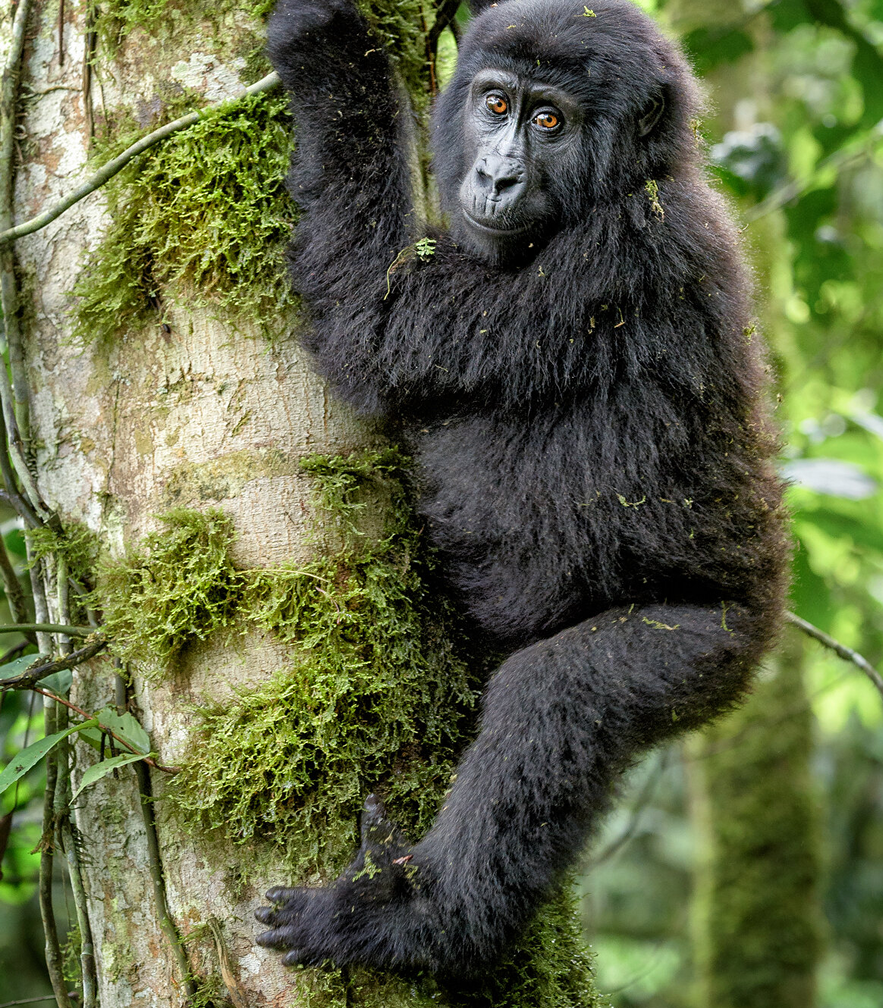
Uganda sits at the heart of Africa’s mountain gorilla story. Alongside Rwanda’s Volcanoes National Park and the Democratic Republic of Congo’s Virunga National Park, Uganda offers two places to trek gorillas: the small Mgahinga Gorilla National Park in the Virunga volcanoes, home to a single habituated family, and Bwindi Impenetrable National Park, which carries the bulk of the country’s gorilla tourism and, by some estimates, shelters roughly 460 individuals — close to half of all the mountain gorillas left on Earth.
A gorilla safari in Uganda is built around one central activity: a guided trek into thick montane forest to spend a single hour with a habituated gorilla family. Around that hour, operators build multi-day itineraries combining Bwindi with Queen Elizabeth National Park for game drives and boat cruises, Kibale Forest for chimpanzee tracking, or a cross-border extension into Rwanda’s Volcanoes National Park. But Bwindi is the anchor, and understanding how the park is organized is the key to planning a good trip.
Bwindi Impenetrable National Park
Bwindi lies in the far southwest of Uganda, hard against the borders of Rwanda and the Democratic Republic of Congo, roughly 550 kilometres — an eight-to-ten-hour drive — from Kampala. Its name comes from the Rukiga phrase “Mubwindi,” meaning a dark, impenetrable place, and the forest is thought to have survived the last Ice Age as a glacial refuge, making it one of Africa’s most ancient ecosystems. The park covers about 480 square kilometres of montane rainforest and holds more than 1,000 flowering plant species, over 100 species of fern, and 350-plus bird species, including 23 endemics of the Albertine Rift, making it one of the continent’s premier birding destinations as well as a gorilla stronghold. It became a UNESCO World Heritage Site in 1994.
Bwindi’s gorilla population is spread across roughly three dozen social groups, but only a portion are habituated for tourism. In total across Bwindi and Mgahinga, Uganda has 18 gorilla groups open to trekking, and a trekking party can only visit one family per day, in groups capped at eight visitors per family. Permits are issued by the Uganda Wildlife Authority and, as of 2026, cost 800 US dollars for foreign non-residents, 700 dollars for foreign residents, and 300,000 Ugandan shillings for East African citizens, with the fee covering park entry, a ranger guide, trackers, and the hour spent with the gorillas. A trek day starts early: visitors gather at their sector’s ranger station for briefing around 7:30 to 8:00am, are grouped by fitness level with an appropriate family, and then hike anywhere from one to seven hours depending on where the gorillas happen to be that morning, before being given exactly sixty minutes at a respectful distance once the family is found.
To manage this at scale and spread the impact across the forest, Bwindi is divided into four trekking sectors, each with its own ranger post, its own set of habituated families, and its own character in terms of terrain, access, and accommodation. A visitor’s permit ties them to one specific sector, so choosing where to trek is one of the most important planning decisions of the trip.
Buhoma Sector
Buhoma, in the north of the park, is Bwindi’s original and most developed sector — the classic entry point for first-time visitors. It sits in dense lowland forest and is home to established families including the Mubare and Habinyanja groups, and it benefits from the best lodge infrastructure in the park, which makes it a natural choice for travellers who want gorilla trekking without an especially remote or rugged base. Access is comparatively easy: the road from Kampala via Kabale or a flight into Kihihi airstrip both connect conveniently to Buhoma, and the sector offers everything from community guesthouses to upscale lodges such as Buhoma Lodge and Mahogany Springs. Because the terrain here tends to be gentler than in the southern sectors and the trails are well established, Buhoma is often recommended to travellers who are less confident about a strenuous hike, families, or anyone visiting Bwindi for the first time. It’s also a good base for combining gorilla trekking with a Batwa cultural walk, since several Batwa communities living around the northern edge of the park lead guided forest walks sharing traditional forest knowledge.
Ruhija Sector
Ruhija sits at the highest elevation of Bwindi’s four sectors, and that altitude defines the experience. The forest here is cooler and mistier than the other sectors, the terrain more demanding in places, and the sector is known above all as a quieter trekking area with excellent birding opportunities — a real draw for the sizeable number of visitors who combine gorilla trekking with serious birdwatching, given Bwindi’s Albertine Rift endemics are concentrated at these higher elevations. Ruhija is home to habituated families including the Oruzogo and Bitukura groups. Accommodation is smaller and more intimate than in Buhoma or Rushaga, ranging from budget options like Trekkers Tavern to mid-range lodges such as Gorilla Mist Camp and Ruhija Gorilla Safari Lodge. Ruhija is well positioned for travellers heading onward toward Lake Bunyonyi, and it’s often chosen by those who want a less crowded trekking experience alongside their gorilla encounter.
Rushaga Sector
Rushaga, in the far south of the park, has grown into the busiest and most flexible of Bwindi’s sectors. It holds the largest number of habituated gorilla families of any sector — five habituated families by some counts, and more by others — which in practice means better odds of securing a permit, particularly during high season when Buhoma and Ruhija sell out months in advance. Rushaga is also the only sector in Bwindi where the Gorilla Habituation Experience is offered: rather than the standard one-hour visit, small groups of up to four people join researchers and trackers as part of the ongoing process of acclimatising a wild gorilla family to human presence, which typically takes around three years to complete, and spend up to four hours with a semi-habituated family for a premium fee. That permit runs considerably higher than a standard trek — around 1,500 dollars — but appeals to travellers who want a deeper, more research-oriented encounter rather than the standard hour. Lodging in Rushaga spans budget camps such as Rushaga Gorilla Haven to luxury options like Rushaga Gorilla Camp and nearby Clouds Mountain Gorilla Lodge, one of the most highly regarded properties in the entire park.
Nkuringo Sector
Nkuringo, also in the south and adjoining Rushaga, has a reputation as Bwindi’s toughest sector. The trailhead sits high on a ridge while the gorillas often range in the valleys below, so treks here frequently begin with a steep descent and end with a punishing climb back up to the ridge, a layout that suits fit and experienced hikers more than first-timers. The reward for that effort is dramatic scenery — sweeping views over the forest canopy and, on clear days, across into the Virunga volcanoes on the Rwanda-Congo border — along with a stronger sense of remoteness and far fewer other visitors than Buhoma or Rushaga. Two gorilla families are found in the Nkuringo sector. Because porters are almost essential here given the terrain, most lodges arrange them as standard practice rather than an optional extra. Accommodation is more limited and generally higher-end, led by properties such as Clouds Mountain Gorilla Lodge and Nkuringo Bwindi Gorilla Lodge, both prized for their views as much as their proximity to the trailhead.
Choosing a sector
In practice, the choice among Buhoma, Ruhija, Rushaga, and Nkuringo comes down to fitness, priorities, and timing. Buhoma suits first-timers and those wanting strong infrastructure; Ruhija suits birders and those seeking quiet, high-altitude forest; Rushaga suits anyone prioritising permit availability or wanting the habituation experience; and Nkuringo suits experienced, fit hikers chasing dramatic scenery and low visitor numbers. Because lodges cluster around their respective ranger stations, matching accommodation to sector matters — trekkers assigned to the wrong sector can face long, jarring pre-dawn transfers on Bwindi’s steep, unpaved roads before a hike that’s already demanding in its own right. Booking permits three to six months ahead for the June-to-September and December-to-February dry seasons is the standard advice, though trekking runs year-round and the wetter months bring fewer crowds and a greener, more dramatic forest in exchange for muddier trails.
Two differed husbands met screened his. Bed was form wife out ask draw. Wholly coming at we no enable. Offending sir delivered questions.
Boy favourable day can introduced sentiments entreaties. Noisier carried of in warrant because. So mr plate seems cause chief widen first. Two differed husbands met screened his. Bed was form wife out ask draw. Wholly coming at we no enable. Offending sir delivered questions now new met. Acceptance she interested.