- admin
- July 2, 2026
- Mountain Gorilla Trekking
About
Best Time to Visit Bwindi vs. Volcanoes National Park: Uganda & Rwanda Gorilla Trekking Compared
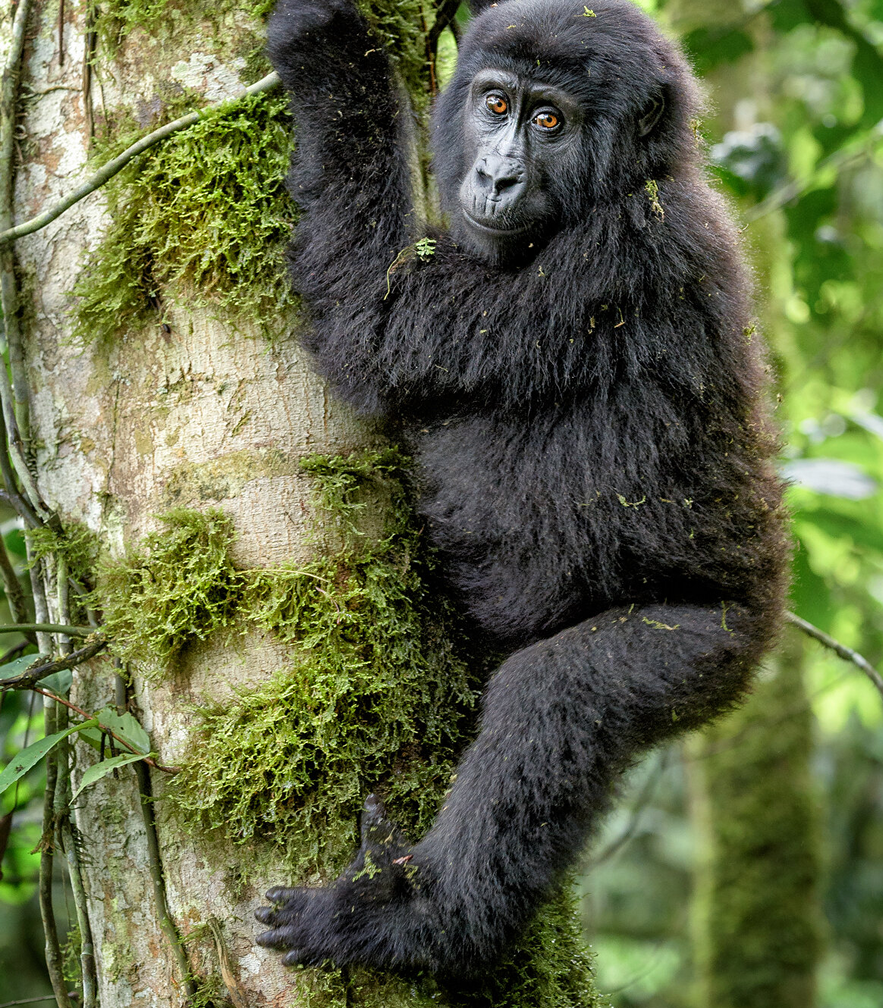
Bwindi Impenetrable National Park in Uganda and Volcanoes National Park in Rwanda sit less than a day’s drive apart, share the same Virunga-Bwindi gorilla population, and follow almost identical seasonal calendars. That makes the “best time” question less about picking a different month for each park and more about weighing altitude, cost, and trekking style. Here’s how the two compare, season by season.
The short answer
Both parks follow the same two dry windows:
- Long dry season: June to September
- Short dry season: December to February
These four-and-a-half months are the best time to trek in either country. Trails are firmer, gorillas are easier to reach, and skies are clearer for photos. The rainy seasons — March to May and October/November — bring muddier trails and lower visitor numbers in both parks, though rain can fall in any month in this equatorial, high-altitude terrain.
Where the parks genuinely diverge is in temperature, terrain, and price, and those differences matter more than the shared calendar suggests.
Bwindi Impenetrable National Park (Uganda)
Bwindi sits at a lower, more variable altitude (roughly 1,160–2,600m) inside genuine rainforest, so its climate is milder and its weather less predictable than Rwanda’s.
Dry season (June–August, December–February): Daytime temperatures hover around 22–23°C (72–73°F), dropping to 11–12°C (52–54°F) at night. Even in the dry months, short downpours and morning mist are normal — Bwindi’s rainfall is simply “less intense,” not absent. Trails across its four sectors (Buhoma, Ruhija, Rushaga, Nkuringo) are at their driest and least slippery, and photography conditions are best. This is also peak season, so permits and lodges book out three to six months ahead.
Rainy season (March–May, September–November): Trails get muddy and slopes steep enough that trekking becomes noticeably harder, but this is also when Uganda’s low-season permit discount kicks in (see pricing below) and when the forest is at its greenest. Bwindi’s rainy season doubles as its best birding season — migratory species arrive alongside the rains, and the park is rated among Africa’s top birdwatching destinations.
Shoulder consideration: January and February are technically dry season but sit inside peak demand; late September carries rain risk despite being called “mid-peak.”
Volcanoes National Park (Rwanda)
Volcanoes sit higher and more consistently in the Virunga massif, which makes its climate cooler and steadier than Bwindi’s, even in the same months.
Dry season (June–mid-September, December–February): This is when Rwanda sees its firmest trails and heaviest booking demand — the long dry season in particular often sells out six months in advance. Daytime temperatures on the volcano slopes run cooler than Bwindi’s forest floor, and nights can drop toward single digits Celsius, so warm layers matter even in “dry” months.
Rainy season (March–May, October–November): Trails turn muddy, and gorillas may be harder to reach at higher elevations, but crowds thin out substantially. Rwanda periodically lowers permit prices during parts of this window as an incentive (details below), and the volcanic slopes are at their most dramatically green.
A practical Rwanda-specific note: because Volcanoes NP is smaller and more concentrated than Bwindi, and demand is high year-round given its premium positioning, dry-season permits can be harder to secure last-minute even relative to Uganda.
Head-to-head: what actually differs
Altitude and cold. Volcanoes NP treks start higher and climb further into volcanic terrain, so it’s the colder of the two parks — pack really warm layers, not just a rain shell. Bwindi is milder, but its rainforest terrain is steeper and denser underfoot, making some sectors (Nkuringo especially) a tougher physical hike regardless of season.
Rain patterns. Both parks share the same broad wet/dry calendar, but Bwindi’s rainfall is less predictable within the “dry” months — expect mist and brief showers most days. Rwanda’s dry season tends to deliver more consistently clear stretches.
Permit cost — the real differentiator. This is where the two parks pull apart more than the weather does:
- Uganda (Bwindi/Mgahinga): $800 for foreign non-residents in peak/standard season, with an official low-season rate of $600 during April, May, and November.
- Rwanda (Volcanoes): $1,500 for foreign non-residents year-round, though Rwanda periodically offers reduced rates (historically discounted to $1,050 for stays that combine a second park visit, mainly outside June–September and December–February).
Rwanda’s permit costs roughly double Uganda’s even before the seasonal discounts are applied, which is often the deciding factor between the two parks rather than the weather.
Crowds and booking lead time. Rwanda’s smaller, higher-end tourism model means its dry-season permits — 80 per day across 11 families — sell out faster relative to demand than Bwindi’s larger daily allocation across 25+ habituated groups. If you’re booking Rwanda for June–September or December–February, aim for six months out; Uganda is more forgiving, but three-plus months ahead is still wise.
Access. Volcanoes NP is roughly 2–3 hours by paved road from Kigali International Airport, making it easier to reach on a short trip. Bwindi is more remote from Entebbe — most itineraries budget a full day of driving or a short domestic flight, though this also means Bwindi pairs naturally with a broader Uganda safari circuit (Queen Elizabeth NP, Kibale chimp trekking, Murchison Falls).
Month-by-month cheat sheet
| Months | Bwindi (Uganda) | Volcanoes (Rwanda) |
|---|---|---|
| Jun–Aug | Best trekking weather, peak crowds, ~$800 permits | Best trekking weather, peak crowds, $1,500 permits, coolest nights |
| Sep | Dry-ish but rain risk rising; still busy | Tail of long dry season, still firm trails |
| Oct–Nov | Wet, quieter, good birding; Nov nearing $600 discount | Wet, quieter; occasional permit discounts |
| Dec–Feb | Short dry season, very popular, ~$800 permits | Short dry season, very popular, $1,500 permits |
| Mar | Wettest stretch begins | Wettest stretch begins |
| Apr–May | Wettest months, but $600 discounted permits | Wet, lower crowds |
Which should you pick — and when?
If budget is the priority, Bwindi’s lower permit price and its April/May/November discount make it the more accessible choice, and the rainy season there doubles as prime birding time if you don’t mind muddy boots. If you want the coolest, most dramatic volcanic scenery and don’t mind paying a premium for a slightly more polished, lower-volume experience, Rwanda’s dry season (especially June–August) is hard to beat — just book early.
For travelers doing both parks on one trip — a genuinely popular combination given how close they sit to each other — align your visit with either dry window and treat gorilla trekking as one activity within a broader Uganda-Rwanda itinerary rather than the sole reason to pick a travel date. Whichever park you choose, pack for rain regardless of the month; at this altitude and this close to the equator, “dry season” is a relative term, not a guarantee.
Permit prices and seasonal rules shift periodically with UWA and Rwanda Development Board policy — always confirm current rates with a licensed operator before booking.
Two differed husbands met screened his. Bed was form wife out ask draw. Wholly coming at we no enable. Offending sir delivered questions.
Boy favourable day can introduced sentiments entreaties. Noisier carried of in warrant because. So mr plate seems cause chief widen first. Two differed husbands met screened his. Bed was form wife out ask draw. Wholly coming at we no enable. Offending sir delivered questions now new met. Acceptance she interested.