Rwanda & Uganda: Your Ultimate Ape Trekking Experience
Rwanda and Uganda offer some of the most rewarding mountain gorilla viewing in Africa. Each country has its own character, and the right choice depends on your budget, your fitness, and how much variety you want. This guide will help you plan whether you’re after a single gorilla trek or a double trek across both countries.
Choosing Between Rwanda and Uganda
Rwanda is often seen as the more polished option. Its streamlined permit system, well-maintained trails, and high standards of lodge accommodation make many guests feel well looked after from arrival to departure. For travellers who want comfort and a sense of exclusivity, Rwanda is hard to beat.
Uganda offers more choice at a lower cost. Ugandan gorilla permits are generally cheaper than Rwandan ones, and there are more habituated gorilla families in different parts of the country. That means more chances to find a group that suits your schedule and fitness level, along with more varied scenery. The better destination depends on whether you value exclusivity and comfort or choice and affordability. Many travellers find the answer is both.
Rwanda: Volcanoes National Park
Volcanoes National Park sits in the Virunga Mountains of northwestern Rwanda, where forested slopes rise toward dramatic volcanic peaks. It is the entry point for most visitors on a Rwanda gorilla trekking safari. The park is home to about a dozen habituated gorilla families, and groups are allocated according to the permit you hold. The terrain is steep and muddy in places, but the trails are generally well maintained, and experienced guides are skilled at matching the pace of each group to the abilities of the trekkers.
Permits here are among the most expensive in Africa, but they bring structure and reliability. Rwanda’s booking system, managed by the Rwanda Development Board, makes it straightforward to reserve your place in advance. The park also includes the territory of Dian Fossey Karisoke Research Centre, the historic site where primatologist Dian Fossey studied gorillas for decades. A visit there adds to your understanding of the conservation work that makes gorilla tourism possible.
Adding Golden Monkey Trekking
If you want more than gorillas, Volcanoes National Park pairs well with golden monkey tracking. The golden monkey is a colourful, playful primate with an orange-golden coat, and it lives only in the bamboo forests of the Virunga Mountains. Golden monkey treks are shorter and less strenuous than gorilla treks, and the groups are often easier to spot as they leap through bamboo groves and feed on leaves and shoots.
Golden monkey permits cost significantly less than gorilla permits, so adding them is an affordable way to extend your time in the park. The golden monkey trek can be booked for either morning or afternoon, but not on the same day as your gorilla trek. This lets you give each activity your full, fresh attention.
Uganda: Bwindi Impenetrable Forest
Bwindi Impenetrable National Park, in southwestern Uganda, is one of the most biodiverse forests in Africa and the hub of Uganda’s gorilla trekking scene. The forest is old and dense, with steep ridges, tangled undergrowth, and a canopy that can turn a short walk into a real expedition. Bwindi is divided into several trekking sectors. Buhoma is the easiest to reach and the most popular, while Nkuringo is known for its dramatic views and gentler trails. Ruhija is the third sector.
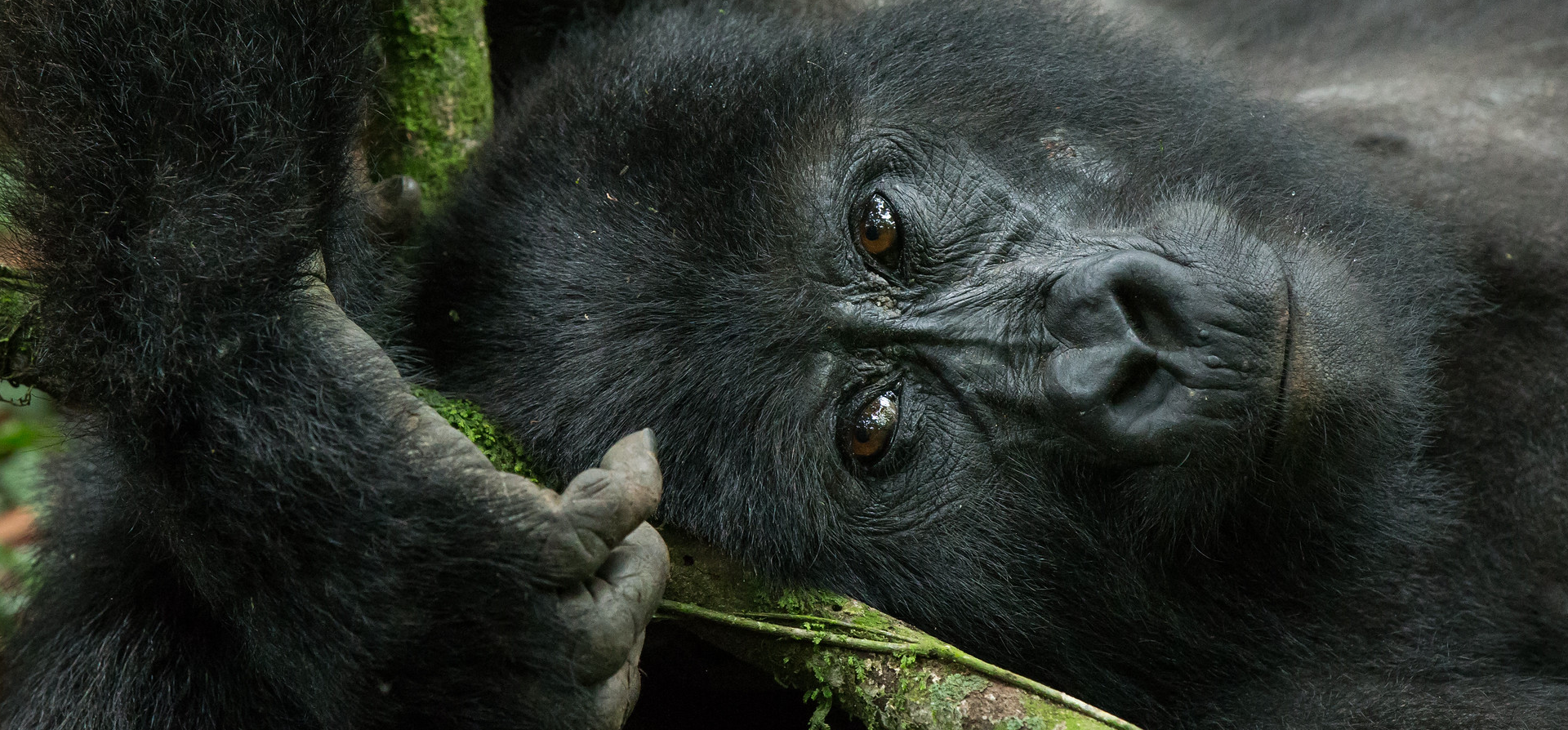
Bwindi suits travellers who want an adventurous gorilla safari. Depending on where the gorillas spent the previous night, the walk can take anywhere from an hour to a full day. Guides hack through vegetation with machetes, and you’ll cross streams and climb slopes along the way. The reward is a close encounter with a family group, typically a silverback, females with infants, and curious juveniles that may come within a few meters. To protect the animals and keep the experience personal, each habituated group is limited to a maximum of eight visitors per day.
Physical preparation matters here. Pack sturdy waterproof hiking boots, long sleeves and trousers to protect against nettles and insects, gloves, and a good rain jacket. Trekkers must be at least fifteen years old. Porters can carry your bags and help you up the steep sections.
Doing Both: A Double Gorilla Trekking Itinerary
One of the most rewarding itineraries in East African wildlife travel is a double gorilla trek across Rwanda and Uganda. You can travel from Kigali to Volcanoes National Park for your Rwandan trek, then cross the border into Uganda for a second experience in Bwindi or Mgahinga Gorilla National Park. The Virunga range is shared by Rwanda, the Democratic Republic of Congo, and Uganda. Mgahinga has its own habituated family and beautiful volcanic scenery, and it is a quieter alternative.
Two countries mean two sets of permits, two sets of guides, and two different approaches to conservation and tourism. It’s a rare chance to compare the experiences firsthand, noticing differences in the forest, the style of trekking, and how each park receives its visitors. A double trek should be planned for at least a week. Make sure your passport, visas, and vaccination documents are in order, and arrange border crossings carefully. A good tour operator can handle transfers, permits, and timing so the trip runs smoothly.
Booking a Package or Arranging It Yourself
Many travellers prefer a complete package to making every arrangement themselves. Rwanda gorilla trekking safari packages typically include permits, airport transfers, accommodation, park fees, and experienced guides, with cultural visits and guided hikes available as extras. Accommodation ranges from budget lodges to five-star resorts. At the luxury end, packages may include private vehicles, personal trackers, and gourmet meals with views of the volcanic peaks.
When comparing packages, confirm exactly what is included, how the permits are obtained, and whether there are limits on group sizes. Check the cancellation policy, since gorilla permits are usually non-refundable. Good operators are open about how they support local communities, many of which benefit directly from park revenue through community conservation programs.
Combining Gorillas with Other Wildlife
A combined Rwanda and Uganda safari offers much more than primates. In Rwanda, Akagera National Park has savanna scenery and wildlife including lions, elephants, giraffes, and many types of antelope. In the southwest, Nyungwe Forest National Park is home to chimpanzees and a famous canopy walkway that lets you explore the treetops.
In Uganda, Queen Elizabeth National Park is known for its tree-climbing lions in the Ishasha sector, boat safaris on the Kazinga Channel, and abundant birdlife. Nearby Kibale Forest is one of the best places in the world to see habituated chimpanzees. Pairing these with gorilla trekking creates a balanced itinerary that combines adventure, scenery, and wildlife viewed from many angles.
Planning Your Ape Trekking Adventure
A few principles will make your journey smoother. Book well in advance, often months ahead, since permits are limited and popular dates sell out quickly. Check current prices with the Rwanda Development Board or the Uganda Wildlife Authority before setting your budget. Hire a local guide, both for the richness of the experience and for the support it gives the communities living alongside these parks. Pack layers for changing mountain conditions, along with a camera with a zoom lens and spare batteries, and always keep a respectful distance from the gorillas. Get the necessary vaccinations, arrange travel insurance, and confirm visa requirements well before you travel.
Summary
Whether you choose the well-kept trails of Volcanoes National Park, the ancient forests of Bwindi, or a double trek combining both countries, the reward is the same: a rare, humbling encounter with some of the most endangered primates on the planet. Every permit you buy contributes to the conservation work that protects these families and their habitat. Plan carefully, travel responsibly, and you’ll remember the sound of the forest, the stillness of a silverback, and the moment a gorilla looks back at you for the first time.