Rwanda Gorilla Trekking
Great Value! Best Offers! |

Rwanda Gorilla Trekking – Adventure Tours, Volcanoes National Park

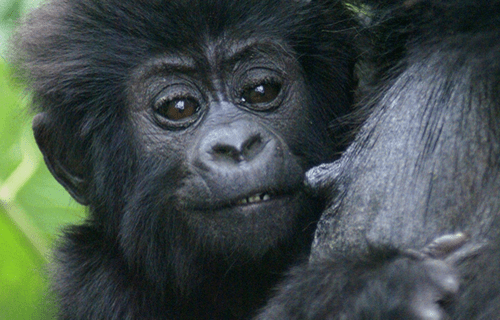
Rwanda Gorilla Trekking stands among the most extraordinary wildlife encounters on Earth — an hour spent within touching distance of critically endangered mountain gorillas in the misty forests of the Virunga Mountains. This unforgettable gorilla adventure tour takes place in a single protected area, Volcanoes National Park Rwanda, and understanding its geography, gorilla families, permit system, and seasonal patterns is essential to planning a successful gorilla safari in Rwanda.

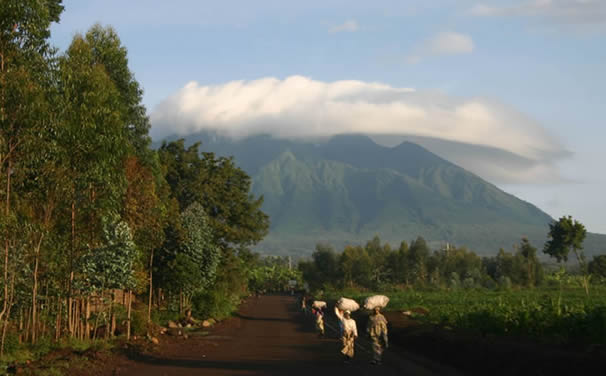
The Park Itself; Volcanoes National Park was established in 1925 by the Belgian colonial authorities as part of the larger Albert National Park, making it Africa’s first and oldest national park, created primarily to protect the endangered mountain gorillas from poaching. The park shelters five of the eight volcanoes of the Virunga chain — Mount Karisimbi, Mount Bisoke, Mount Muhabura, Mount Gahinga, and Mount Sabyinyo — a dramatic landscape of volcanic peaks, bamboo forest, and Afro-montane vegetation shared across the borders of Rwanda, Uganda, and the Democratic Republic of Congo.

In terms of scale, Volcanoes National Park Rwanda spans approximately 160 square kilometers, making it considerably smaller than East Africa’s major savannah parks, but its compact size is part of its appeal — dense gorilla populations are packed into forested volcanic slopes that rise dramatically above the surrounding farmland. The park sits in northern Rwanda, roughly 116 kilometers (72 miles) from Kigali International Airport, a drive of about two hours on well-maintained paved roads through Rwanda’s terraced hillsides — a striking contrast to Uganda’s Bwindi Impenetrable National Park, which typically requires much longer overland travel. This accessibility is frequently cited as one of the chief advantages of choosing gorilla safaris Rwanda over its regional competitors.

Gorilla Trekking Safaris- Rwanda
Volcanoes National Park

1 Day Rwanda Gorilla Trekking

Short on time? Track mountain gorillas in Volcanoes National Park in one day — Kigali pickup, expert guide, lunch included. Book your day trip today.

Hot

4 Days Rwanda Gorilla Tours and Bisoke Hike

Explore Rwanda in 4 days: track mountain gorillas, summit Mount Bisoke's crater lake, and experience local culture. Expert-guided safari packages

Hot

2 Days Rwanda Gorilla Trekking

Trek mountain gorillas in Rwanda in just 2 days. Kigali pickup, Volcanoes National Park permit, private 4x4 transfer & full-board lodging included

Hot

6 Days Gorilla trek, Golden Monkeys and Karisoke Hike

Experience Rwanda's best 6-day safari: gorilla trekking, golden monkey tracking, the Karisoke hike, and Lake Kivu — all expertly planned. Get a free quote

Hot

3 Days Rwanda Gorillas & Golden Monkeys

Plan your 3-day Rwanda gorilla trekking trip: Kigali transfers, Kinigi lodges, ranger-guided trek in Volcanoes National Park, and 2026 permit info included.

Hot

8 Days Rwanda Gorilla trekking and Nyungwe Chimps

Rwanda's ultimate primate safari: 8 days tracking gorillas, golden monkeys and chimps across Volcanoes and Nyungwe National Parks, Kigali to Kigali.

Hot

About Volcanoes National Park

In terms of scale, Volcanoes National Park Rwanda spans approximately 160 square kilometers, making it considerably smaller than East Africa’s major savannah parks, but its compact size is part of its appeal — dense gorilla populations are packed into forested volcanic slopes that rise dramatically above the surrounding farmland. The park sits in northern Rwanda, roughly 116 kilometers (72 miles) from Kigali International Airport, a drive of about two hours on well-maintained paved roads through Rwanda’s terraced hillsides — a striking contrast to Uganda’s Bwindi Impenetrable National Park, which typically requires much longer overland travel. This accessibility is frequently cited as one of the chief advantages of choosing gorilla safaris Rwanda over its regional competitors.

The total number of gorilla groups in Volcanoes National Park is estimated at 18, of which 12 are fully habituated and available for tracking on a daily basis; the rest are mainly kept for ongoing research. The park is also home to another eight habituated groups which are generally harder to reach and mainly visited by researchers, not tourists — though if a tourist-designated group happens to cross into Uganda or the DRC on a given day, one of these research groups is sometimes visited by visitors instead.

There is a conservation logic behind capping the number of tourism-ready families. More than roughly 70% of the total gorilla population is not habituated for tourism, so as not to undermine tourism’s role as a genuine conservation tool — more exposure to humans raises the risk of disease transmission and can generate added stress for the animals.

The Gorilla Families

Volcanoes National Park is home to roughly a dozen fully habituated gorilla families available for daily tourist visits, alongside several additional groups habituated purely for scientific research and rarely opened to tourists. Habituation — the gradual process of acclimating a wild gorilla family to human presence — can take years, and each family is led by at least one silverback, sometimes several. Anyone planning a gorilla tour Rwanda itinerary will encounter these well-known groups:

Susa — historically the largest and most famous family in Rwanda, directly linked to Dian Fossey’s original research. In 2008 the group split, with part of it becoming known as the Susa B or Karisimbi family, which lives on the upper slopes of Mount Karisimbi and is considered the most difficult family to trek in Rwanda due to its high, remote range.

Sabyinyo — found on the lower slopes of Mount Sabyinyo and long led by Guhonda, described as the largest and most powerful silverback in the park. Because of its lower-altitude range, it’s often recommended as one of the more accessible treks, though the family occasionally wanders outside the park boundary into surrounding farmland.

Amahoro — meaning “peace” in Kinyarwanda, this is one of the most tranquil families in the park, ranging on the slopes of Mount Bisoke. Its calm silverback leadership has historically made it vulnerable to losing members to more assertive rivals — most notably giving rise to a splinter family.

Umubano — formed when the silverback Charles broke away from Amahoro after repeated confrontations with its dominant male, taking a number of females with him. The name means “living together” or “togetherness,” chosen to symbolize cooperation in conservation.

Agashya (formerly known as Group 13) — now led by the silverback who replaced Nyakarima, ranging around Mount Sabyinyo, and notable for having grown substantially since its early habituation days.

Kwitonda — named after its “humble” silverback leader and originally migrated from the Democratic Republic of Congo, now ranging on the steep slopes of Mount Muhabura.

Hirwa — meaning “the lucky one,” formed from members who broke away from the Agashya and Sabyinyo families, and known for having produced a rare set of twins.

Karisimbi — living on the high, remote slopes of Rwanda’s tallest peak, a demanding trek reserved for the physically fit.

Other recognized families include Bwenge, Ugenda, Muhoza, Igisha, Kwisanga, and Noheli, each with its own history of splits, territory, and temperament. Trekkers do not choose their family in advance; rangers make assignments each morning based on group fitness, trekking difficulty, and gorilla location that day, so anyone hoping for an easier or more strenuous hike should mention this at the morning briefing.

Choosing a Rwanda Gorilla Trekking Safari with Accommodation in Volcanoes National Park

Volcanoes National Park, home to roughly a third of the world’s remaining mountain gorillas, offers trekking experiences that pair naturally with a range of Safari lodge accommodation styles to suit different budgets and preferences.

Budget/mid-range: Lodges like Kinigi Guest House or Mountain Gorilla View Lodge offer comfortable, simple rooms close to park headquarters, ideal for travelers prioritizing the trek itself over luxury extras.

Mid-to-upper range: Options such as Mountain Gorilla Nest or Da Vinci’s Lodge Volcanoes provide stylish rooms, good food, and mountain views without the premium price tag of top-tier lodges—good for those wanting comfort and value.

Luxury: Properties like Bisate Lodge, One&Only Gorilla’s Nest, and Singita Kwitonda deliver high-end villas, spa facilities, gourmet dining, and personalized service, often with volcano views right from your room. These suit travelers seeking a fully immersive, pampered experience alongside the trek.

We select accommodations that offer the best value for money while staying within your safari budget. We have excellent deals on lodges in Volcanoes National Park and Bwindi Impenetrable National Park, so any quotation we provide will always align with your expected budget. These lodges combine comfort with tranquility, situated at the base of Volcanoes National Park and on the edges of the forest in Bwindi.

Best Rwanda gorilla trekking in Volcanoes National Park. 12 habituated families, professional guides, and conservation-focused safaris. Plan your trek now.

4 Days Rwanda Luxury Safari

Explore Rwanda's mountain gorillas in Volcanoes National Park. 12 habituated families, expert guides, and unforgettable wildlife experiences. Book your trek today.

Learn More
Lorem Ipsum is simply dumy text of the printing typesetting industry lorem ipsum.
Everything you need to know before booking a gorilla trek: permit prices, cancellation rules, physical demands, and how Rwanda compares to Uganda

The Trekking Experience: How It Works

Gorilla trekking permits are highly controlled. Volcanoes National Park generally has 96 gorilla permits each day, broken down into 8 permits for each of the 12 habituated groups accessible to tourists. This spreads tourism income and impact around the population so there is little disturbance to any one family.

A Typical Trekking Day

Each day of trekking begins early, usually starting at 7 am with a briefing at the park headquarters. The trek can take anywhere from one to six hours depending on which gorilla family is being visited that day. Trackers go ahead of the tourist groups to find out where the gorillas slept the previous night, then rangers take visitors on foot through bamboo forest, volcanic ridges and montane rainforest to find them. When the group does meet the gorillas, visitors are permitted to watch the family in its natural habitat for a maximum of one hour.

Fitness and Terrain

It’s physical work but not generally technical. The terrain in Volcanoes National Park is not as steep as in Uganda’s Bwindi Impenetrable Forest, but the altitude varies from about 2,400 to 4,507 meters above sea level, and a reasonable degree of fitness is recommended. Hiring a porter is widely recommended for practical help on the trail, and it also puts income directly in the hands of community members living around the park, many of whom are former poachers now employed in tourism.

Rules and Regulations

Rules exist to protect both visitors and gorillas. All three gorilla trekking countries have agreed a minimum age of 15 and strictly enforce this rule, though there is no upper age limit — fitness and mobility is left to the traveller’s own judgement. Distance rules (generally 7 to 10 meters from the gorillas) and mask requirements for treks help mitigate the risk of disease transmission from humans to the apes, who are closely related to us on a genetic basis.

Price and Booking

In 2024/2025, a single gorilla permit costs:

Visitor CategoryPrice
Non-African visitorsUS$1,500
Rwandan citizens & other East African Community countriesUS$200
Non-citizens of Rwanda / residents of other African countriesUS$500

This makes Rwanda the premium gorilla-trekking destination of the three countries — compared with roughly US$800 in Uganda’s Mgahinga park and historically US$400 in DRC’s Virunga National Park (although Virunga has been closed to tourism since 2020 due to security concerns).

The international rate drops to about $1,050 for travelers who combine their gorilla trek with at least two nights at either Akagera National Park or Nyungwe Forest National Park, and this seasonal 30% discount is valid from November through May. Permits can be booked directly with the Rwanda Development Board or through a licensed tour operator. Permits are highly sought after, so advance booking — often six months or more ahead for peak season — is strongly advised.

More Than Gorillas

Gorilla trekking is the headline draw, but Volcanoes National Park offers a wider range of experiences:

  • Following the endemic, playful golden monkey through the park’s bamboo zones
  • Hiking to Dian Fossey’s grave and the former Karisoke Research Centre
  • Climbing to the summits of peaks like Bisoke (with its crater lake) and Karisimbi, the highest point in Rwanda at 4,507 metres
  • Visiting Buhanga Eco-Park, an ancient forest connected with local folklore
  • Exploring the Musanze Caves, formed some 62 million years ago during the last volcanic eruption in the area

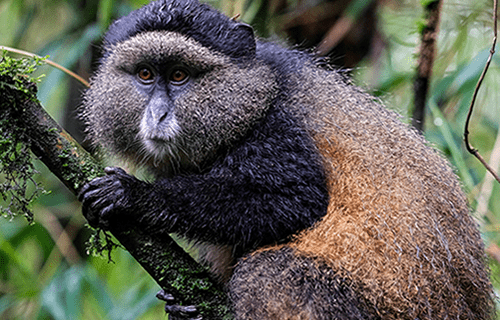
Other wildlife in the park includes the golden monkey, black-fronted duiker, African buffalo, spotted hyena, harnessed bushbuck and 178 recorded bird species.

Conclusion

Together, these elements make Volcanoes National Park not just a wildlife destination, but a living case study in how tourism revenue, scientific research and community partnership can pull a critically endangered species back from the edge of extinction — and provide travelers with one of the most profound wildlife encounters available anywhere on Earth.