- admin
- July 2, 2026
- Mountain Gorilla Trekking
Gorilla Trekking Packing List
What to Pack for Gorilla Trekking: Complete Packing List for Uganda & Rwanda
Gorilla trekking in Bwindi Impenetrable National Park (Uganda) or Volcanoes National Park (Rwanda) is one of the most extraordinary wildlife encounters on the planet — but it is also one of the most physically demanding. You’ll be hiking through dense, muddy, high-altitude rainforest, sometimes for hours, before you get your hour with a habituated gorilla family. What you pack can make the difference between an uncomfortable slog and a trip of a lifetime. This guide walks through everything you need, category by category, plus a few things people forget.
Understanding the Environment First
Before diving into the checklist, it helps to understand what you’re actually walking into. Treks take place at elevations between roughly 1,500 and 2,600 meters, through thick, often trail-less vegetation, stinging nettles, and volcanic or forest mud. Weather can shift from bright sun to sudden downpour within the same hour, regardless of season. Trek duration is unpredictable — you might find the gorillas after 45 minutes or after six hours, and you only get one guaranteed hour with them once located. This unpredictability is the reason packing correctly matters so much: you need to be prepared for cold, heat, rain, and rough terrain, all in the same day.
Clothing: Layer for Everything
Long-sleeved shirts and long trousers are non-negotiable, not optional. Bwindi and Volcanoes National Park are full of stinging nettles, thorny vines, and biting insects, and short sleeves will leave you regretting it within the first twenty minutes. Choose lightweight, quick-drying fabrics rather than cotton, which stays wet and heavy once soaked with sweat or rain.
- Moisture-wicking base layers – synthetic or merino wool, not cotton
- A warm mid-layer or fleece – mornings at trailheads are often cold, especially in Rwanda at higher elevations
- A waterproof, breathable rain jacket – this is essential, not optional; showers arrive with little warning
- Waterproof rain trousers or a poncho – useful if you’re trekking during the wetter months
- Neutral-colored clothing – khaki, olive, or brown is recommended. Bright colors can startle wildlife, and white or very dark clothing shows dirt and heat differently; avoid camouflage patterns too, as they’re restricted for civilians in both countries
- A change of clothes for after the trek – you will be muddy, sweaty, and possibly wet through
Tuck trousers into your socks or gaiters to keep safari ants and nettles from finding their way up your legs — trekkers who skip this step regret it almost universally.
Footwear
Your boots matter more than almost anything else on this list.
- Sturdy, ankle-supporting, waterproof hiking boots, broken in well before the trip — never wear brand-new boots on trek day
- Thick hiking socks, ideally two pairs to change into if the first gets soaked
- Gaiters – highly recommended for keeping mud, water, and biting ants out of your boots
- Camp shoes or sandals for evenings back at the lodge
Hands and Head
- Gardening-style gloves – these protect your hands from stinging nettles and thorns when you need to grab onto vegetation for balance on steep, slippery slopes. This is one of the most commonly forgotten items, and one of the most useful
- A wide-brimmed hat or cap for sun protection at the trailhead and on more open sections
- A buff or bandana – doubles as a sweat rag, dust mask, or neck protection
Gear and Equipment
- A daypack (20–30 litres) with a rain cover to carry water, snacks, and camera gear
- A hydration bladder or water bottles – at least 2 liters; dehydration at altitude sneaks up quickly
- Trekking poles – genuinely transformative on steep, muddy descents; many lodges and tour operators rent these, but bringing your own collapsible pair guarantees fit and availability
- A dry bag or ziplock bags to protect your phone, permit, and passport from rain and mud
- A headlamp or small flashlight – useful for early starts, generator-only evenings, and dark lodge paths
- Binoculars – gorillas can occasionally be spotted from a distance, and binoculars enrich birdwatching along the way too
Photography Equipment
You’ll only get one hour with the gorillas, so come prepared to actually use it rather than fumbling with gear.
- A camera with a versatile zoom lens (roughly 70–200mm equivalent is a good all-rounder for both close and mid-distance shots)
- Extra batteries and memory cards – there’s no charging a battery mid-forest, and cold, humid conditions drain batteries faster
- A rain cover or dry bag for your camera
- A lens cloth, as humidity constantly fogs lenses
A note on flash photography: it’s prohibited during gorilla encounters, as it can startle and stress the animals, so make sure your camera performs reasonably in low light under forest canopy.
Health and Personal Care
- Insect repellent with DEET
- Sunscreen, even on overcast days — you’re often at altitude with thin cloud cover
- Personal first-aid kit: blister plasters, antihistamines, pain relievers, rehydration salts
- Hand sanitiser and wet wipes – running water isn’t always available on trail breaks
- Any personal prescription medication, packed in carry-on/daypack, not checked luggage
- Anti-malarial medication, prescribed before your trip, as both countries are malaria zones
- A basic altitude-sickness remedy if you’re prone to it, particularly relevant in Rwanda’s higher-elevation sectors
Both the Uganda Wildlife Authority and the Rwanda Development Board enforce a strict rule: anyone showing signs of a cold, flu, or other communicable illness may be barred from trekking, since gorillas are highly susceptible to human respiratory diseases. It’s worth packing a basic face mask, as some operators now recommend or require one during the actual encounter to protect the gorillas.
Documents and Money
- Passport (valid for at least six months, with blank pages)
- Your gorilla trekking permit — bring a printed or digital copy; this cannot be replaced on the spot if lost
- Travel insurance details, ideally including medical evacuation coverage — reputable operators often require proof of this
- Visa documentation, or East Africa Tourist Visa if you’re combining Uganda and Rwanda
- Yellow fever vaccination certificate — required for entry into both countries
- Cash in small denominations (USD, printed after 2009, in good condition) for tips and incidentals — note that Uganda’s park gates have moved to a fully cashless payment system, so budget for card or mobile payment where relevant, though cash is still the standard for tipping trackers, guides, and porters
On permit costs specifically: as of 2026, a standard Uganda gorilla permit runs $800 for foreign non-residents, with a low-season discount to $600 during April, May, and November. Rwanda’s permit is fixed at $1,500 per person year-round, with no seasonal discounts. These prices are worth confirming with your operator closer to your travel dates, as they are periodically revised.
Consider Hiring a Porter
This isn’t strictly a packing item, but it belongs on this list: hiring a local porter (typically $15–20 for the day) to carry your daypack is one of the best decisions you can make. It’s not just about convenience — porters also help pull you up and down muddy slopes, and the fee directly supports communities living around the park, many of whom depend on gorilla tourism for their livelihoods.
What to Leave at Home
- Camouflage-patterned clothing (restricted for civilian use in both countries)
- Drones (banned in both Bwindi and Volcanoes National Park without special permits, which are rarely granted)
- Heavy, non-broken-in boots
- Excess valuables you don’t need on the trail
A Sample Packing List at a Glance
Wear on trek day: long-sleeved shirt, long trousers, waterproof boots, hat, gloves, gaiters Carry in daypack: rain jacket, extra layer, 2L water, snacks, camera + spare battery, first-aid kit, insect repellent, sunscreen, permit copy, passport copy, cash for tips. At the lodge: change of clothes, camp shoes, personal toiletries, medication
Final Thoughts
Gorilla trekking rewards preparation. The hour you spend with a gorilla family is unforgettable regardless of what you’re wearing, but the three, four, or six hours of hiking to get there — through nettles, mud, altitude, and unpredictable weather — are a very different experience depending on whether you packed well. Layer for temperature swings, protect your hands and legs from vegetation, invest in real waterproof boots, and bring enough camera gear to actually capture the moment. Everything else is a bonus.
Mountain gorillas (Gorilla beringei beringei) are one of the most extraordinary wildlife encounters on Earth, and gorilla trekking has become a signature safari experience in East Africa for good reason.
Where They Live
Mountain gorillas exist in only two isolated populations, found nowhere else on the planet:
- The Virunga Massif — spanning the borders of Uganda, Rwanda, and the Democratic Republic of Congo, including Volcanoes National Park (Rwanda), Mgahinga Gorilla National Park (Uganda), and Virunga National Park (DRC)
- Bwindi Impenetrable Forest — a dense, ancient rainforest in southwestern Uganda
They live at high altitude, typically between 2,200 and 4,300 meters, in cool, misty mountain forests thick with bamboo and vegetation.
A Conservation Success Story
Mountain gorillas were once considered critically endangered, with numbers dropping below 700 individuals in the late 1980s. Thanks to decades of dedicated conservation work, anti-poaching efforts, and community-based tourism, the population has slowly recovered to just over 1,000 individuals today — one of the only great ape populations in the world that is actually increasing. This recovery is largely credited to the revenue and protection that gorilla trekking tourism generates.
Why It’s Such a Popular Safari Activity
1. Rarity and exclusivity. With only around 1,000 gorillas left and permits deliberately limited (a handful of groups per day, per park), trekking offers an experience very few people on Earth get to have. That scarcity — plus permit costs running from a few hundred to $1,500+ depending on the country — adds to its appeal as a bucket-list activity.
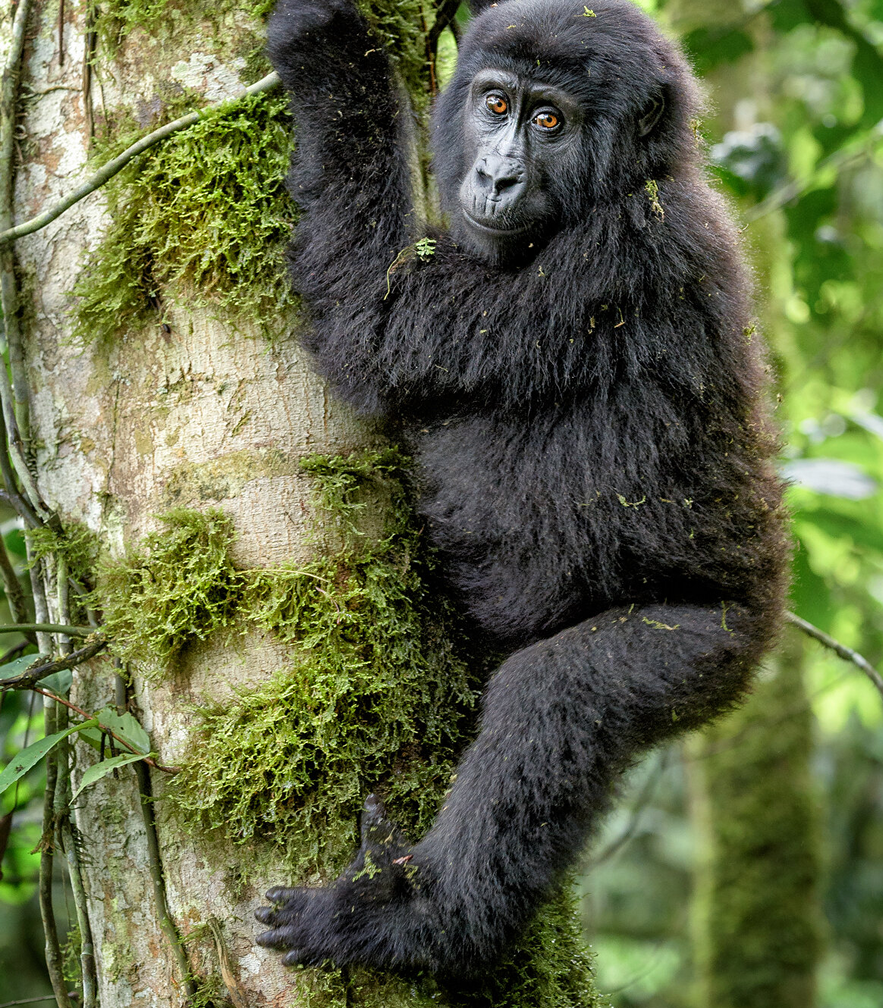
2. Profound closeness with a wild great ape. Habituated gorilla families allow visitors to sit within a few meters of them for a full hour, watching silverbacks, mothers, and playful youngsters go about their day. The eye contact and clear intelligence in their gaze often leaves people deeply moved — many describe it as the most emotional wildlife encounter of their lives.
3. The adventure of the trek itself. Reaching the gorillas isn’t passive — it involves hiking through dense, muddy, high-altitude rainforest, sometimes for a couple of hours, sometimes much longer. The physical effort and unpredictability make the eventual encounter feel earned.
4. Direct conservation impact. Because permit fees fund park protection and local communities, visitors know their trip is directly supporting the survival of an endangered species — a rare case where tourism dollars visibly translate into conservation outcomes.
5. Combines well with other iconic experiences. Uganda and Rwanda pair gorilla trekking with chimpanzee tracking, savanna game drives, and volcano hikes, letting travellers build a broader East African itinerary around it.
If you’re considering it, permits typically need to be booked well in advance (especially in Rwanda, where demand is highest), and July is actually within one of the better trekking windows since the dry season runs roughly June through September.