- admin
- July 2, 2026
- Mountain Gorilla Trekking
Gorilla Trekking Age Limit
Gorilla Trekking Age Limits and Health Requirements: Full 2026 Guide
Gorilla trekking is one of Africa’s most extraordinary wildlife experiences, offering travelers the rare privilege of standing just meters away from endangered mountain gorillas in their natural habitat. But before booking a permit, it’s essential to understand the rules that govern who can participate. Because mountain gorillas are critically vulnerable to human disease and the trek itself is physically demanding, the three countries where this activity takes place — Rwanda, Uganda, and the Democratic Republic of Congo (DRC) — enforce strict age and health requirements. This guide covers everything travelers need to know before planning a gorilla safari.
The Minimum Age Requirement
Across Rwanda, Uganda, and the DRC, the minimum age for gorilla trekking is 15 years old. This is not a suggestion or a loose guideline — it’s a firmly enforced regulation set by each country’s wildlife authority: the Rwanda Development Board (RDB), the Uganda Wildlife Authority (UWA), and the Institut Congolais pour la Conservation de la Nature (ICCN) in the DRC. Rangers check passports at park headquarters before the morning briefing, and anyone who doesn’t meet the age threshold will be turned away, regardless of how fit or mature they appear.
The rule traces back to the IUCN Best Practice Guidelines for Great Ape Tourism, an internationally recognized standard for primate-based ecotourism. All three countries adopted the 15-year threshold into their own national park regulations, meaning the rule is consistent no matter which destination you choose.
Importantly, the age requirement is based on the child’s age on the day of the trek, not the date of booking. If a child turns 15 partway through your trip, they can only join a trek scheduled on or after their birthday.
There is no upper age limit for gorilla trekking. Travelers in their 60s, 70s, and beyond regularly complete treks successfully, though older travelers or those with limited mobility should honestly assess their own fitness and consider arranging a private group or hiring porters for extra support.
Why the Age Limit Exists
The 15-year rule reflects a combination of conservation science and practical safety concerns, rather than an arbitrary cutoff.
Disease transmission risk. Mountain gorillas share roughly 98% of human DNA, which makes them highly susceptible to human respiratory illnesses such as colds, flu, and other airborne infections. Young children are more likely to carry mild viral infections without showing obvious symptoms, and a minor human cold can spread through a gorilla family and become life-threatening. Because gorilla populations are small and genetically fragile, even a single outbreak could have serious consequences for a habituated group.
Physical demands of the trek. Treks take place in dense montane rainforest at high altitude, often in Volcanoes National Park (Rwanda), Bwindi Impenetrable and Mgahinga Gorilla National Parks (Uganda), or Virunga and Kahuzi-Biega National Parks (DRC). Trails are steep, muddy, and unpredictable, sometimes involving stream crossings and dense vegetation. A trek to locate a gorilla family can last anywhere from one to eight hours depending on where the group is feeding that day. Younger children often lack the stamina and endurance to complete this reliably, and rangers cannot guarantee an early exit once a group is deep in the forest.
Behavioral and emotional maturity. Encountering a wild silverback at close range requires calm, disciplined behavior. Sudden movements, loud noises, or panicked reactions can be misread by gorillas as threatening, potentially provoking a defensive charge. The correct response — staying low, remaining quiet, and avoiding eye contact — requires a level of self-control and situational awareness that park authorities consider unreliable in younger children.
Are There Any Exceptions?
Rwanda enforces its 15-year minimum with essentially zero flexibility. Even a child who is a day short of the required age, no matter how mature or physically capable, will not be permitted to trek. Passport verification at Volcanoes National Park headquarters is strict, so it’s worth building the age rule into your itinerary well in advance.
Uganda is occasionally more flexible. In limited cases, the UWA has granted written exceptions for children who are 14 but will turn 15 within the same calendar year, provided they are demonstrably fit and accompanied by a parent or guardian throughout the trek. This is not automatic and should never be assumed. Families wishing to pursue this route typically need to:
- Submit a formal request letter from their tour operator to the UWA Executive Director well before the trip.
- Provide a copy of the child’s passport along with recent photos to help demonstrate physical maturity.
- Include a brief account of the child’s hiking experience and general fitness level.
- Sign an indemnity waiver at park headquarters on the morning of the trek, if the request is approved.
Because approval is discretionary and never guaranteed, families should not purchase permits for an under-15 child on the assumption that an exception will be granted. The DRC does not generally offer similar exceptions.
Alternatives for Younger Children
Traveling with children under 15 doesn’t mean they’re excluded from the trip entirely. Rwanda and Uganda both offer age-appropriate alternatives so families can still enjoy a shared experience:
- Golden monkey trekking in Rwanda’s Volcanoes National Park is open to children as young as 12.
- Chimpanzee trekking in Uganda’s Kibale Forest also has a minimum age of 12, considerably lower than gorilla trekking.
- Guided nature walks and community tours run by park authorities let younger children learn about conservation without entering habituated gorilla territory.
- Many lodges near Bwindi and Volcanoes National Park offer kids’ clubs, guided birdwatching, or short nature-focused programs while parents trek.
Health Requirements for All Trekkers
Age is only one part of the eligibility picture. Because gorillas are so vulnerable to human illness, health screening happens at every stage of the process, and trekkers of any age are expected to self-report symptoms honestly.
Contagious illness policy. Anyone showing signs of a cold, flu, cough, diarrhea, or other communicable illness on the morning of the trek will be asked not to participate. Park rangers conduct a basic health check during the pre-trek briefing, and travelers who appear unwell may be denied entry even with a valid permit. Most tour operators recommend rescheduling rather than risking exposing a gorilla family to illness, and reputable operators will help arrange a new date when this happens.
General fitness expectations. While there’s no formal fitness test, trekkers should be in reasonably good physical condition. The altitude (often above 2,000 meters/6,500 feet), uneven terrain, and unpredictable trek length mean that cardiovascular fitness and comfort with multi-hour hikes matter more than raw athletic ability. Travelers with chronic conditions such as heart disease, severe asthma, or mobility limitations should consult a doctor before booking and discuss options like hiring a porter, arranging a sedan chair (available in some parks for those unable to walk the full distance), or requesting an easier gorilla family location.
Vaccinations and travel health preparation. Requirements vary somewhat by country of entry, but travelers to Rwanda, Uganda, and the DRC are generally advised to:
- Carry proof of yellow fever vaccination, which is often required for entry depending on your travel history.
- Consider vaccinations or preventive medication for malaria, typhoid, and hepatitis A, in consultation with a travel clinic.
- Bring any personal medications in original packaging, since pharmacies near the parks are limited.
Face masks. Some parks recommend or require trekkers to wear a surgical-style mask while in close proximity to the gorillas, a practice that became more widespread during and after the COVID-19 pandemic as an added layer of disease prevention. Check current requirements with your park or operator before travel, since rules can change.
Planning Around the Rules
Because both the age limit and health screening are strictly enforced, the best way to avoid disappointment is to plan ahead:
- Confirm every trekker’s age against the trek date, not the booking date, before purchasing permits.
- Book permits through a licensed operator who can help navigate exceptions in Uganda, if relevant.
- Build flexibility into your itinerary in case a trekker is asked to sit out due to illness on the day.
- Pack for the physical demands of the hike: sturdy waterproof boots, gaiters, rain gear, gloves, and layered clothing, regardless of age or fitness level.
- Have travel insurance that covers permit cancellations or rescheduling due to illness.
Gorilla trekking permits are expensive and limited in number, so understanding these age and health rules in advance protects both your trip and the extraordinary — and extremely vulnerable — mountain gorillas at the heart of the experience.
Mountain gorillas (Gorilla beringei beringei) are one of the most extraordinary wildlife encounters on Earth, and gorilla trekking has become a signature safari experience in East Africa for good reason.
Where They Live
Mountain gorillas exist in only two isolated populations, found nowhere else on the planet:
- The Virunga Massif — spanning the borders of Uganda, Rwanda, and the Democratic Republic of Congo, including Volcanoes National Park (Rwanda), Mgahinga Gorilla National Park (Uganda), and Virunga National Park (DRC)
- Bwindi Impenetrable Forest — a dense, ancient rainforest in southwestern Uganda
They live at high altitude, typically between 2,200 and 4,300 meters, in cool, misty mountain forests thick with bamboo and vegetation.
A Conservation Success Story
Mountain gorillas were once considered critically endangered, with numbers dropping below 700 individuals in the late 1980s. Thanks to decades of dedicated conservation work, anti-poaching efforts, and community-based tourism, the population has slowly recovered to just over 1,000 individuals today — one of the only great ape populations in the world that is actually increasing. This recovery is largely credited to the revenue and protection that gorilla trekking tourism generates.
Why It’s Such a Popular Safari Activity
1. Rarity and exclusivity. With only around 1,000 gorillas left and permits deliberately limited (a handful of groups per day, per park), trekking offers an experience very few people on Earth get to have. That scarcity — plus permit costs running from a few hundred to $1,500+ depending on the country — adds to its appeal as a bucket-list activity.
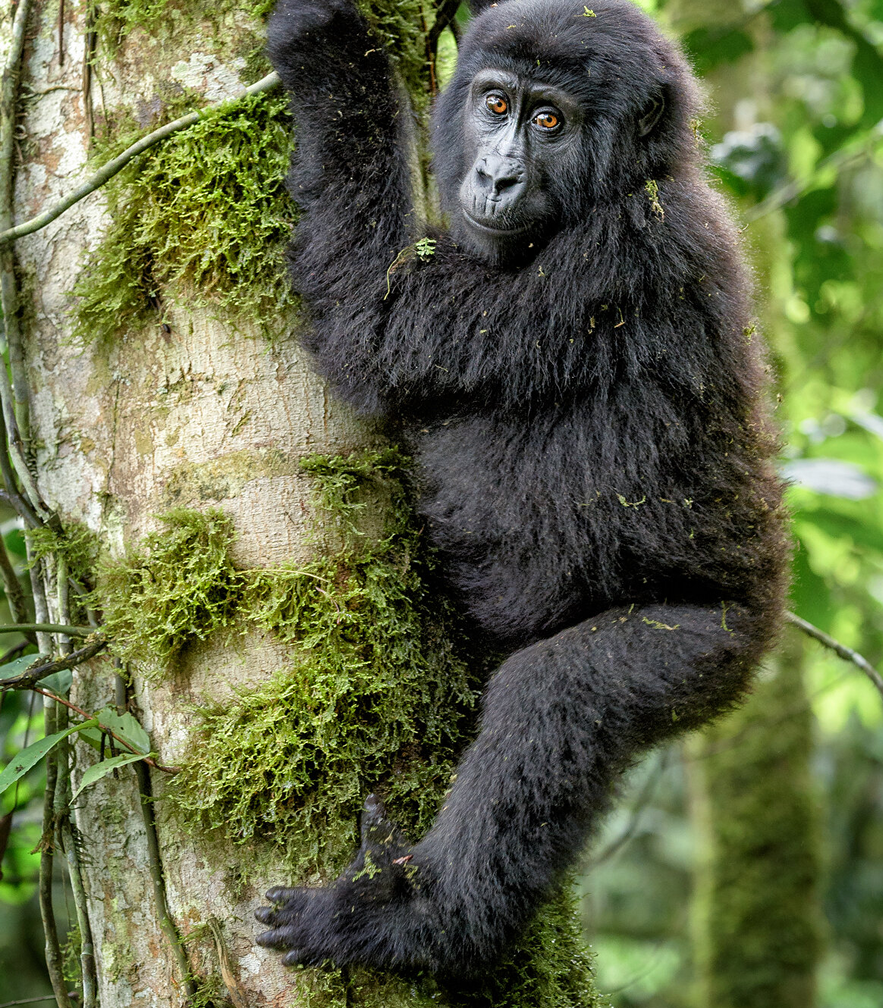
2. Profound closeness with a wild great ape. Habituated gorilla families allow visitors to sit within a few meters of them for a full hour, watching silverbacks, mothers, and playful youngsters go about their day. The eye contact and clear intelligence in their gaze often leaves people deeply moved — many describe it as the most emotional wildlife encounter of their lives.
3. The adventure of the trek itself. Reaching the gorillas isn’t passive — it involves hiking through dense, muddy, high-altitude rainforest, sometimes for a couple of hours, sometimes much longer. The physical effort and unpredictability make the eventual encounter feel earned.
4. Direct conservation impact. Because permit fees fund park protection and local communities, visitors know their trip is directly supporting the survival of an endangered species — a rare case where tourism dollars visibly translate into conservation outcomes.
5. Combines well with other iconic experiences. Uganda and Rwanda pair gorilla trekking with chimpanzee tracking, savanna game drives, and volcano hikes, letting travelers build a broader East African itinerary around it.
If you’re considering it, permits typically need to be booked well in advance (especially in Rwanda, where demand is highest), and July is actually within one of the better trekking windows since the dry season runs roughly June through September.