- admin
- July 6, 2026
- Gorilla Habituation
Guide to Mountain Gorilla Trekking
Mountain Gorilla Trekking: What to Expect Before, During & After
Mountain gorilla trekking stands as one of the world’s most transformative wildlife experiences. Found only in the dense, misty forests of Uganda, Rwanda, and the Democratic Republic of Congo, these remarkable creatures in their natural habitat are a privilege that demands serious preparation, both physical and mental. This comprehensive guide will help you understand what lies ahead on this extraordinary journey, updated with current permit pricing, population data, and health protocols.
The State of the Species Today
Before diving into logistics, it helps to understand exactly what you’ll be visiting. The global mountain gorilla population now stands at roughly 1,063 individuals, based on the most recent Greater Virunga Transboundary Collaboration census data — split almost evenly between the Virunga Massif (around 604 gorillas spanning Rwanda, Uganda, and DRC) and the Bwindi–Sarambwe ecosystem in southwestern Uganda (around 459 gorillas). That’s up from just 254 animals in 1981, a recovery driven by decades of anti-poaching patrols, veterinary intervention, and — critically — tourism revenue that funds nearly all of it. The species was downgraded from “Critically Endangered” to “Endangered” on the IUCN Red List in 2018, and it remains one of the only great ape populations trending upward. It is not, however, a finished story: the gorillas are confined to roughly 800 square kilometres of forest with no room to expand, hemmed in by some of the most densely farmed land on the continent. A single disease outbreak or conflict flare-up could undo a decade of gains quickly.
The Pre-Trek Phase: Preparation and Planning
Medical Requirements and Health Precautions
Before booking your gorilla trekking adventure, schedule a consultation with a travel medicine specialist at least six weeks in advance. Your doctor will likely recommend vaccinations for yellow fever, hepatitis A and B, typhoid, and tetanus. Additionally, malaria prophylaxis is essential, even though many trekking regions have lower transmission rates than surrounding areas. Ensure your routine vaccinations, including MMR and COVID-19, are current.
Gorillas share roughly 98% of their DNA with humans, which means they’re vulnerable to many of the same respiratory pathogens we carry. Since the documented COVID-19 transmission to gorillas in several parks during 2020–2021, park authorities have tightened proximity protocols. While Rwanda’s official minimum distance remains 7 meters, some parks and operators now recommend or enforce a slightly greater buffer and ask visitors to wear a surgical or N95-style mask during the viewing hour. Anyone with a cold, flu, or other contagious illness will be turned away at the trailhead — no exceptions, and no refund for that specific circumstance, so factor this into your trip insurance planning.
Your physical health should be thoroughly assessed. While gorilla trekking isn’t technically a mountaineering expedition, it demands cardiovascular fitness and strength. The elevation ranges from 2,200 to 4,500 meters, depending on your location, and the trek itself can last anywhere from three to eight hours of hiking through dense forest on challenging terrain. Even at these altitudes, altitude sickness is uncommon but possible. If you have a history of heart conditions, respiratory issues, or joint problems, consult your doctor about the physical demands. The minimum age for gorilla tracking is 15 in both Rwanda and Uganda.
Mental preparation is equally important. Research gorilla behaviour, conservation efforts, and the impact of your visit. Understanding these magnificent creatures’ intelligence, complex social structures, and endangered status will deepen the emotional significance of your encounter.
Booking and Logistics: What Permits Actually Cost Now
Permit pricing varies meaningfully by country, and it’s worth getting this right before you budget your trip:
- Uganda — a standard one-hour trekking permit for Bwindi Impenetrable National Park or Mgahinga Gorilla National Park costs $800 per person for foreign non-residents (with discounted rates for foreign residents, African citizens, and East African nationals). The Uganda Wildlife Authority has also introduced a discounted $600 low-season rate for April, May, and November. For a longer, more intensive experience, Uganda’s gorilla habituation permit runs $1,500 and allows a small group of just four visitors to spend up to four hours with a gorilla family still being acclimated to human presence.
- Rwanda — a standard permit for Volcanoes National Park costs $1,500 per person, with discounts of up to 30% available for visitors who combine their trip with at least two nights in Nyungwe or Akagera National Parks during the low season (November–May).
- Democratic Republic of Congo — Virunga National Park historically offered the cheapest permits (as low as $400, with off-season discounts), but the park has faced repeated closures since 2020 due to security instability in eastern DRC. Check current conditions carefully with your operator before counting on this option; Kahuzi-Biega National Park, which hosts eastern lowland (not mountain) gorillas, remains a separate alternative.
These permits fund conservation efforts that have brought mountain gorillas back from the brink of extinction — typically around 75% of permit revenue goes directly to conservation, with the remainder split between government administration and local community projects. Book well in advance (3–6 months, and up to a year for July–August or December–February peak dates) as permits are limited and high demand means they sell quickly during peak seasons.
Choose reputable tour operators who prioritise conservation and employ experienced guides. These professionals understand gorilla behaviour, forest ecology, and safety protocols. They’ll brief you thoroughly the evening before your trek, explaining what to expect and establishing ground rules that protect both you and the gorillas.
Packing Essentials: Gearing Up for Success
Clothing Strategy
Layering is your best friend in mountain gorilla country. Early morning temperatures can dip to 5°C, but physical exertion will warm you quickly. Pack:
- Moisture-wicking base layers (avoid cotton; choose merino wool or synthetic materials)
- A lightweight fleece or insulating mid-layer
- A waterproof, breathable outer jacket (you’ll encounter mist and rain, often constantly)
- Waterproof or water-resistant hiking pants
- A warm hat and gloves for pre-dawn starts
- Multiple pairs of moisture-wicking socks
Choose neutral earth tones — greens, browns, and greys. Bright colours startle wildlife. Your outer layer should be durable; the forest is unforgiving on fabric.
Footwear and Accessories
Invest in high-quality, waterproof hiking boots with excellent ankle support and aggressive tread patterns. The terrain is muddy, slippery, and uneven — subpar boots will make the experience miserable and increase injury risk. Break them in thoroughly before arrival. Gaiters are invaluable for keeping mud and moisture out of your boots. Trekking poles (collapsible poles pack easily) provide essential stability on steep descents and reduce strain on knees and ankles. Most operators also offer porters for a modest fee (often $15–20 per day) — hiring one is worth considering, and it directly supports the local community.
Additional essentials include:
- A medium-sized daypack (20–30 liters) with a waterproof cover
- A wet bag for electronics and valuables
- High-SPF sunscreen and lip balm (the intensity at elevation is deceptive)
- Insect repellent (though insects are less problematic at higher altitudes)
- A headlamp with extra batteries for early morning departures
- Binoculars for bird watching during rest periods
- A surgical mask or N95 (increasingly requested or required near the gorillas)
- A lightweight waterproof notebook and pencil for journaling
Nutrition and Hydration
Pack high-calorie snacks and electrolyte replacement. The physical exertion, altitude, and cool temperatures create significant caloric demand. Bring energy bars, trail mix, dried fruit, and chocolate. Your tour operator typically provides bottled water, but bring a water filter bottle as backup. Hydration at altitude is crucial for mitigating altitude sickness and maintaining energy.
Physical and Altitude Considerations
Fitness Preparation
Begin a structured training program at least eight weeks before departure. Incorporate cardiovascular exercise — hiking, running, or cycling — three to four times weekly. Build up to hikes of increasing duration and elevation gain, ideally mimicking the terrain you’ll encounter. Strength training for legs, core, and glutes is essential; these muscles bear the brunt of steep descents and uneven terrain.
Don’t underestimate your fitness level. Guides regularly report that overconfident trekkers underestimate the difficulty. The trek isn’t technically demanding, but it’s physically rigorous in ways that gym workouts don’t fully prepare you for — the combination of altitude, terrain, mud, and duration creates a unique challenge.
Altitude Acclimatization
At 2,000–4,500 meters elevation, acute altitude sickness (AMS) is a real possibility, though serious cases are rare. Symptoms include headache, nausea, fatigue, and difficulty sleeping. Your body needs time to adjust. Arrive at least two days before your trek, ideally at the highest elevation. Many guides suggest sleeping at altitude, walking at moderate intensity for short periods, and staying well-hydrated to support acclimatisation.
If you’re sensitive to altitude or carrying a high-risk health history, consult your doctor about prescription medications like acetazolamide. Most trekkers find that paying attention to hydration, eating regular meals, and pacing themselves are sufficient. Guides are trained in AMS recognition and management; inform them immediately of symptoms.
The Trek Day Itself
You’ll wake between 5:00 and 6:00 AM for a briefing, packed breakfast, and transportation to the trailhead. The hike’s difficulty varies significantly; some groups locate gorillas after two to three hours, while others trek for six to eight hours through dense forest with minimal visibility. You have no control over this — gorillas roam, and finding them depends on ranger tracking, recent gorilla movement, and fortune. Advance trackers typically head out ahead of the main group at dawn to locate the gorilla family and radio back its position, which is one reason the process runs as smoothly as it does.
The terrain is consistently steep, muddy, and vegetation is dense. You’ll often walk through tangles of vines and vegetation, ducking under branches and navigating roots. The air is cool and humid, frequently obscured by mist that reduces visibility to 10–20 meters. Walking sticks and boots become muddy within minutes; expect to be thoroughly filthy by the time you find the gorillas.
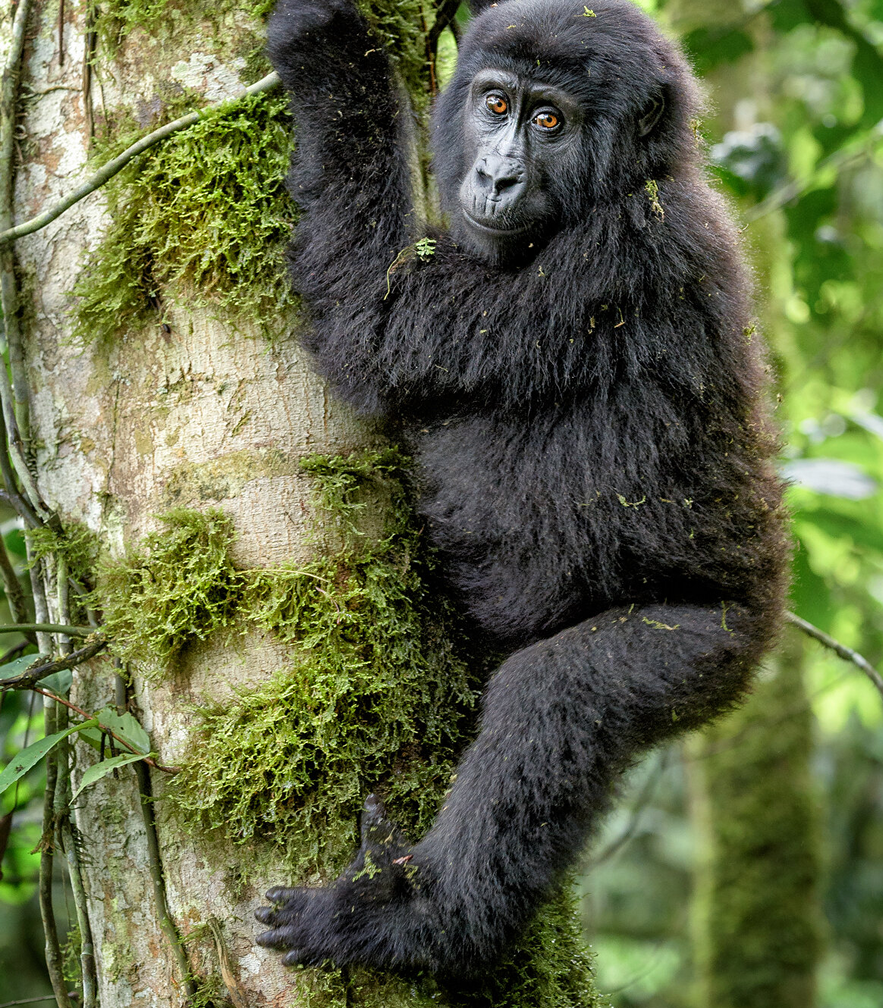
When you locate the gorillas, you’ll spend exactly one hour in their presence. Your guide maintains a respectful distance, generally around 7 meters, though this buffer has been increased at the discretion of some parks as a post-pandemic health measure. Any closer, and rangers will ask you to step back. During this hour, you’ll observe them feeding, playing, grooming, and interacting. The silverback male (the dominant male, weighing up to 200 kilograms) is magnificent and commands respect. Females are gentler in appearance but equally fascinating. Infants are adorable, playing and exploring under their mother’s watchful eye.
Photography is permitted, though flash photography is prohibited, and your guide may ask you to lower your camera in sensitive moments. The mist often reduces light, requiring higher ISO settings and steady hands. Many trekkers find that experiencing the moment directly, rather than entirely through a camera lens, creates the most meaningful memories.
The Emotional Landscape
Before the Trek
Anticipation and anxiety coexist. You’ve invested significant time, money, and physical effort. Questions arise: Will I see gorillas? Can I handle the physical demands? What if it rains heavily? These feelings are normal and valid. Channel them into final preparations, research, and mental rehearsals of the trek.
During the Trek
The first hours involve focused exertion — managing breathing, maintaining pace, watching footing. When you locate gorillas, the emotional impact is profound and immediate. Most trekkers report overwhelming feelings: awe at the gorillas’ size and presence, humility at being in their world as guests, gratitude for the opportunity, and often, tears.
The experience is intensely present-moment. You’re not thinking about work emails or daily stressors; you’re fully engaged in the extraordinary privilege of watching a silverback male settle into the forest, observing a mother gently guiding her baby, or watching juveniles play. Many describe it as spiritual or life-changing. The intimacy of the encounter — separated only by a few meters and a handful of minutes — is unlike any other wildlife experience.
After the Trek
The post-trek period involves physical and emotional processing. Your body will be exhausted; rest is essential. Soreness, particularly in legs and glutes, peaks 24–48 hours after the trek. Many trekkers experience restless sleep the night following the experience, their minds replaying the encounter.
Emotionally, expect a range of responses. Some feel euphoric and energised. Others experience a bittersweet combination of gratitude and sadness — sadness because the hour ended, because these creatures remain endangered, or because returning to everyday life feels anticlimactic. Some trekkers report profound shifts in perspective regarding conservation, humanity’s place in nature, and personal priorities.
Many operators issue a personalised trekking certificate afterwards, and most trekkers walk away with a genuine sense of having contributed to something larger than a vacation — your permit fee is, quite literally, a direct line item in the budget that keeps rangers patrolling and this population growing. The experience often becomes a reference point. Subsequent conversations circle back: “When I was gorilla trekking…” The memory remains vivid and detailed months and years later.
Final Thoughts
Mountain gorilla trekking is demanding — physically, financially, and emotionally. But for most who undertake it, it’s unequivocally worth it. You’ll stand face to face with one of Earth’s most intelligent, endangered species in their natural habitat, at a moment when their numbers are — cautiously — climbing rather than falling. You’ll test your physical limits, stand in mist-shrouded ancient forests, and experience a moment of genuine connection with the natural world.
Prepare thoroughly. Train your body, manage your expectations, understand the current permit costs and health protocols, and arrive with respect for these remarkable creatures. The mountain gorillas are waiting — and the journey toward encountering them will transform you in ways you cannot anticipate.
Mountain gorillas (Gorilla beringei beringei) are one of the most extraordinary wildlife encounters on Earth, and gorilla trekking has become a signature safari experience in East Africa for good reason.
Where They Live
Mountain gorillas exist in only two isolated populations, found nowhere else on the planet:
- The Virunga Massif — spanning the borders of Uganda, Rwanda, and the Democratic Republic of Congo, including Volcanoes National Park (Rwanda), Mgahinga Gorilla National Park (Uganda), and Virunga National Park (DRC)
- Bwindi Impenetrable Forest — a dense, ancient rainforest in southwestern Uganda
They live at high altitude, typically between 2,200 and 4,300 meters, in cool, misty mountain forests thick with bamboo and vegetation.
A Conservation Success Story
Mountain gorillas were once considered critically endangered, with numbers dropping below 700 individuals in the late 1980s. Thanks to decades of dedicated conservation work, anti-poaching efforts, and community-based tourism, the population has slowly recovered to just over 1,000 individuals today — one of the only great ape populations in the world that is actually increasing. This recovery is largely credited to the revenue and protection that gorilla trekking tourism generates.
Why It’s Such a Popular Safari Activity
1. Rarity and exclusivity. With only around 1,000 gorillas left and permits deliberately limited (a handful of groups per day, per park), trekking offers an experience very few people on Earth get to have. That scarcity — plus permit costs running from a few hundred to $1,500+ depending on the country — adds to its appeal as a bucket-list activity.
2. Profound closeness with a wild great ape. Habituated gorilla families allow visitors to sit within a few meters of them for a full hour, watching silverbacks, mothers, and playful youngsters go about their day. The eye contact and clear intelligence in their gaze often leaves people deeply moved — many describe it as the most emotional wildlife encounter of their lives.
3. The adventure of the trek itself. Reaching the gorillas isn’t passive — it involves hiking through dense, muddy, high-altitude rainforest, sometimes for a couple of hours, sometimes much longer. The physical effort and unpredictability make the eventual encounter feel earned.
4. Direct conservation impact. Because permit fees fund park protection and local communities, visitors know their trip is directly supporting the survival of an endangered species — a rare case where tourism dollars visibly translate into conservation outcomes.
5. Combines well with other iconic experiences. Uganda and Rwanda pair gorilla trekking with chimpanzee tracking, savanna game drives, and volcano hikes, letting travelers build a broader East African itinerary around it.
If you’re considering it, permits typically need to be booked well in advance (especially in Rwanda, where demand is highest), and July is actually within one of the better trekking windows since the dry season runs roughly June through September.